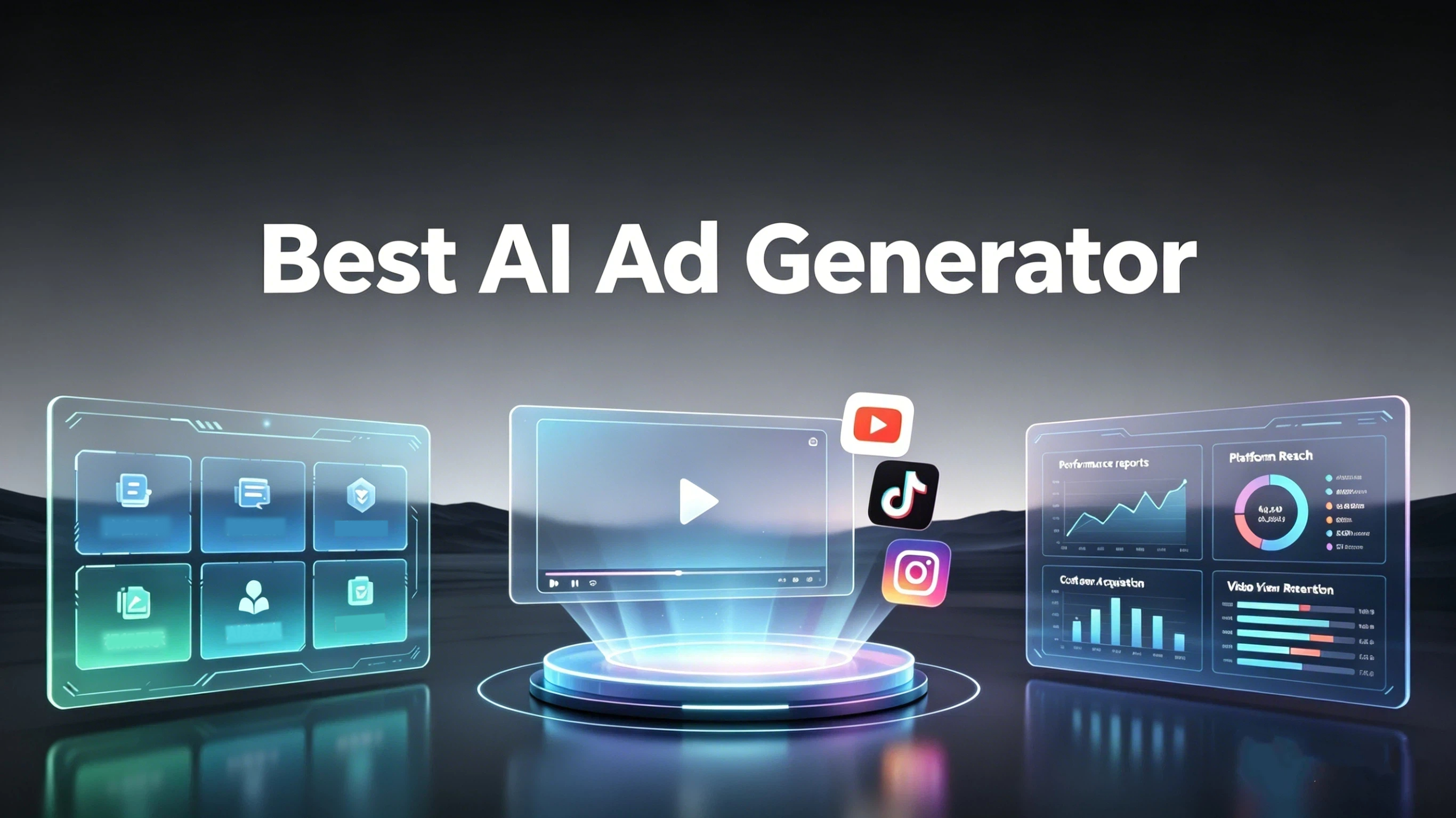
In today’s digital advertising landscape, marketers face many challenges: creative assets quickly burn out, video production costs remain high, testing cycles are slow, and the demand for multi-platform, multi-size creatives is exploding. Especially on major platforms like TikTok, Meta, and YouTube, rapidly producing high-quality ads while ensuring performance has become a key to success.
According to a 2025 digital marketing report, top advertisers need to test an average of 150–300 creatives per month, and traditional production methods simply can’t keep up with that pace.
It’s in this market context that AI ad generators are fundamentally changing how brands create, test, and scale ad creatives. These tools are no longer just simple template-fillers or copy-rewrite helpers; they can understand marketing goals, analyze competitor strategies, generate complete creatives tailored to platform specs, and even predict ad performance and offer optimization suggestions.
Modern AI ad agents like Navos Agent have gone beyond mere asset generation. They can support teams across a full workflow—from market insights, creative strategy, and scriptwriting to visual generation, performance optimization, and deep campaign analysis. This end-to-end capability, from strategy to execution, is redefining what truly efficient digital marketing tools look like.
This article will take an in-depth look at the 10 best AI ad generators on the market in 2026 to help advertisers quickly find the AI ad tool that best fits their needs.
What Is an AI Ad Generator?
An AI ad generator is a tool or platform that leverages artificial intelligence technology to automate the creation of advertising creative assets. Unlike traditional advertising production workflows that require multiple stages and specialized personnel, an AI ad generator is capable of completing the entire process from creative ideation to finished output within a matter of minutes.
Core capabilities typically found in an AI ad generator include the following:
- Ad copy generation: Create on-brand headlines, body copy, and CTAs optimized for Facebook ads, Google Search ads, TikTok scripts, and more.
- AI ad image generation: Generate product lifestyle shots, poster designs, and scene-based visuals using generative AI models.
- Ad script generation: Build complete ad script frameworks including hooks, pain points, solutions, and CTAs — tailored to your product and audience.
- AI video ad creation: Transform a product URL into a ready-to-run video ad with AI avatars, auto-generated subtitles, background music, and platform-specific formatting.
- AI voiceover & dubbing: Support for multi-language, multi-voice AI dubbing so your video ads can go global without a recording studio.
- Automatic platform resizing: One-click generation of assets sized for TikTok (9:16), Instagram (1:1, 4:5), YouTube (16:9), Google Display, and more.
How AI Ad Generators Work?
To understand how AI ad generators create ads that seem to reflect human creative thinking, you need to know the core technical architectures that power these systems.
1. Large Language Models (LLMs)
Large language models like GPT-4 and Claude are at the heart of AI ad copy generation. By training on massive amounts of text, these models learn not only grammar but also the semantic structures and writing patterns of different content types. When you ask the system to generate a TikTok ad script for a skincare product, the LLM draws on what it learned about skincare marketing language, TikTok content traits, and ways to express consumer pain points to produce copy suited to the scenario.
2. Generative AI Technology
Generative AI gives the system the ability to create entirely new visual content. Rather than simply retrieving existing images from a library, these technologies can produce images or short video clips from text descriptions. For example, you might ask the system to generate “a close-up of an Asian woman using skincare in a bright bathroom”, and it will produce a visual matching that description using diffusion models or GANs.
3. AI Video Models
AI video models go further, supporting longer generated clips (from 4 seconds up to 30+ seconds), producing coherent motion and realistic physics, handling camera cuts, and even simulating specific filming styles. This makes fully AI-generated video ads technically possible.
4. Performance Prediction Systems
Performance prediction systems are the key component that turns an AI ad generator from a “creative tool” into a “marketing intelligence” system. By analyzing historical ad data, audience interaction patterns, and platform algorithm characteristics, these systems can estimate how different creative elements will perform before an ad runs. For instance, the system might tell you that videos that open with a question-style hook usually get 40% higher click-through rates with your target audience than videos that show the product immediately, or that a certain color scheme converts noticeably better on Meta platforms. Platforms like Navos Agent integrate these technologies to not only generate assets but also provide data-driven creative guidance and optimization directions.
What Makes the Best AI Ad Generator?
When evaluating whether an AI ad generator is truly useful, you can’t just look at how long its feature list is or how flashy its marketing is—you need to assess from the perspective of real marketing workflows whether it actually solves the core challenges that ad teams face. A genuinely good AI ad tool should perform well across creative quality, technical capability, platform compatibility, performance optimization, workflow integration, and cost control—not just excel in one area while having obvious weaknesses in others.
1. Creative Quality
Creative quality is the most easily overlooked yet most critical evaluation dimension for AI ad generators. No matter how fast they produce or how cheap they are, if the output can’t grab the target audience’s attention and drive conversions, the tool has no real value. Key criteria for judging AI-generated creative quality include whether the content matches the target audience’s expectations and language habits, whether the visuals meet professional standards for placement, whether the creative logic is complete and persuasive, and whether the materials are sufficiently differentiated rather than all sounding the same.
High-quality AI ad generators usually apply strict standards when selecting training data: they don’t simply train on all ads from the internet but instead filter for high-conversion, high-engagement examples as learning samples. This helps the system understand which creative structures are more likely to produce commercial results. At the same time, strong systems build dedicated creative templates and rules for different industries, product types, and marketing goals, avoiding obvious mismatches like using B2B software copy for fast-moving consumer goods ads.
Controllability is also an important part of creative quality. The best AI ad generators give users enough parameters to steer creative direction—for example, specifying whether the brand tone should be professional and serious or light and humorous, choosing to emphasize features or emotional resonance, or setting specific target-audience profiles. These inputs help the AI produce content that better fits the brand’s real needs instead of generating generic-looking material that may look fine but isn’t suitable for your product.
2. AI Video Generation Capability
Video has become the most important asset format on most digital advertising platforms. Traffic shares for TikTok, Meta Reels, and YouTube Shorts continue to rise, making AI video generation a critical factor when evaluating ad tools. Truly powerful AI video generation isn't just adding transitions and background music to static images; it creates dynamic content with coherent storytelling, visual appeal, and a native platform feel.
When evaluating AI video generation, focus on several key metrics. First is the naturalness of the generated video: are character movements smooth, are scene transitions logical, and does AI voiceover sound close to a human tone? Videos that clearly show “AI artifacts” reduce audience trust and willingness to watch. Second is the precision of creative control. A strong system should let users specify professional parameters—shot type, camera angle, visual style, pacing—rather than only producing a few fixed, system-preset styles.
Flexibility in video length is also important. Different platforms and marketing goals require different runtimes: TikTok feed ads may need 15–30 seconds, YouTube pre-roll may need 6- or 15-second versions, and product demos may need a full 60-second walkthrough. The best AI tools can generate multiple length versions and reasonably adjust content density while preserving core messaging. From a practical standpoint, tools that can convert a product URL or a text brief directly into multi-platform-ready full video ads are far more useful than tools requiring heavy manual intervention and post-production.
3. Platform Compatibility (TikTok, Meta, Google)
Each digital ad platform has its own content preferences, algorithmic traits, and technical specs. A creative that works well on Meta might fail outright on TikTok, making platform compatibility a core problem AI ad generators must solve. A truly useful tool not only outputs assets that meet technical specs for each platform but also understands different platforms’ content ecosystems and user behaviors to generate creatives with native platform fit.
TikTok emphasizes authenticity, entertainment, and fast pace. Successful ads often use a UGC style, hook attention within the first 3 seconds, maintain rapid narrative pace and high information density, and favor vertical native shooting over polished brand-film aesthetics. Meta also pushes short video but its users tend to be more accepting of ads; product displays can be more direct, and square or 4:5 vertical formats perform well in feeds. Meta’s strong audience targeting lets creatives deliver more precise messages to segmented groups.
Google’s YouTube presents more complex ad scenarios: 6-second non-skippable ads must convey core messages in very short time; 15- or 30-second skippable ads must hook viewers within the first 5 seconds to avoid being skipped; longer video ads can tell fuller product stories. A strong AI ad generator should build these platform rules into the system: if you choose TikTok as the placement, the system should automatically adopt the platform’s creative style and narrative structure, rather than outputting a generic version you must adapt yourself. This intelligent platform adaptation can significantly improve ad performance.
4. Performance Marketing Optimization
Generating ad assets is only the first step. A top-tier AI ad generator should continuously optimize performance; this requires not only content creation but also data analysis, causal understanding, and actionable recommendations. Tools with strong optimization capabilities usually integrate ad delivery data, track each creative’s performance across audience segments, times, and bidding strategies, and use machine learning to identify which creative elements correlate with high conversion and which factors drive high drop-off.
Based on these insights, the system can automatically generate optimized variants for testing. For example, if data shows videos featuring on-screen people have 30% higher CTR than pure product shots, the system will increase the use of human elements in subsequent creatives. If a specific call-to-action phrase yields higher conversion, the system will favor similar wording in new creatives. More advanced systems can design intelligent multivariate tests to help advertisers understand interaction effects among creative elements, avoiding incorrect conclusions from simple single-factor attribution.
Predictive optimization is an AI advantage over manual analysis. By training predictive models, the system can estimate expected performance before live deployment and allocate limited test budgets to the creative combinations predicted to perform best. This smart budget allocation can achieve higher overall ROI under the same total budget. The system should also continuously monitor live ads and, when a creative’s performance starts to decline, alert users and automatically generate replacements to prevent ad fatigue and wasted spend.
5. Automation and Workflow Integration
Even if an AI tool is excellent at creative generation and performance optimization, it will still add operational burden to the team if it can’t integrate smoothly with your existing marketing workflows. A truly usable AI ad generator should be able to embed itself across the full marketing chain—from market research, creative planning, and asset production to campaign execution and performance analysis—reducing information loss and duplication when moving between tools.
Ideal workflow integration includes API connections with major ad platforms so generated assets can be pushed directly to TikTok Ads Manager, Meta Ads Manager, or Google Ads accounts without manual download and upload. Integration with project management tools should streamline creative approval: when AI generates a new creative version it automatically notifies the relevant team members for review, and once approved it enters the campaign queue. Connectivity with analytics platforms enables real-time tracking of creative performance, consolidating ad platform data, website analytics, and CRM data to form complete attribution from exposure to final conversion.
Degree of automation is a key metric for measuring workflow integration. The most advanced AI ad systems can already automate the entire process—from competitor monitoring triggering creative inspiration, to automatically generating multiple test variants, to smart budget allocation for delivery, and finally to data-driven iterative optimization—where humans mainly set strategy and review critical decisions rather than perform repetitive tasks. This high level of automation not only saves labor costs but, more importantly, allows response to market changes at speeds human teams cannot match—a decisive advantage in the highly competitive performance advertising space.
6. Pricing and Free Plans
Cost-effectiveness is an unavoidable consideration for businesses choosing a tool, especially for budget-constrained SMBs or startups. Evaluating the reasonableness of an AI ad generator’s pricing shouldn’t just focus on the absolute price; you must consider the feature coverage, usage limits, how it compares to alternative costs, and the potential ROI uplift. Pricing models vary widely: some tools charge a fixed monthly subscription, some charge per generated asset, and some offer basic features for free while charging for advanced capabilities.
From a cost-benefit perspective, if an AI ad generator costs $1,000 per month but saves you at least $5,000 in video production costs and, through better creative testing, improves your ad ROI from 3:1 to 5:1, then it’s clearly a worthwhile investment. Conversely, if a tool costs only $100 but produces low-quality creative that requires heavy manual revision, or lacks critical features forcing you to use other tools as well, the total cost of ownership may not be low. So when evaluating pricing, calculate the full economic picture: subscription fees, saved labor and production costs, potential advertising performance gains, and the time cost of learning and integrating the tool.
The 10 Best AI Ad Generators Recommended
After examining in depth the standards for evaluating AI ad generators, we will now proceed to analyze in detail the ten tools that demonstrate the most outstanding performance in the 2026 market. Each of these tools possesses distinctive characteristics and areas of emphasis, and the selection should be matched to the most appropriate solution based on your specific business scenario and marketing objectives.
1. Navos Agent
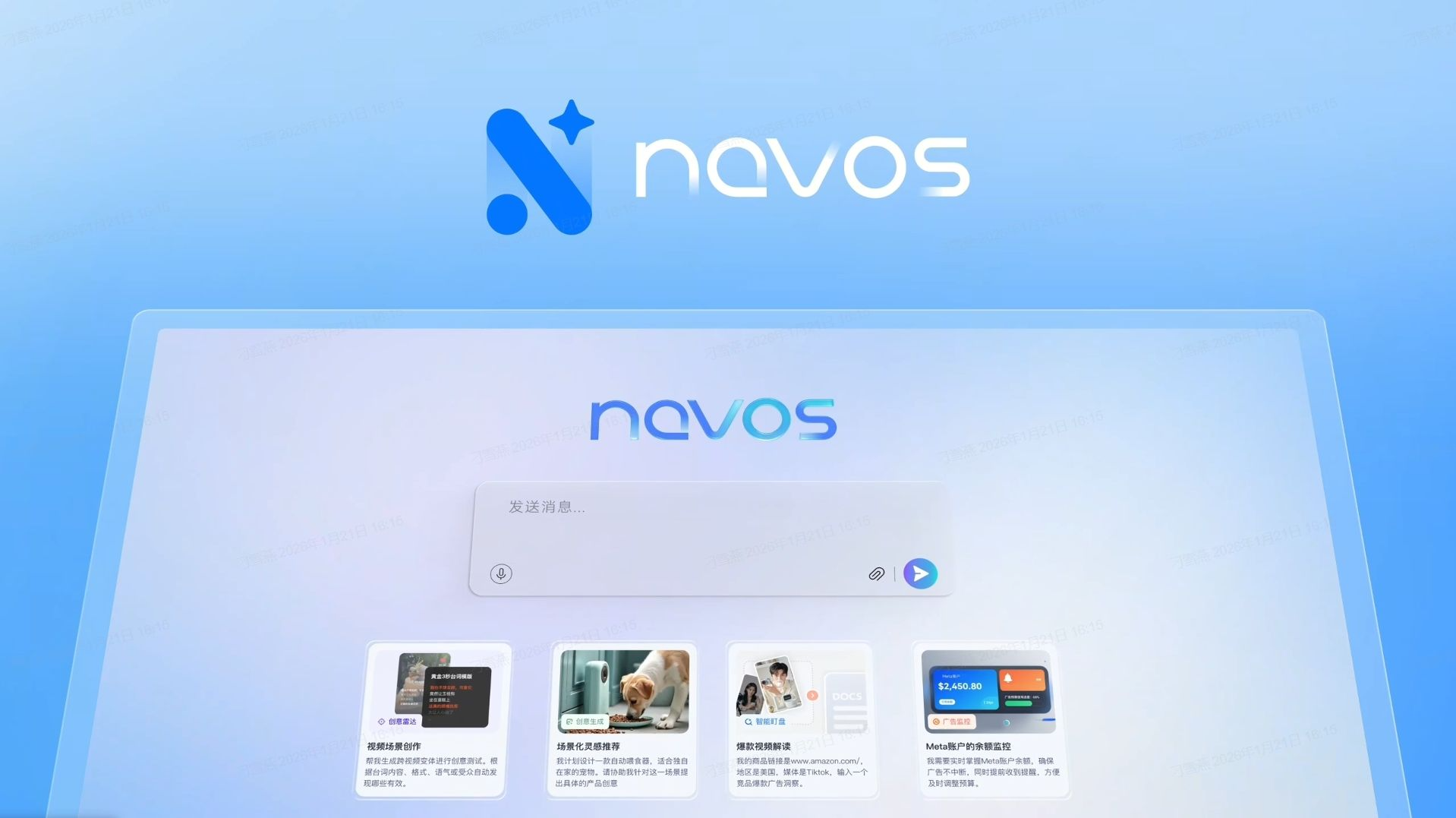
Navos Agent’s positioning is fundamentally different from most AI ad tools on the market. It’s not just a creative tool to quickly produce ad assets; it’s a comprehensive AI marketing intelligence system that covers everything from market insight to creative execution to performance optimization.
Highlights:
- AI ad creative generation: The AI creative generation feature can automatically produce copy, visual designs, and full creative concepts based on product information and marketing goals. Navos’s value is that it can quickly generate many creative variants and use intelligent predictions to prioritize which combinations to test first, while continuously monitoring test results and automatically iterating. This efficient testing loop can significantly shorten the time to find the best creative assets, thereby lowering overall customer acquisition costs.
- AI video ad generation: The AI video ad module can generate platform-ready video assets for TikTok, Meta, YouTube, etc., directly from a URL or product description. It supports formats like AI on-screen talent, product demos, and scenario dramatizations.
- AI ad analysis: What truly sets Navos apart from pure creative tools is its marketing intelligence layer. The built-in AI ad analysis can deeply interpret ad account data, identify performance anomalies, budget waste, and optimization opportunities. Optimization suggestions are based on your historical data and industry benchmarks, automatically identifying issues in current campaigns and providing concrete, actionable improvements—for example, an ad set’s audience targeting is too narrow causing low reach; certain creatives have weak hooks leading to high drop-off in the first 3 seconds; or a bidding strategy that isn’t efficient at the current budget.
- Competitor ad insights: The competitor insights module lets you continuously track industry competitors’ ad strategies across platforms, learn their creative directions, key product selling points, and audience targeting. This market intelligence can directly become your creative inspiration and help you avoid reinventing the wheel.
- Marketing strategy generation: Strategy generation elevates AI to a higher level. By entering business goals, product features, target markets, and so on, the system generates complete marketing strategy recommendations, including which platforms to prioritize, which audience segments to target, creative themes and messaging strategies, how to allocate budget, and what KPIs to set—essentially an always-on marketing strategy advisor. This end-to-end strategic-to-execution loop is Navos Agent’s biggest differentiator.
- Full AI marketing closed loop: Navos Agent integrates capabilities that other tools typically split across multiple products. Most AI ad generators only handle the “asset generation” step; Navos connects market insight, strategy planning, creative execution, media optimization, and performance analysis into an intelligent marketing operating system.
Best For:
If your team struggles to consistently produce high-quality creatives, extract actionable insights from massive data, or integrate creative production with media optimization, Navos Agent’s complete AI marketing ecosystem will solve your practical problems better than single-function creative tools.
This full-stack capability is especially suitable for e-commerce brands, professional ad agencies, growth teams, and high-spend advertisers managing larger-scale campaigns—teams with monthly ad budgets in the tens of thousands of dollars or more.
2. AdCreative.ai
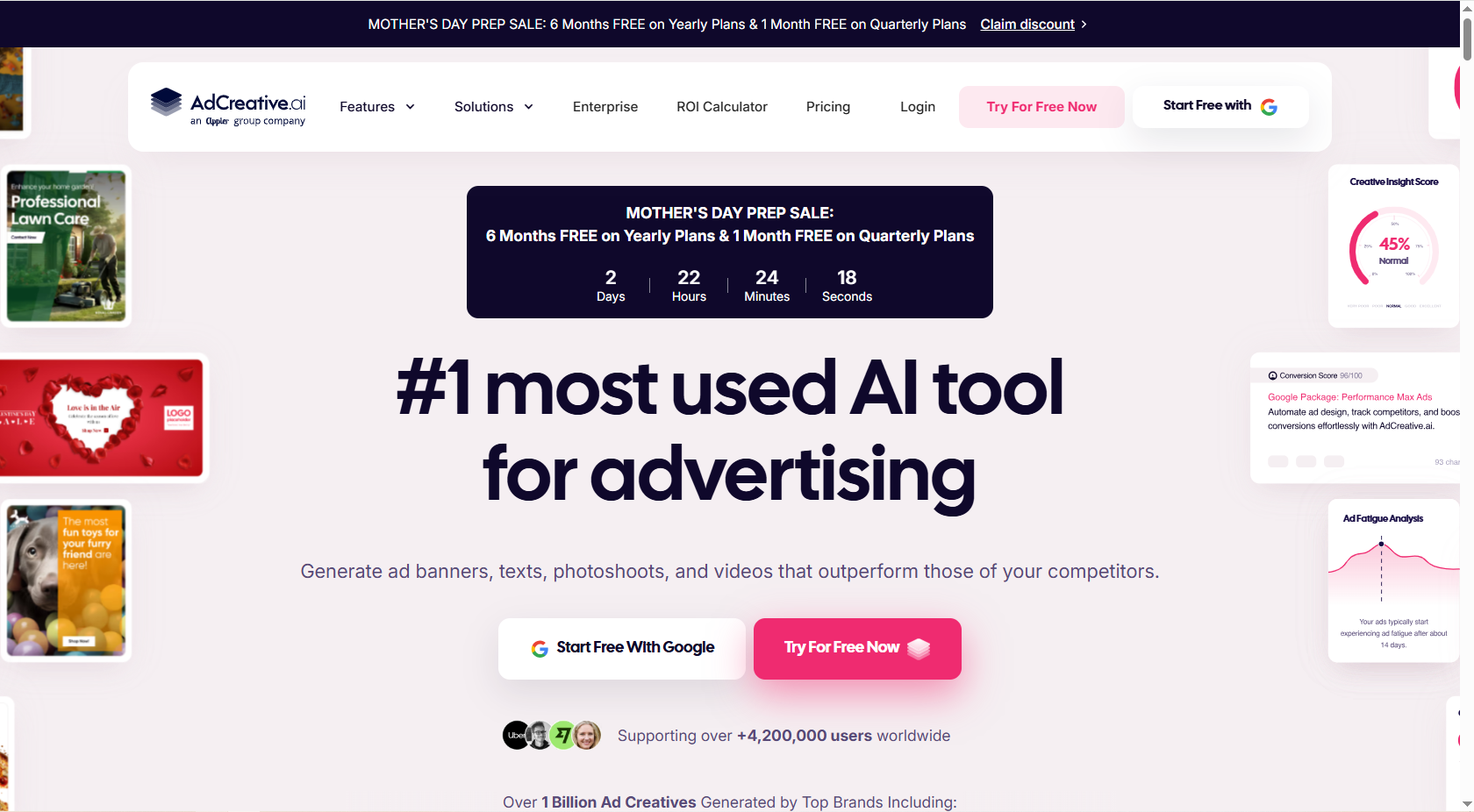
AdCreative.ai has established a solid market position in digital ad creative generation. This tool is particularly good at quickly producing large volumes of visual creative variants for Meta ads, Google Display ads, and various banner ads.
Highlights:
- Bulk creative generation: Simply upload product images, logos, and basic brand information, and the system can automatically produce dozens or even hundreds of ad assets with different design styles, copy combinations, and visual layouts. User feedback indicates AdCreative.ai’s biggest value is greatly lowering the barrier to creative testing. Where teams once could only test three to five creative directions due to limited design resources, they can now easily test thirty to fifty variants. This larger-scale testing directly increases the chances of finding high-performing creatives.
- AI-driven performance prediction: The system scores each generated creative and predicts likely click-through and conversion performance in real campaigns. These predictions are based on millions of ad examples and machine learning models. While the prediction score isn’t 100% accurate, in practice it helps filter for higher-potential creatives to prioritize testing and avoid wasting budget on clearly low-quality assets. Many advertisers on Reddit report that following AdCreative.ai’s prediction scores and testing the top 20% of creatives often yields a meaningful improvement in overall account ROI.
- Automatic multi-size adaptation: This feature solves a practical cross-platform pain point. The same creative concept needs to fit Facebook feed square formats, Instagram Stories vertical full-screen, and Google Display’s various standard banner sizes. Manual adjustment is time-consuming; AdCreative.ai can generate all required size variants with one click, maintaining design consistency while meeting different platform display requirements.
- E-commerce strength: The tool performs especially well for e-commerce advertisers. It handles product images effectively and produces designs that highlight product selling points, price advantages, and promotions. The visual style leans toward clear, direct product presentation rather than brand narrative.
Limitations:
It should be noted that this tool focuses primarily on the generation of static images and simple animated graphics. If your main deployment channels are video-centric platforms such as TikTok and YouTube, the video generation capability of AdCreative.ai is relatively limited, making it more suitable for use as a production tool for image-based advertising assets.
Best For:
Media buyers who need to run dense A/B tests with dozens of image creative variations on Meta and Google Ad.
3. Runway
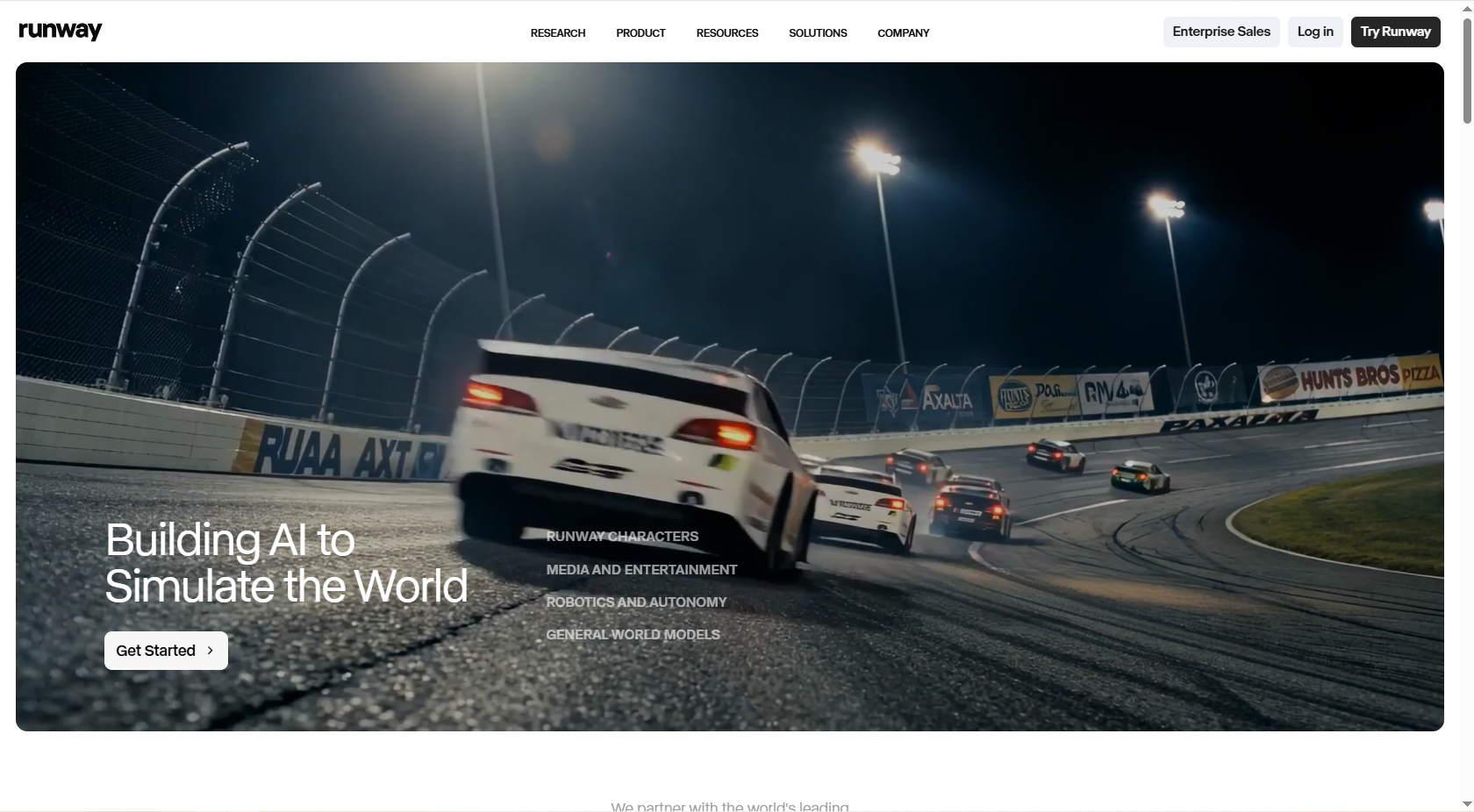
Runway represents one of the highest levels of current technology in the field of AI video generation and editing. This tool initially gained recognition in the film and creative industries before gradually being discovered and applied by marketing teams for advertising production.
Highlights:
- AI Video Ad Generation: The AI video generation capability of Runway is extremely powerful. You can generate completely non-existent video segments through text descriptions, upload reference images for the AI to generate dynamic content based on those images, or perform advanced editing on existing video including AI-driven style transformation, object replacement, and scene expansion.
- Visual Quality: If you are pursuing cinema-grade visual quality, creative visual effects, or advertising content that requires refined imagery consistent with a high-end brand tone, Runway is likely the most suitable choice. The AI video it generates demonstrates clear superiority over most AI tools focused on marketing scenarios in terms of image detail, color processing, and dynamic naturalness.
- Creative Freedom: The capability makes it particularly suitable for producing brand advertisements that require visual impact, conceptual product demonstration videos, or TikTok content that pursues creativity and aesthetic beauty. Many creative teams use Runway to produce opening segments for YouTube advertisements or special effects shots in brand promotional videos.
Limitations:
However, the positioning of Runway determines that it has certain limitations in the context of batch production for performance advertising.
- Slower generation: the generation speed is relatively slow, with high-quality AI video rendering potentially requiring several minutes or even longer, making it unsuitable for high-frequency deployment scenarios that require producing dozens or hundreds of testing assets daily.
- Steeper learning curve: operation requires a certain degree of professional knowledge. To fully leverage the capabilities of Runway, you need to understand professional concepts such as shot language, visual style, and editing rhythm, resulting in a steeper learning curve compared to simplified tools designed specifically for marketing personnel.
- Higher cost: From a cost perspective, the pricing of Runway is relatively high, particularly when you need to generate large quantities of video. However, considering that it can replace the work of professional video production teams, for brands that would otherwise invest thousands of dollars in video shooting, using Runway remains the more economical choice.
Best For:
The most suitable usage scenarios for Runway are brand marketing activities that require a small number of high-quality video content pieces, such as hero visual videos for quarterly promotions, conceptual demonstrations for new product launches, or visual expression of brand stories, rather than batch asset production for daily performance advertising.
4. Synthesia
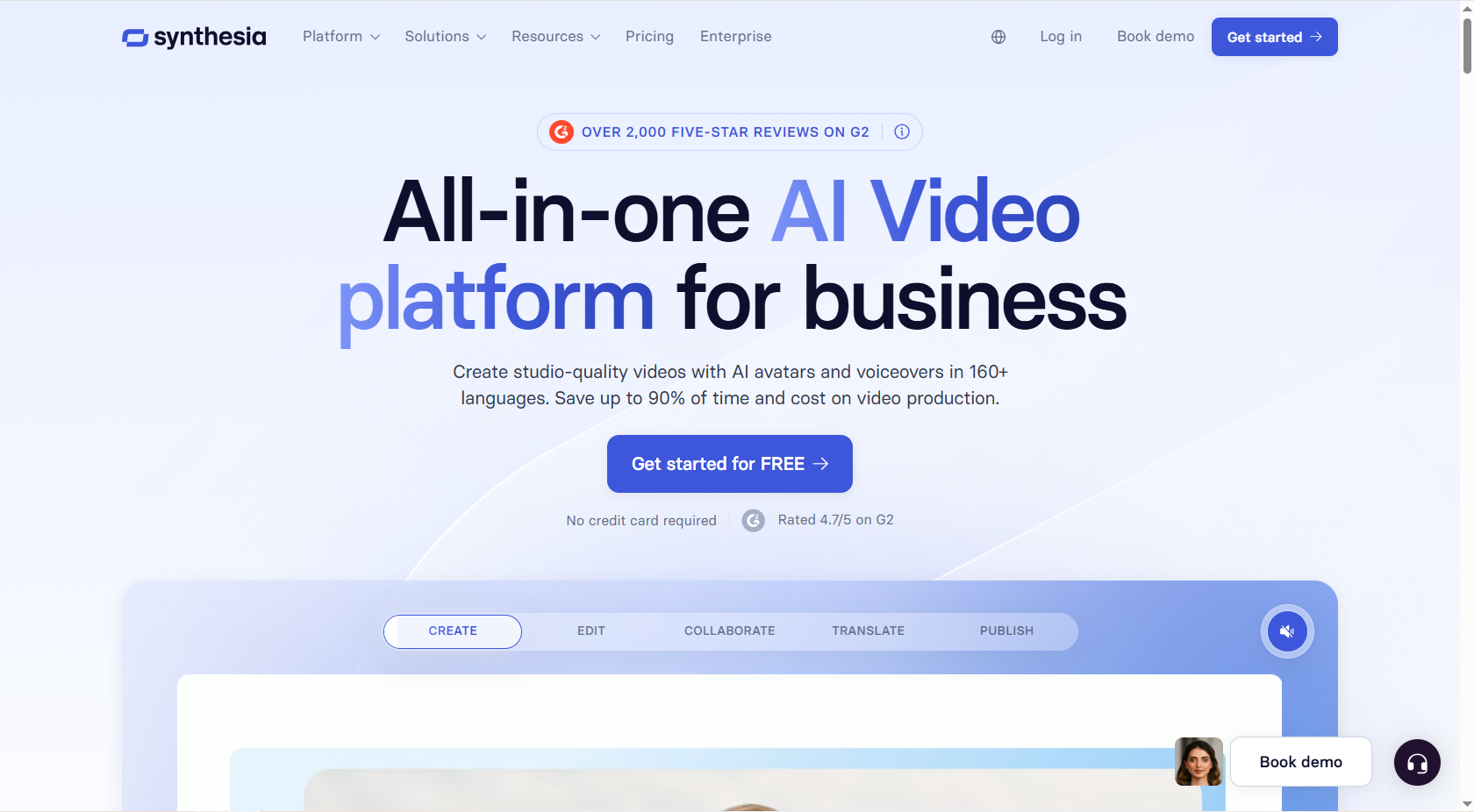
Synthesia has established a clear technological lead in AI-generated virtual presenter videos. Its standout feature is the ability to create videos that look like a real person speaking on camera, while the on-screen presenter is actually a fully AI-generated digital avatar. For companies that need a real person to present but want to avoid the cost and time of live shoots, Synthesia offers a very practical solution: you simply input a text script, choose a virtual persona and language, and the system produces a video of that avatar fluently delivering the script in your selected language.
Highlights:
- Supports 120+ languages: Synthesia supports more than 120 languages, so you can quickly generate localized video versions for different markets from the same script. The avatar’s lip movements match each language’s pronunciation, a synchronization that’s hard to achieve with live shoots—even with dubbing.
- Custom exclusive digital avatars: The platform’s avatar library includes options across ethnicities, ages, genders, and clothing styles. You can also create a custom avatar to better align its appearance with your brand or target audience.
- High-quality AI video ads: Video quality is high—facial expressions, body movements, and vocal tone are carefully tuned. In non-close-up shots, many viewers may struggle to tell these AI-generated presenters apart from real people.
- Cost-effective for long-term subscriptions: Synthesia uses a subscription model. Plans mainly differ by monthly video minutes and access to premium features. For companies producing video content continuously, long-term subscriptions can offer good value.
Limitations:
Its generated videos lean formal and corporate in style. Although the avatars look realistic, the overall presentation feels more like corporate promos or e-learning than the casual, spontaneous content common on social platforms. This makes Synthesia videos perform well on LinkedIn, corporate websites, and YouTube educational content, but they may feel out of place on TikTok or Instagram Reels—platforms that emphasize authenticity and entertainment. Users may sense the “produced” quality, which can reduce trust and engagement.
Best For:
For advertising, Synthesia is best for explanatory content—SaaS feature walkthroughs, multilingual product introductions, comparisons of different solutions, FAQs, corporate training, and similar formats. For emotionally driven ads, lifestyle scenes, or fast-paced visual hooks that rely on native social media style, other AI tools that focus on native social formats may be better choices.
5. Canva
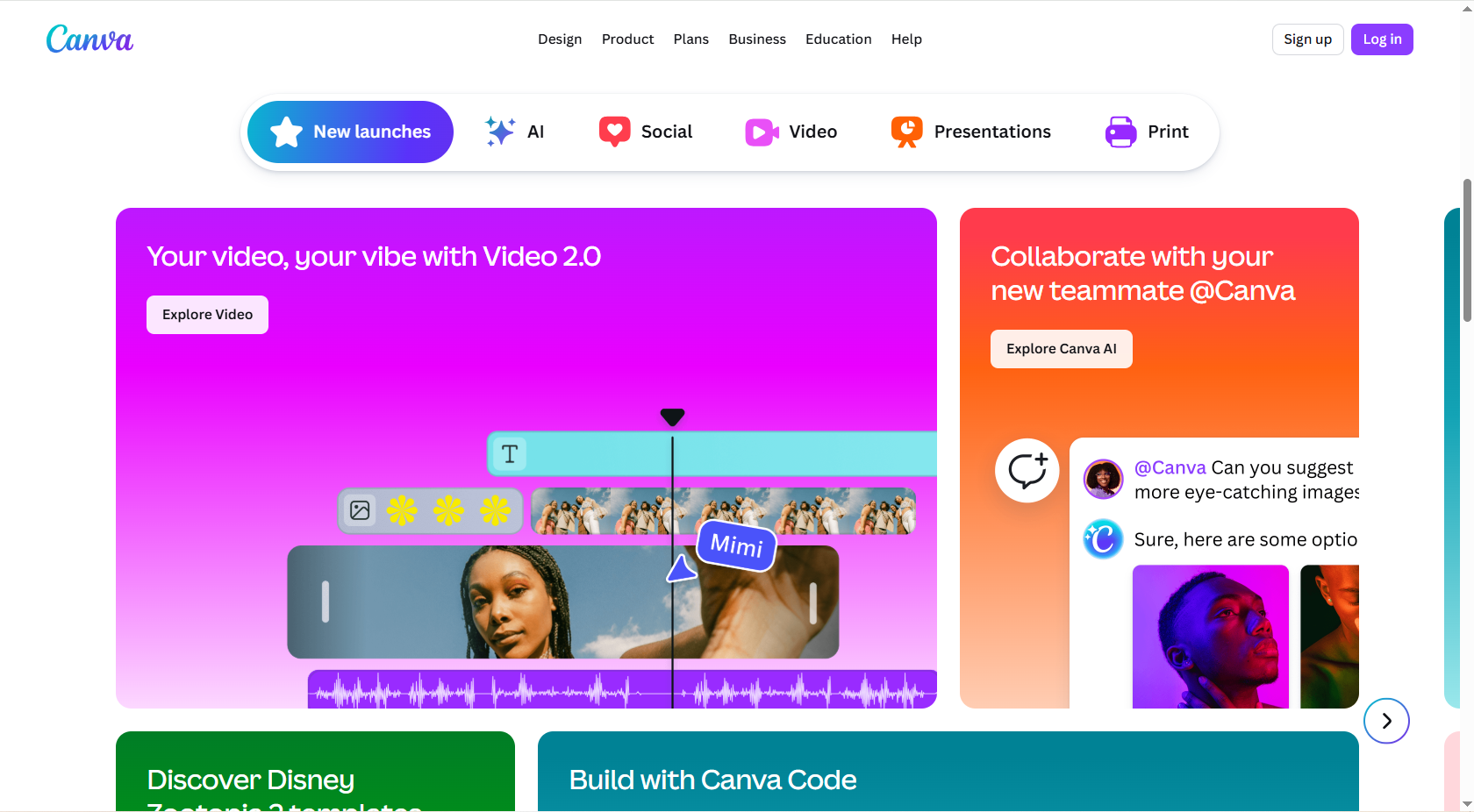
Canva will be familiar to most marketers. Originally known for simplifying graphic design, the platform lets non-designers quickly create posters, social images, presentations, and other visuals. In recent years, Canva has heavily invested in AI features, adding AI image generation, AI copywriting, AI video editing, background removal, and image expansion—evolving from a pure design tool into an AI-enabled content creation platform.
Highlights:
- Low learning curve: Canva’s biggest advantage for small businesses, startups, or budget-conscious marketers is its very low learning curve and abundant template library. The platform offers tens of thousands of ad templates across industries, scenarios, and platforms. Pick a template close to your needs, swap in your product images, brand colors, and copy, and you can produce decent ad creative in minutes. This straightforward workflow empowers non-designers to create ads without waiting for a designer or outsourcing.
- Basic AI ad-generation features: Canva’s AI features aren’t as deep or specialized as dedicated AI ad tools, but they’re practical for basic needs. AI image generation can create supportive visual elements, the AI copy assistant offers initial ad copy suggestions, and Magic Resize quickly adapts designs to different platform sizes. AI background removal and replacement simplify product image processing.
- AI video editing: Canva recently enhanced its video editing with AI—automatic subtitle generation, smart trimming, and AI transitions—improving its video ad capabilities.
- Free tier available: Canva’s pricing is user-friendly. A fairly full-featured free version covers basic needs, and the paid Canva Pro is affordable. For small teams on a budget, it’s a good starting point; as your needs grow and you require more advanced ad optimization, you can consider upgrading to specialized AI ad platforms.
Limitation:
At its core, Canva remains a design tool rather than a professional AI ad generator. While it can help you create visually appealing ad creatives, it lacks the marketing intelligence capabilities needed to optimize creative assets based on ad performance data, predict ad performance, and automate testing and iteration.
Advertising professionals on Reddit generally agree that Canva is an excellent tool for design execution, suitable for bringing well-defined creative ideas to life. However, if you require systematic creative strategy guidance, large-scale A/B testing management, or deep integration with ad platforms, you may need to combine it with other, more specialized AI advertising tools.
Best For:
If you're just getting started with digital advertising, have a small team, and a limited advertising budget, Canva can serve as your primary creative tool.
6. HeyGen
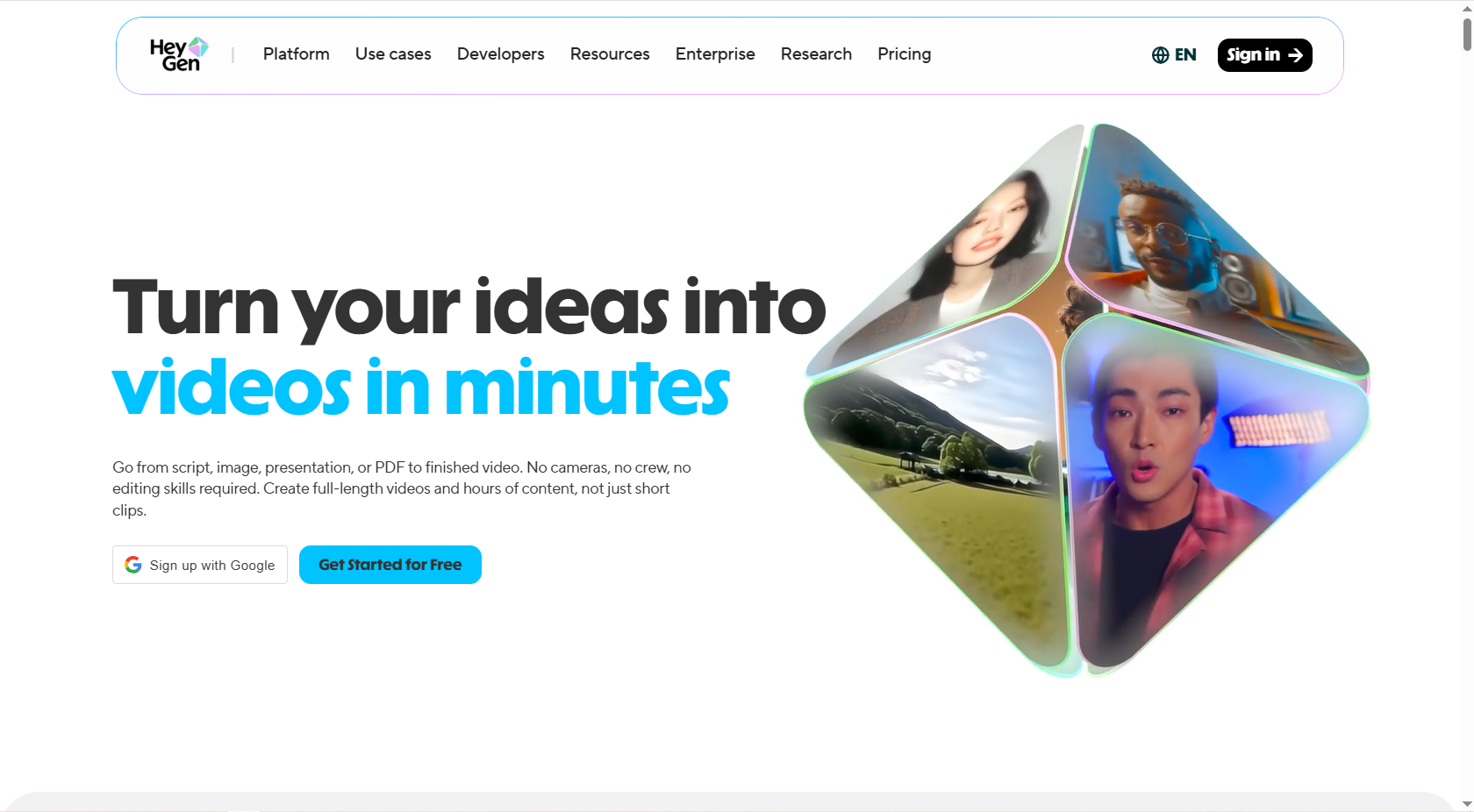
HeyGen focuses on AI digital human video generation. Similar to Synthesia but with its own distinctions, the platform excels at producing AI virtual-person videos that look natural. It’s particularly well suited for creating UGC-style ads, product explainer videos, and short social media clips.
Highlights:
- Custom digital avatars from real photos: One of the platform’s most attractive features is the ability to create a custom digital avatar based on real photos. You can upload photos of yourself or team members plus a short video; the system learns the person’s facial features and speaking style to create a highly similar digital avatar. Then you simply input a text script and the avatar will “speak” the script, with lip sync, expressions, and tone matched as closely as possible to the original person. This is very useful for personal brand content, founder messages, or ad series that need consistent on-screen identity.
- Natural presentation: HeyGen has optimized facial expressions and body language for its virtual presenters, producing videos that are less likely than some competitors’ to show obvious AI artifacts—important in ad contexts where building trust matters.
- Automatic platform-style adaptation: For TikTok ads and other short-video platforms, HeyGen adapts well. It can produce a more relaxed, lifestyle-oriented visual style rather than the overly formal look of some enterprise AI video tools.
- Localization fit: Many international brands use HeyGen to create localized influencer-style content. By choosing virtual personas that fit the target market and having them present product benefits in the local language, the results often outperform simple subtitle translations—viewers see a “local” presenter recommending the product rather than an obviously foreign clip.
Limitations:
HeyGen is mainly a single-purpose tool focused on virtual-person video generation. If you need a full advertising creative strategy, large-scale A/B test management, or ad performance analytics, you’ll need to combine it with other tools.
For bulk ad testing efficiency, HeyGen is less suitable than platforms built for high-frequency creative iteration. It’s better for producing a limited number of higher-quality videos rather than generating dozens or hundreds of assets per day.
Best For:
In SaaS advertising, HeyGen is often used to create product demo videos where a virtual presenter explains on one side of the screen while the software interface is shown. This explain-and-demo format works well for YouTube ads and landing page conversion videos. AI explainer videos attract and hold attention better than plain text or silent demos, while saving substantial time and cost compared to live-action shoots.
7. Creatify
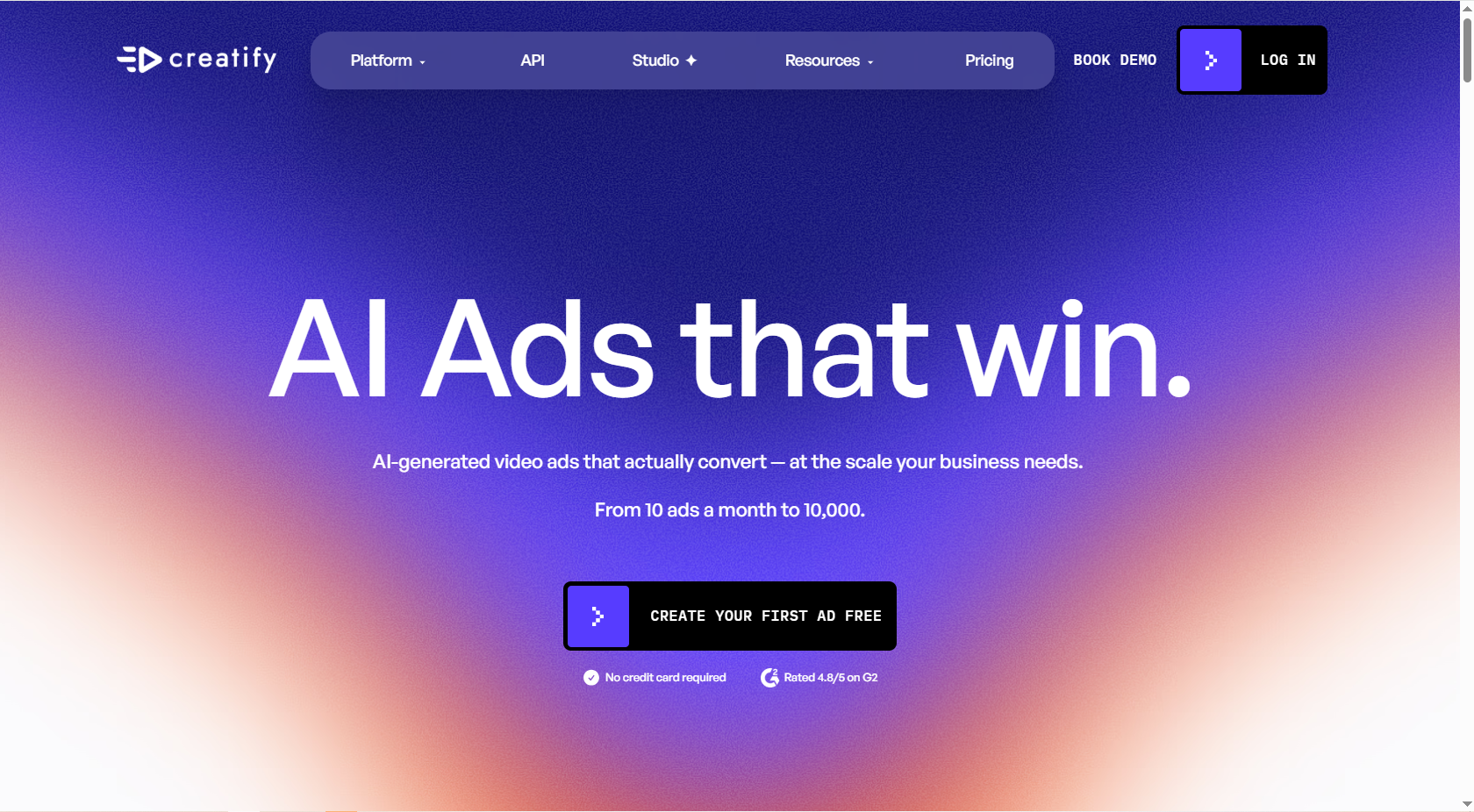
Creatify is an AI video ad generation tool optimized specifically for e-commerce and performance advertising scenarios.
Highlights:
- Product URL to video ads: Creatify’s standout feature is its ability to quickly turn a product URL into a ready-to-run video ad. This convenience makes it popular among sellers who need to rapidly create ads for many SKUs. You enter the product page link, and the system automatically grabs product images, titles, descriptions, and selling points, then generates a complete video ad with product shots, text overlays, and AI voiceover.
- Batch ad asset generation: Batch generation is another strength. If you have a product catalog and need an ad for each SKU, you can bulk-import product links and the system will generate videos for each item. This automation saves massive manpower for e-commerce teams with hundreds or thousands of SKUs.
- Optimized for TikTok and Meta: Creatify is particularly suited for teams running performance ads on TikTok and Meta. The generated videos tend toward direct product showcases and benefit-focused messaging, usually featuring fast-paced cuts, clear text annotations, and attention-grabbing opening hooks—elements that drive higher conversion in feed ads. Creatify offers templates and styles like 360° product views, usage scenarios, competitive comparisons, and customer testimonials, so you can choose the format that best fits the product.
- Efficient creative testing: Many acquisition teams report Creatify is highly efficient in the creative testing stage because generating a deployable video from a product link takes only minutes. This allows teams to quickly validate whether a product is worth deeper creative investment. For situations that require rapid response to market trends or testing many potential best-sellers, this speed is crucial. The platform also supports quick hook testing—you can generate a dozen different openers for the same product, test which first-3-second hook retains viewers best, then concentrate budget on the top-performing version.
- Affordable pricing: Pricing-wise, Creatify is more budget-friendly than many other video generation tools, making it accessible to small and mid-sized e-commerce sellers. ROI is typically easy to calculate—if the generated videos drive sales, the tool’s cost is a small share of ad revenue.
Limitation:
The naturalness of AI Avatar’s output ranks in the upper-middle range among similar tools. While close inspection still reveals traces of AI, it is sufficient to capture attention and convey information in a fast-scrolling news feed.
Videos generated by Creatify prioritize functionality and conversion efficiency over artistic flair or brand storytelling. If your advertising goal is to establish a brand identity or tell an emotional brand story, you may want to consider other tools that place greater emphasis on creative quality.
Best For:
Creatify is particularly well-suited for e-commerce sellers who need to quickly generate ad creatives for a large number of SKUs.
8. Jasper
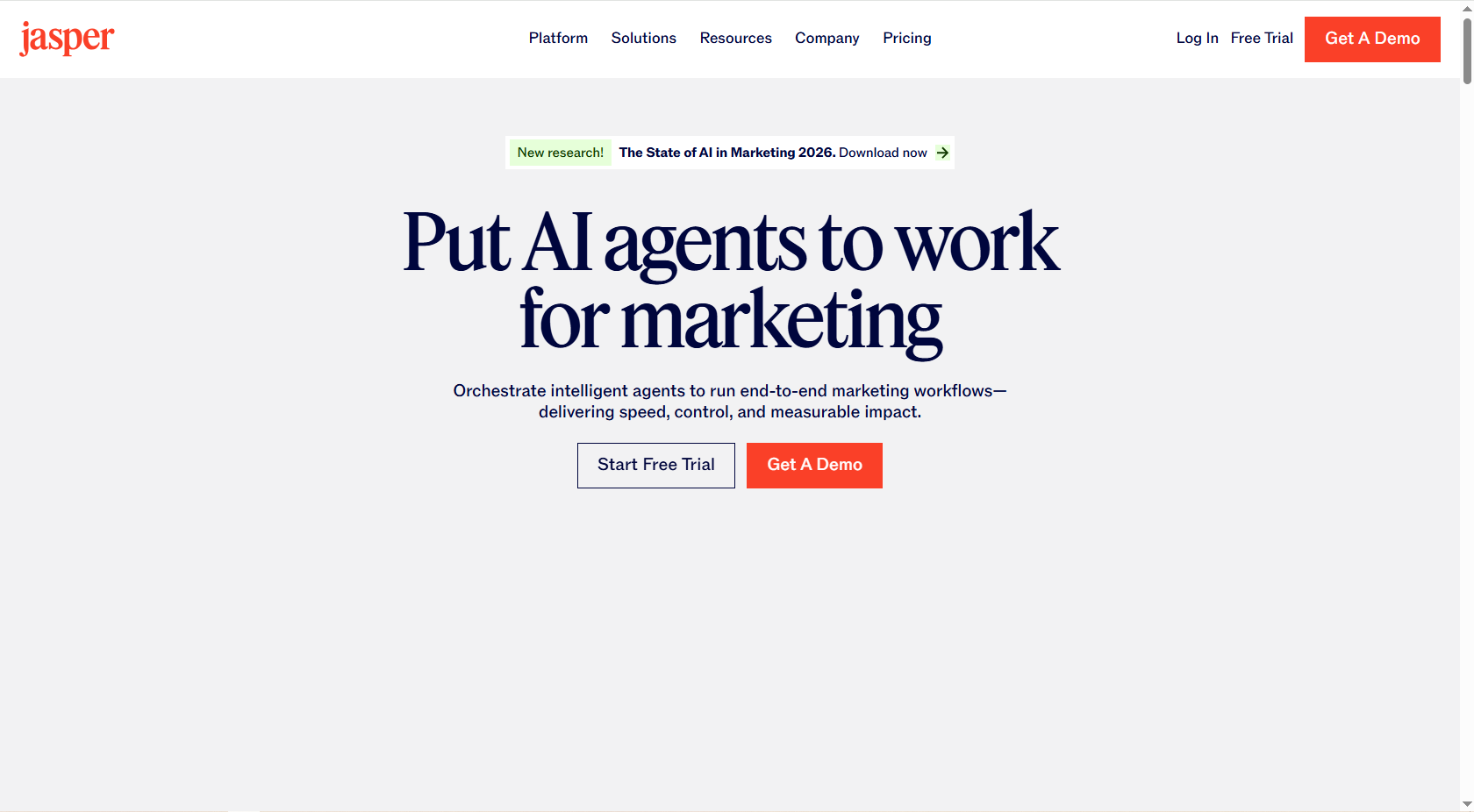
Jasper has built substantial recognition in AI copywriting. The platform originally focused on long-form content like blog posts, product descriptions, and email marketing, and later expanded to cover a range of marketing copy needs, including ads. For teams whose primary pain point is writing ad copy rather than creating visual assets, Jasper offers a mature and powerful solution. Its ad lines typically outperform general AI writing tools in language quality, persuasiveness, and brand tone.
Highlights:
- Templates optimized for advertising platforms: Jasper includes many templates tailored to different ad platforms and marketing scenarios, such as Google search ad headlines and descriptions, Facebook ad copy, product listing optimization, and ad script outlines. These templates are trained on years of high-conversion copy examples, so the output generally follows platform best practices. You can input product details, target audience traits, and core selling points, and the system will generate multiple copy variants for you to choose and edit. This greatly shortens the time from a blank page to usable copy, making it ideal for fast ad launches.
- Compliance with ad platform rules: For Google Ads, Jasper can generate ad copy that fits character limits, includes keywords, and matches search intent, while producing multiple variants for A/B testing. For Meta ads, it excels at creating attention-grabbing openers, clear value propositions, and effective calls to action, and can generate personalized message variants for different audience segments.
- Integrated SEO features: Jasper also integrates SEO capabilities, optimizing keyword use while keeping ad copy engaging—especially valuable for teams managing both paid ads and organic search traffic.
- Brand voice customization: Brand voice customization is a standout feature. You can train the system on your brand’s specific language style, common terms, and tone, and future outputs will aim to maintain that consistency. This is important for companies with strict brand requirements, helping avoid the generic, non-branded feel common in AI-generated content. Multi-language support also makes Jasper suitable for global marketing teams, allowing one creative brief to produce localized copy versions for different markets.
Limitations:
Jasper’s main limitation is its focus on text generation. Although the platform is gradually adding visual features like AI image generation, it’s not as complete as tools designed for end-to-end ad production when it comes to video ad creation, visual design, or deep integrations with ad platforms.
Best For:
Jasper is best suited as a professional tool for copywriting, working in tandem with other visual design tools to create a comprehensive workflow for producing advertising materials, or for text-heavy ad formats such as search ads, text-link ads, and email marketing.
9. StudioKit.ai
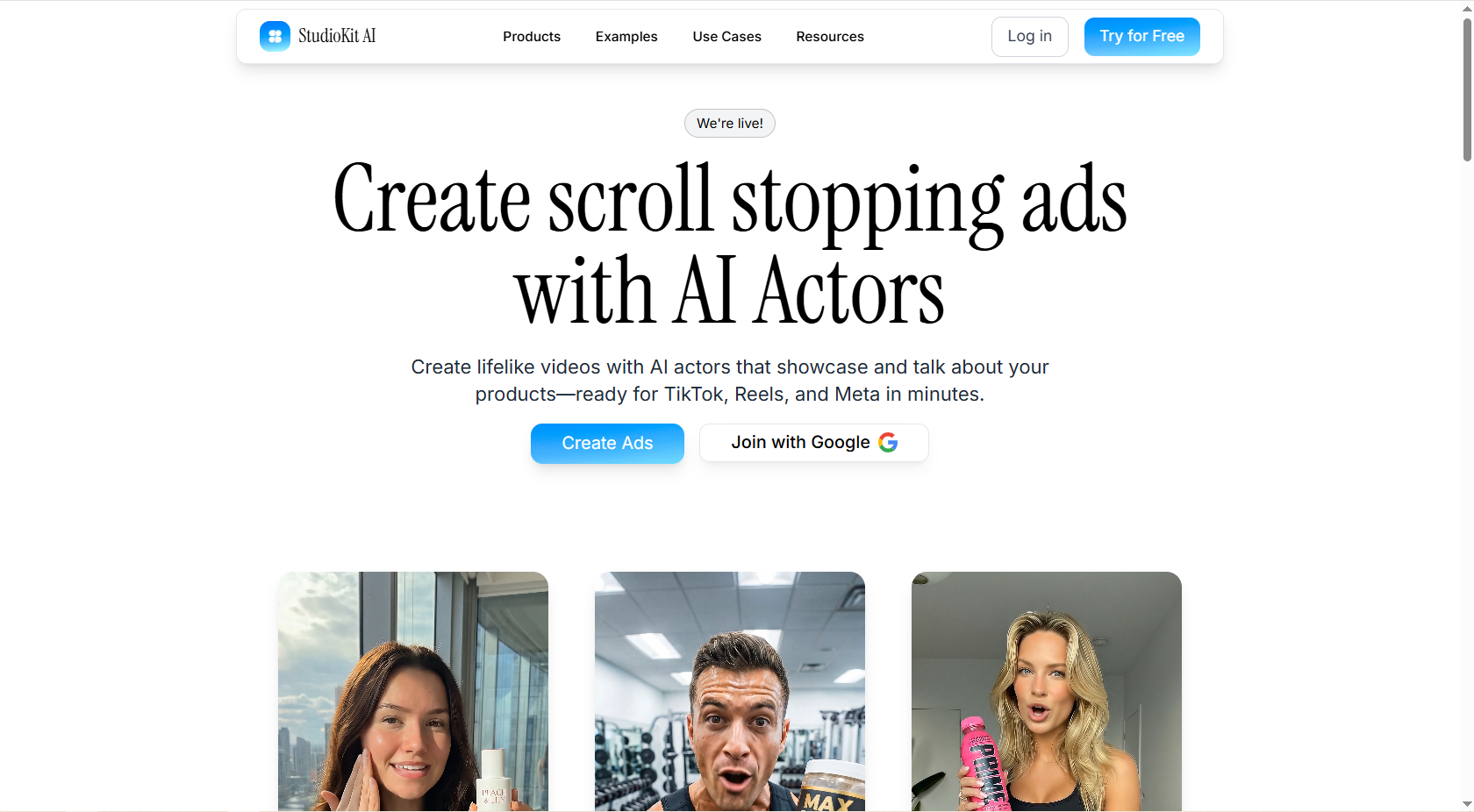
StudioKit.ai positions itself as a professional AI-driven ad creative studio, focused on helping brands and marketing teams quickly turn products into high-quality visual ads and short videos. Its core advantage is democratizing professional-grade ad production, enabling companies without large creative teams to produce visuals comparable to top agencies. From product photography-style stills to dynamic demo videos, StudioKit.ai offers a full suite covering mainstream ad formats.
Highlights:
- AI scene generation: For product visuals, StudioKit.ai goes beyond simple template fills with intelligent scene understanding. The system not only places products in various scenes but also selects the most suitable visual style and scene pairing based on product category, target audience, and marketing goals. For example, it will automatically create a minimalist, elegant marble-surface scene with soft lighting for high-end skincare, while choosing energetic outdoor or gym settings with dynamic visual elements for fitness products. The AI scene generation can produce photography-level product displays that often get noticeably higher click and engagement rates in Meta and Instagram feeds because they present the product clearly while creating an eye-catching visual atmosphere.
- Smart workflow design: StudioKit.ai’s workflow design reflects real marketing team needs. You can upload product images and enter brand positioning, target markets, and other key info; the system will then generate multiple creative directions to choose from, each with different visual styles, copy strategies, and presentation formats. This creative variety enables quick A/B testing to find the ad format that resonates best with the target audience.
- Video ad production: For video ads, StudioKit.ai can turn product images into short ads with multiple camera angles, smooth transitions, and attention-grabbing animated elements. These videos are well-suited for TikTok, Instagram Reels, and Facebook feed placements. The system automatically handles pacing to ensure the most compelling content appears in the first 3 seconds to reduce drop-off, and it intelligently adds background music and transitions that match brand tone. The result is professionally polished videos that feel native to the platform and avoid triggering strong “ad resistance” in viewers.
- Strong visual quality: StudioKit.ai stands out at helping brands quickly build a professional visual identity. Many users report that materials generated by the platform have noticeably higher visual quality than assets their teams created with traditional design tools. This quality boost often translates into higher click-through rates and improved brand awareness.
Best For:
Ideal for DTC brands and marketing teams looking to quickly turn their products into high-quality advertising visuals and short-form video content.
10. AdCreate
AdCreate positions itself as a multi-platform AI ad creation tool, emphasizing its ability to produce platform-ready ad assets for major digital advertising channels like TikTok, Facebook, YouTube, and Instagram. This cross-platform capability is its core selling point, especially suited for brands that need to run ads across multiple channels simultaneously.
Highlights:
- Product URL to ad creative: One of the tool’s standout features is URL-to-ad conversion. You simply input a product page or landing page link, and the system automatically analyzes the page content, extracts product details, selling points, and visual elements, then generates various ad assets including videos and images. This automated flow—from link to finished ad—greatly simplifies ad production, particularly for companies with many products or frequently updated product lines. They don’t need to manually compile product info and creative briefs each time; the system handles most of the information extraction and creative generation.
- AI video ad generation: AdCreate’s generated video ads typically include product shots, text overlays, background music, and AI voiceover. Lengths can be adjusted to meet platform requirements, from six-second bumper ads to full 30- or 60-second versions.
- Smart adaptation to platform rules:
- The platform places special emphasis on understanding and adapting to TikTok’s characteristics. Generated videos consider TikTok users’ viewing habits and the platform’s algorithm preferences in visual style, pacing, and hook design—for example, quickly presenting core information, using native vertical formats, and adding trendy transitions and text animations.
- For YouTube, the system can produce assets suited to pre-rolls, in-stream placements, and other ad slots, designing attention-grabbing content in the first five seconds to help prevent skips.
- Instagram and Facebook asset generation focuses on visual appeal and clear information delivery. The system automatically adapts to square, vertical, and horizontal aspect ratios, and optimizes visual elements’ size and position for each platform’s display environment to ensure key information remains readable on small mobile screens. This intelligent platform adaptation removes the tedious manual adjustments typically required for each platform and significantly improves efficiency for multi-platform campaigns.
Best For:
AdCreate’s multi-platform strengths make it especially suitable for brands using omnichannel marketing strategies, ensuring the same creative concept is presented appropriately across different platforms—maintaining message consistency while respecting each platform’s uniqueness. For ad agencies or marketing teams managing multiple brand accounts, the ability to produce multi-platform assets in one go delivers clear efficiency gains, markedly reducing repetitive work and coordination overhead.
Which AI Tool Produces the Best Advertising Results?
Giving a single definitive answer about which AI tool produces the best ads would be irresponsible, becaue “best” depends heavily on your specific marketing situation, business goals, target audience, and evaluation criteria. A tool that excels at e-commerce product display ads may not be as strong for brand storytelling; a platform that’s great at quickly generating large batches of test creatives might not match the finesse of a tool focused on high-quality single creatives. A more reasonable approach is to assess tools by application scenario and analyze each category’s strengths.
AI Ad Generator | Strongest Direction | Suitable For | Copywriting Ability | Image Ability | Video Ability | Ad Optimization Ability |
Navos Agent | AI Marketing Closed Loop | Growth Teams | Very Strong | Very Strong | Strong | Very Strong |
AdCreative.ai | Advertising Creative Batching | Media Buyers | Strong | Very Strong | Medium | Strong |
Runway | AI Video Advertising | Creative Teams | Weak | Strong | Extremely Strong | Weak |
Synthesia | AI Spoken-word Advertising | SaaS/Enterprise | Medium | Medium | Strong | Medium |
Canva | AI Design | Beginners | Medium | Strong | Medium | Weak |
HeyGen | AI UGC Advertising | TikTok Teams | Medium | Medium | Strong | Medium |
Creatify | E-commerce Advertising Video | DTC Brands | Medium | Strong | Very Strong | Medium |
Jasper | AI Advertising Copywriting | Copywriting Teams | Extremely Strong | Weak | Weak | Medium |
StudioKit.ai | Product Advertising Images | E-commerce | Medium | Extremely Strong | Medium | Medium |
AdCreate | All-Platform Advertising | Small-Medium Teams | Strong | Strong | Strong | Medium |
How to Choose the Right AI Ad Generator?
Choosing an AI ad generator shouldn’t be based simply on which feature list is longest or which marketing sounds flashiest. Instead, start from your real business characteristics, team capabilities, budget constraints, and marketing goals to find the solution that best fits your needs. Different types of companies face very different core challenges, so the best tool choice will vary accordingly.
For e-Commerce Brands
1. Supports bulk generation of product ads
E-commerce brands typically have many SKUs, need to continuously test new products, are highly sensitive to conversion rates, and run ads at a fast pace. These traits mean e-commerce companies most need AI tools that can quickly generate product ads in bulk, support high-frequency creative testing, and integrate with e-commerce platform data. Tools like Creatify, which can generate video ads directly from product URLs, are especially well-suited to e-commerce because they greatly reduce the work of producing creative assets for each SKU. When you have hundreds of products to promote, that automation becomes especially valuable.
2. Ad creatives that feel native to the platform
For e-commerce brands running large-scale feed ads on TikTok and Instagram, it’s important that generated content feels native to those platforms—users on these platforms strongly reject content that feels overly “ad-like”. AI tools that can produce UGC-style or product-review-style content will perform better. Navos Agent’s value in e-commerce is that it not only generates creatives but can also analyze competitor ad strategies, identify market trends, and predict creative performance, helping e-commerce teams make smarter product promotion decisions and budget allocations.
3. Supports integration with mainstream e-commerce platforms
E-commerce brands should also consider a tool’s ability to integrate with Shopify, WooCommerce, and similar platforms. If an AI tool can sync product information, inventory status, and promotions directly, it enables higher levels of automation—for example, automatically increasing ad spend when inventory is plentiful, pausing ads when stock runs low, or intelligently allocating ad budgets based on product margins. From a cost perspective, e-commerce businesses should compare a tool’s subscription fees to the sales growth or cost savings it can deliver. If a tool costs $500 per month but helps you test 20 more products monthly and find two or three bestsellers, that investment is clearly worthwhile.
For Agencies
The core challenge for advertising agencies is serving multiple clients, managing ad accounts across different industries, meeting clients’ demands for both quantity and quality of creative assets, and controlling labor costs to maintain reasonable margins. For agencies, the value of AI ad-generation tools lies first in significantly boosting the team’s creative output, enabling a limited creative staff to serve more clients or produce more test assets for the same client.
1. Multi-account management capability
Multi-client management is a must-have when agencies choose tools. The tool should support creating multiple workspaces, setting separate brand asset libraries for different clients, and generating client-specific creative styles to avoid mixing or homogenizing assets across clients. White-labeling is important for some agencies so they can deliver AI-generated creatives under their own brand instead of exposing the use of a third-party tool. Collaboration features are also crucial—team members need to share creatives, add comments, and manage approval workflows to ensure efficient multi-person collaboration.
2. Coverage of major ad platforms
In terms of feature breadth, agencies generally need tools that cover multiple ad types and platforms because clients’ needs vary widely—some need TikTok short videos, others Google search ad copy, others YouTube brand films. A platform with comprehensive functionality reduces the cost of learning and managing multiple tools. Platforms like Navos Agent that offer end-to-end capabilities from strategy to execution to analysis are particularly valuable for agencies, because they not only help produce assets but also provide data-backed strategic recommendations, increasing an agency’s consulting value rather than just its execution value.
3. Support for customized subscription plans
On cost structure, agencies should look for tools that support multiple user seats and pricing that scales with usage, to avoid buying separate subscriptions for each client project and letting costs spiral. Some AI tools offer agency-specific plans that typically provide better pricing and permission controls and are worth close consideration. From a business-model perspective, agencies can also treat AI tool costs as part of their service premium and charge clients for creative production; in that case the tool cost can be passed on—what matters is whether it helps you produce creative work that satisfies clients and that they’re willing to pay for.
For Small Businesses
1. Low learning curve
Small businesses and startups often face limited budgets, small teams, and a lack of marketing specialists, so when choosing AI ad tools they should focus on ease of use, value for money, and learning cost. For these users, a tool with a complex interface or overly specialized features that takes a long time to learn—even if powerful—may not be the best choice. Simpler tools with rich templates that let you produce results quickly are more practical.
Canva is a great starting point for small businesses: its free version covers basic ad design needs, the paid tiers are relatively affordable, and most importantly the learning curve is very low—entrepreneurs with no design experience can learn the basics in half an hour. Tools like Studiokit.ai that focus on specific scenarios and simplify workflows are also well-suited for small teams, producing usable assets quickly without complex setup. For cash-strapped startups, prioritize tools with generous free tiers or pay-as-you-go pricing to keep initial costs minimal.
2. Upgrade path in features and paid tiers
Small businesses should also consider future scalability—while they may only need basic features now, their AI tool needs will grow with the business. Choosing tools with a clear upgrade path and paid tiers that unlock advanced features can avoid the hassle of switching tools later. Cost-effectiveness should account for the labor and time savings the tool provides; if an AI tool frees a founder ten hours a week previously spent creating ad assets, those ten hours can be used for product development, customer service, or business growth—time value that may far exceed the subscription fee.
3. End-to-end ad optimization capability
Practically speaking, small businesses should prioritize tools that directly impact revenue growth—such as AI ad generators that help quickly test product-market fit and improve ad conversion rates. These tools usually deliver more value than ones that only optimize internal processes without directly driving revenue. Small teams should also take advantage of AI tools’ learning resources—many platforms offer tutorials, case libraries, and community forums that help you quickly learn best practices and shorten the journey from novice to proficient user.
For App Marketing Teams
1. Support for bulk creative asset generation
Mobile app marketing teams have distinct needs: they typically must create content for App Store and Google Play asset displays, produce user-acquisition ads for channels like Facebook, TikTok, and Google UAC, and personalize marketing communications for different user segments. A core challenge in app marketing is continuously testing different value propositions, visual styles, and acquisition strategies—app markets are highly competitive and user acquisition costs keep rising, so only extensive testing can reveal the most efficient ways to acquire users.
2. AI video ad generation capability
For app marketing teams, AI video ad generation is especially important because video currently achieves the highest conversion rates in mobile user acquisition. Video ads that can show the app interface, demonstrate core features, and convey value typically perform much better than static images. Tools like HeyGen or Synthesia, which can generate talking-head videos, can be used to create app tutorials, feature overviews, and user testimonial–style content—these work well on App Store product pages and in YouTube ads.
3. Ad creative adapted to platform-native formats
App marketing teams should also check whether a tool can generate assets that meet each platform’s specifications—for example, Apple Search Ads’ keyword strategy and ad copy, Google UAC’s combinations of multiple asset sizes, and TikTok for Business’ vertical native videos. An AI tool that understands these platform-specific requirements can help avoid asset rejection or poor performance. A/B testing capability is particularly critical for app marketing, since different app categories and target audiences respond differently to creative; continuous testing is needed to optimize.
4. Data analysis and attribution capabilities
Teams running large-scale paid campaigns need more than creative automation; they also need integration with mobile attribution platforms (like AppsFlyer, Adjust) to track the full user journey from ad impression to install to in-app events. Platforms such as Navos Agent that connect ad generation, campaign optimization, and performance analysis are particularly valuable because they can optimize creative strategies based on actual in-app conversion data (like sign-ups, subscriptions, purchases) rather than just optimizing for installs. This deeper optimization can substantially improve user acquisition ROI and lifetime value.
Do AI Ad Generators Really Work?
With the market full of claims that AI will revolutionize marketing, it’s important to stay rational and critical. AI ad generators can create significant value in certain scenarios, but they are not a universal solution and have clear limitations. Based on many case studies and industry feedback, a balanced conclusion is that AI excels in some advertising tasks but still cannot replace human creativity and strategic thinking in others.
Advantages of AI in Advertising
The value AI brings to ad generation and optimization can be measured, which is why more brands are allocating marketing budgets to AI tools.
1. Faster production
In terms of production efficiency, traditional video ad workflows—from brief to final cut—usually take 7 to 14 business days and involve scriptwriting, casting, shooting, and post-production. AI ad generators can compress that cycle to hours or even minutes, allowing brands to respond immediately to market trends, competitor moves, or shifts in user demand instead of waiting through long production timelines.
2. Lower creative costs
Cost savings are also significant. A professionally shot 30-second ad typically costs $5,000–$50,000. If you need to test 10 different creative directions, production costs alone can reach hundreds of thousands of dollars. AI-generated video ads have marginal costs close to zero, making large-scale creative testing economically feasible. Industry data shows teams using AI ad tools reduce creative production costs by an average of 60%–80% while increasing creative output 3 to 5 times.
3. Scalable A/B testing and more precise personalization
The reality of advertising is that most creatives fail and only a few become hits. Improving A/B testing scale may be the most strategically valuable change AI brings: when creative production is no longer a bottleneck, teams can test personalized messages for different audiences, alternative visual styles, narrative structures, and calls to action simultaneously, quickly iterating to find combinations that truly resonate. Data show teams able to test 20+ creative variants per week achieve average account ROI about 120% higher than teams that can test fewer than five variants—this gap comes directly from broader creative exploration.
4. Faster ad iteration
Faster iteration lets brands capture market opportunities more sharply. When a social trend emerges, competitors launch new products, or platform algorithms change, brands that can roll out relevant creative within 24 hours often gain a clear first-mover advantage. AI systems can also auto-generate optimized versions based on live performance data—for example, if a hook has a particularly high three-second view-through rate, the system can immediately produce more variants with similar openings. This dynamic optimization is hard for human teams to match.
Weaknesses of AI in Advertising
1. Brand strategy development
AI ad generators are not suitable for every scenario. At the level of brand strategy, AI still cannot replace human strategic thinking. Tasks like brand positioning, selecting target markets, defining long-term value propositions, and shaping brand personality require deep understanding of the business environment, competitive landscape, and human insight—strategic decisions that should remain human-led. AI can provide data support and recommendations, but it should not be the decision-maker.
2. High-end brand storytelling
High-end brand storytelling is another weak spot for AI. Content that requires deep emotional connection, cultural resonance, and artistic expression often comes out of AI-generated versions as superficial and lacking the true depth that moves people.
3. Emotional creative expression
Emotional creative expression is also an area AI struggles to master fully. While AI can recognize and mimic emotional language patterns, its understanding of human emotions is based on statistical data rather than real experience. In situations that require subtle emotional nuance, cultural sensitivity, or creatively breaking conventions to trigger emotional responses, human creatives’ intuition and experience remain irreplaceable. For content that demands a strong personal style or unique creative perspective, AI outputs tend to be bland and safe, lacking the edge that sparks broad discussion.
The Winning Formula: Human + AI Collaboration
Based on these observations, top-performing ad teams typically adopt a human–AI collaboration model rather than simple human replacement. They leverage AI’s speed and scale to handle repetitive tasks, produce many variants, and work where uniqueness is not critical—such as producing creative assets for everyday performance ads, initial filtering in creative testing, and adapting assets across platforms. At the same time, they keep humans in charge of strategic direction, core creative concept development, brand tone supervision, and emotionally driven content creation. This division of labor maximizes each side’s strengths.
A common best practice in the field is to use AI to quickly generate initial drafts or multiple directional options, have human creative teams select the most promising directions to refine, then use AI to rapidly produce multiple variant versions of that direction for testing, iterating and optimizing based on test data. In this cycle, AI is responsible for “expanding the possibility space” and “speeding execution”, while humans handle “setting direction” and “quality control”. Together they form an efficient creative production system. Teams that can establish this collaborative model usually achieve the best balance between creative quality and output efficiency, gaining a competitive edge.
Summary
As AI technology continues to advance and marketing applications deepen, we can expect more innovative features and improved user experiences. But regardless of how technology evolves, the essence of marketing remains understanding human nature, creating value, and building connections. AI is a powerful tool to achieve these goals, but the value of any tool ultimately depends on the user’s wisdom. The most successful marketing teams will be those that perfectly combine AI’s efficiency with human insight. They won’t blindly trust technology to solve everything, nor will they cling to tradition and refuse change; instead, they will clearly recognize each side’s strengths and limitations, building marketing systems that are both efficient and human-centered, and continuously create business value in a fast-changing digital marketing environment.
Key takeaways
Recommended best AI ad generators:
- Comprehensive marketing capabilities + large-scale campaigns → Navos Agent
- Facebook image ad bulk testing → AdCreative.ai
- High-quality brand video ad → Runway
- B2B explainer videos → Synthesia
- Quick start for small teams → Canva + Creatify
- TikTok e-commerce videos → Creatify or Navos Agent
- Ad copy → Jasper
Best AI ad generators for free:
- Navos Agent (AI marketing closed loop)
- Canva Free (design and basic AI features)
- HeyGen Free (1 minute of AI digital-human video per month)
- ChatGPT / Claude (ad copy generation)
Special recommendation: Navos Agent
If you need more than AI-generated creative—if you also want:
- Market insights: know what competitors are doing and industry trends
- Campaign optimization: concrete improvement suggestions based on campaign data
- Campaign analysis: deep attribution to know which creative elements truly work
- Scalable performance marketing workflows: a complete closed loop from creative to launch to optimization
Then the AI advertising ecosystem Navos Agent offers is more complete than most standalone AI creative tools. It’s not just a generation tool but an AI marketing assistant that can:
- Think like a senior market conslutant (market analysis, audience insights)
- Work like a creative design team (bulk generation, rapid iteration)
- Optimize like an ad optimizer and data analyst (performance attribution, optimization recommendations)
For e-commerce brands, app growth teams, and ad agencies with monthly ad budgets of $10K+ seeking sustained ROAS growth, Navos Agent can deliver far more value than simple asset generation.