
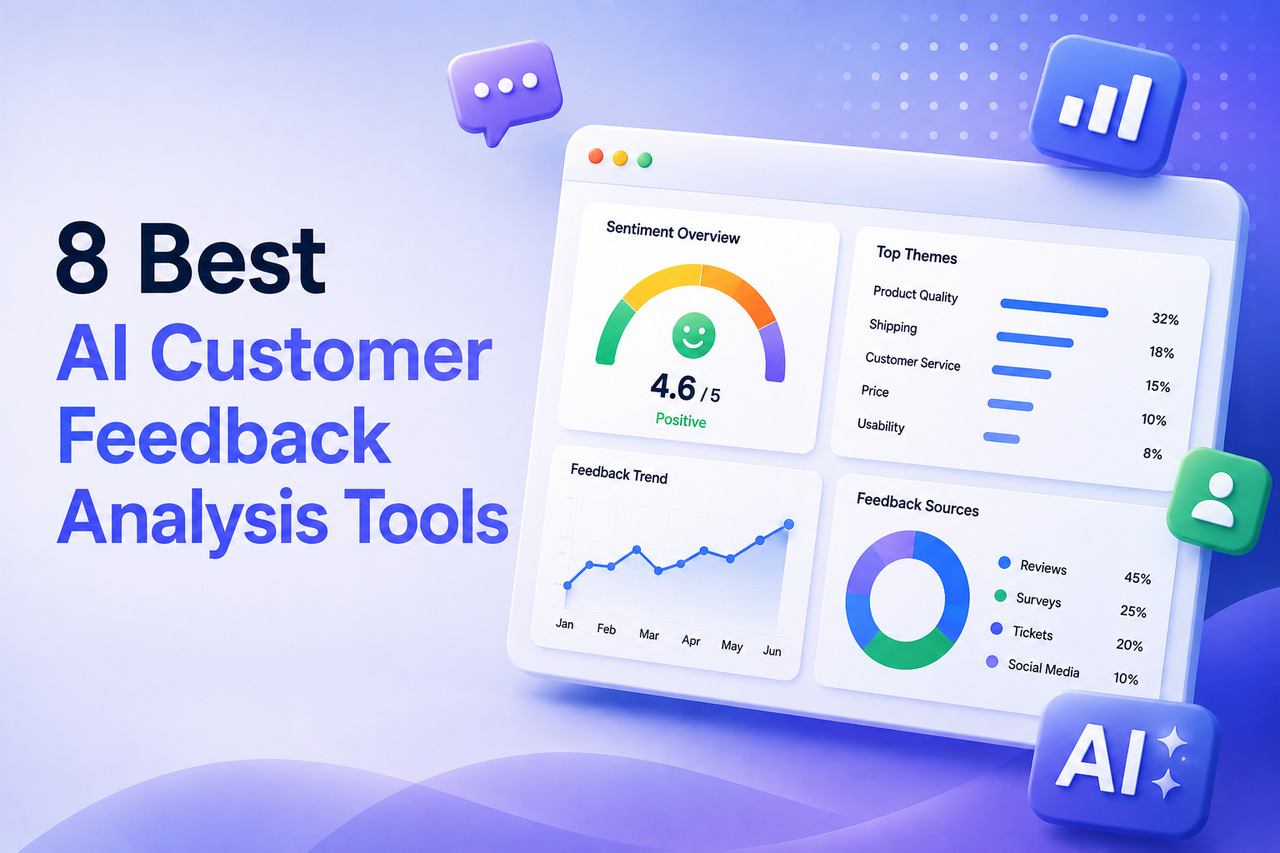
Customer feedback is everywhere — from reviews and support tickets to surveys and social media comments. The challenge isn't collecting it, but turning it into actionable insights.
AI customer feedback analysis tools can automatically identify sentiment, detect recurring issues, and surface trends that would take teams hours to uncover manually.
In this guide, we compare eight of the best AI customer feedback analysis tools in 2026 based on features, integrations, and ideal use cases.
Quick Recommendations
Use Case | Top Pick |
Cross-border e-commerce | |
Product-led B2B/SaaS | Enterpret |
Enterprise CX | Qualtrics XM Discover |
UX research | Dovetail |
Small to mid-size teams | Viable |
Best AI Customer Feedback Analysis Tools at a Glance
Tool | Best For | Key Features | Main Trade-off |
Cross-border e-commerce VOC | review analysis, sentiment scoring, UGC mining | Newer to feedback analysis; broader ad/creative platform | |
Enterpret | Product-led B2B/SaaS | Customer Context Graph, adaptive taxonomy, MCP server | B2B-focused; limited multilingual support |
Chattermill | Enterprise CX at scale | 90+ integrations, aspect-based sentiment, 99+ languages | No self-serve; requires high feedback volume |
Thematic | CX teams with existing stack | Theme discovery, predictive NPS/churn, SOC 2 Type II | Needs mature feedback data sources to shine |
Viable | Product managers & UX teams | GPT-4 powered analysis, 50+ languages, plain-English summaries | English-centric accuracy; needs data volume |
Dovetail | Research repository & qualitative analysis | AI transcription, tagging, semantic search, 75 languages | Free plan limited; research-focused, not high-volume |
Qualtrics XM Discover | Enterprise omnichannel VoC | Conversational Feedback, multi-channel text analytics | Complex implementation; enterprise-only |
Lumoa | Mid-market impact analysis | AI impact scoring, 60+ languages, real-time alerts | Higher starting price; analysis over collection |
Top 8 AI Customer Feedback Analysis Tools Reviewed
1. Navos
Navos is an AI marketing platform that helps e-commerce brands analyze reviews and turn customer feedback into marketing insights.
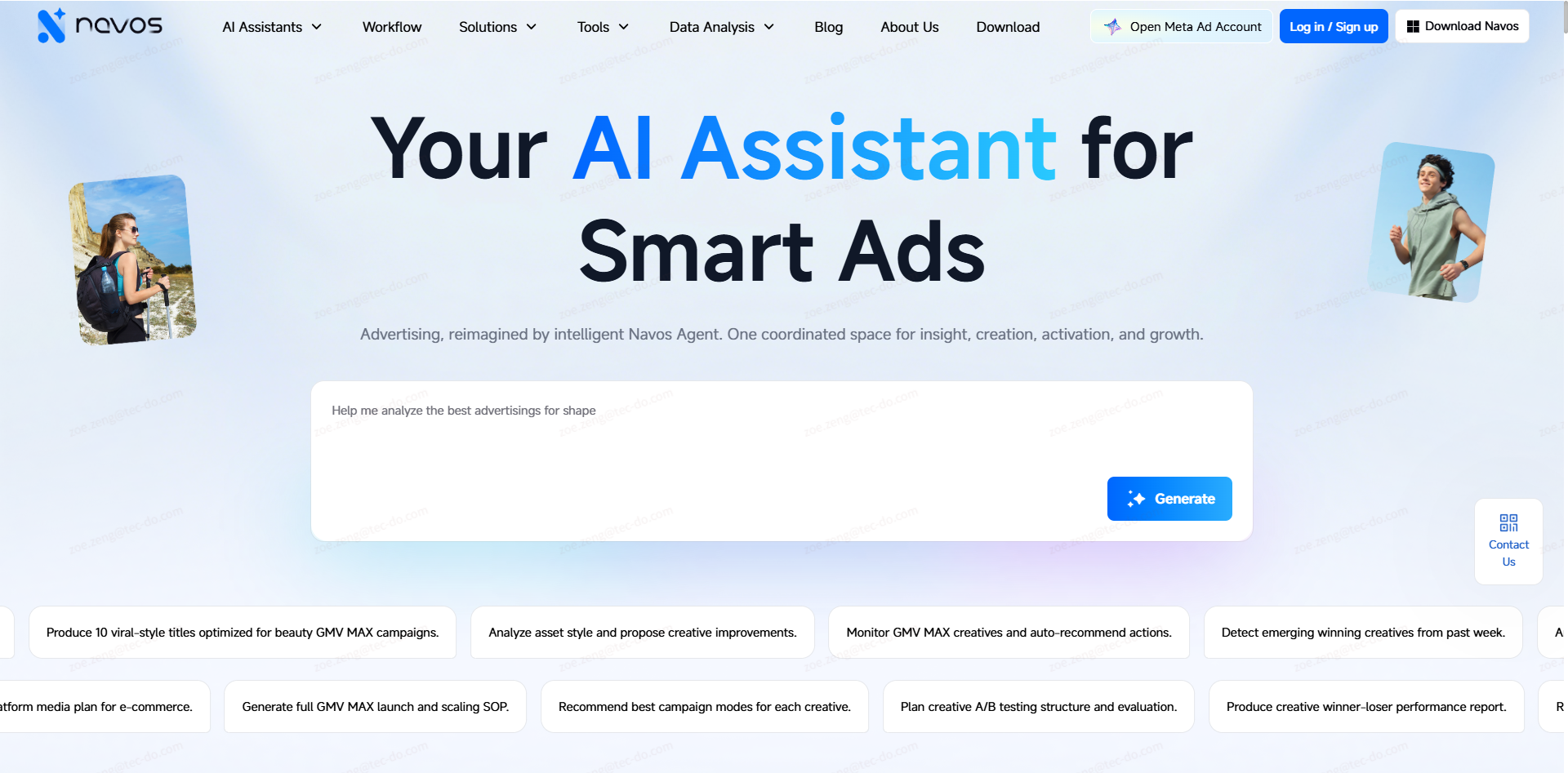
Navos turns Amazon reviews into actionable marketing insights with AI.
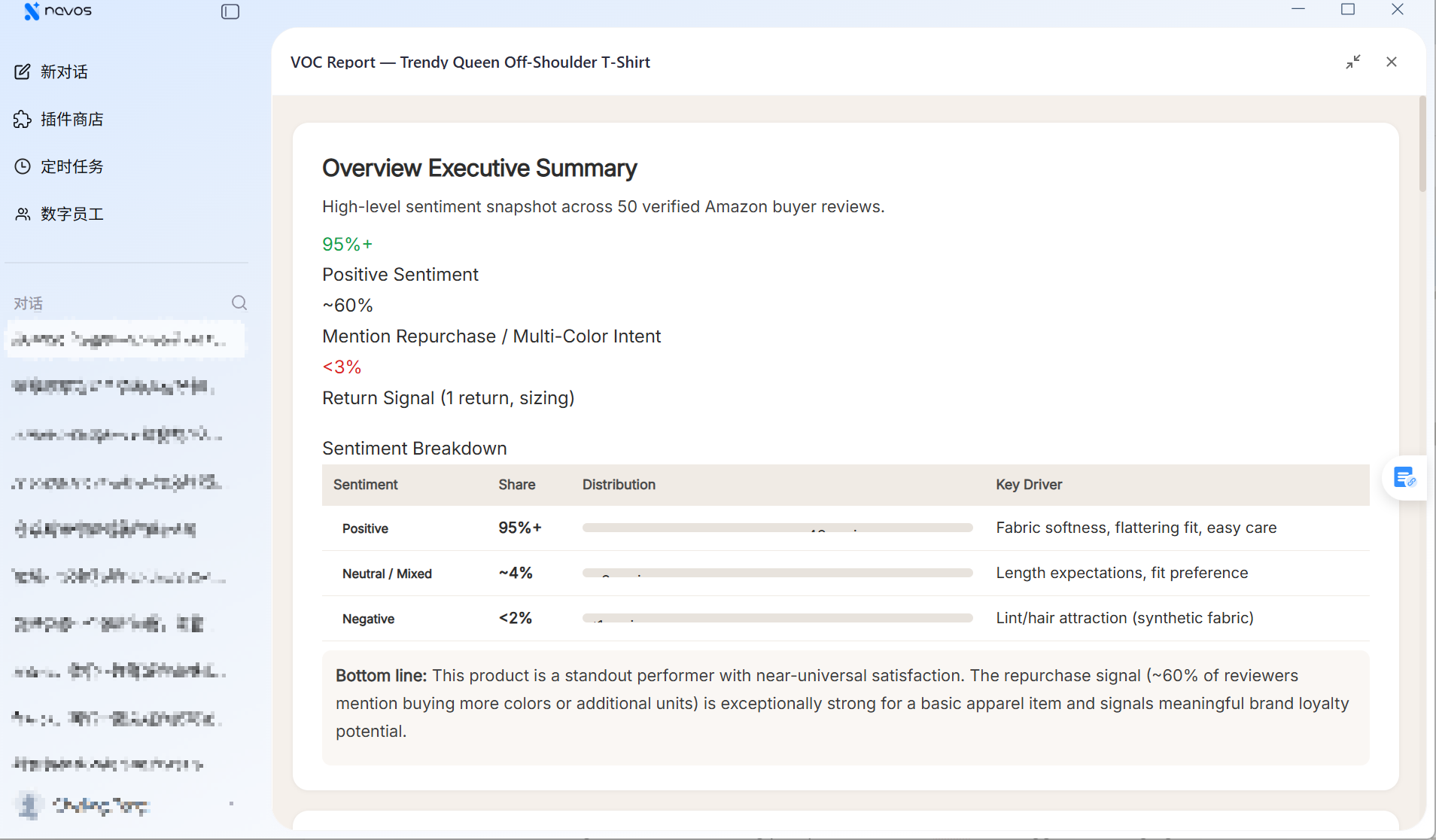
Why we picked it: Instead of only summarizing customer feedback, Navos connects review analysis with e-commerce marketing. It identifies recurring pain points, extracts UGC, and suggests messaging ideas that marketers can immediately use in ads or product pages.
Pros:
- review analysis with sentiment scoring
- Pain point detection with severity levels
- UGC extraction for ad creative
Cons:
- Focused primarily on e-commerce
- Fewer feedback channels than enterprise VoC platforms
2. Enterpret
Enterpret is a customer intelligence platform that connects every piece of feedback to the individual customer who left it.
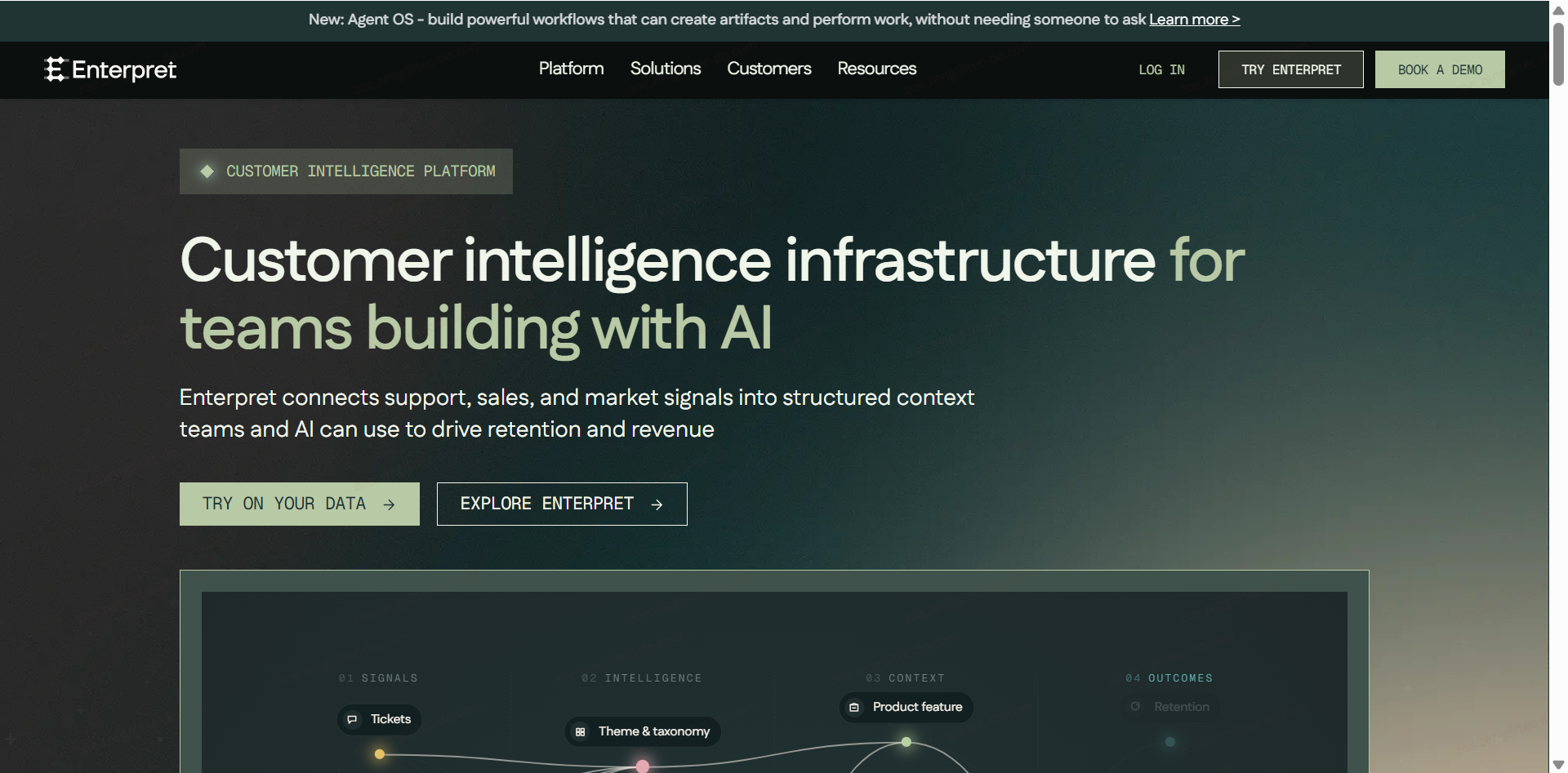
Why we picked it: Enterpret's Customer Context Graph links feedback to account details, usage patterns, and deal status — making it uniquely powerful for B2B SaaS teams that need to understand not just what customers say, but who's saying it and how it affects retention. Its adaptive taxonomy auto-classifies feedback without manual re-coding, and the MCP server enables AI workflows inside Claude, ChatGPT, and Slack.
Pros:
- Customer Context Graph for account-level analysis
- Adaptive taxonomy eliminates manual tagging
- MCP server for AI workflow integration
Cons:
- Built for B2B/SaaS, not ideal for high-volume B2C
- No self-serve tier or free trial
3. Chattermill
Chattermill is a customer experience analytics platform built for high-volume, multi-source feedback unification.
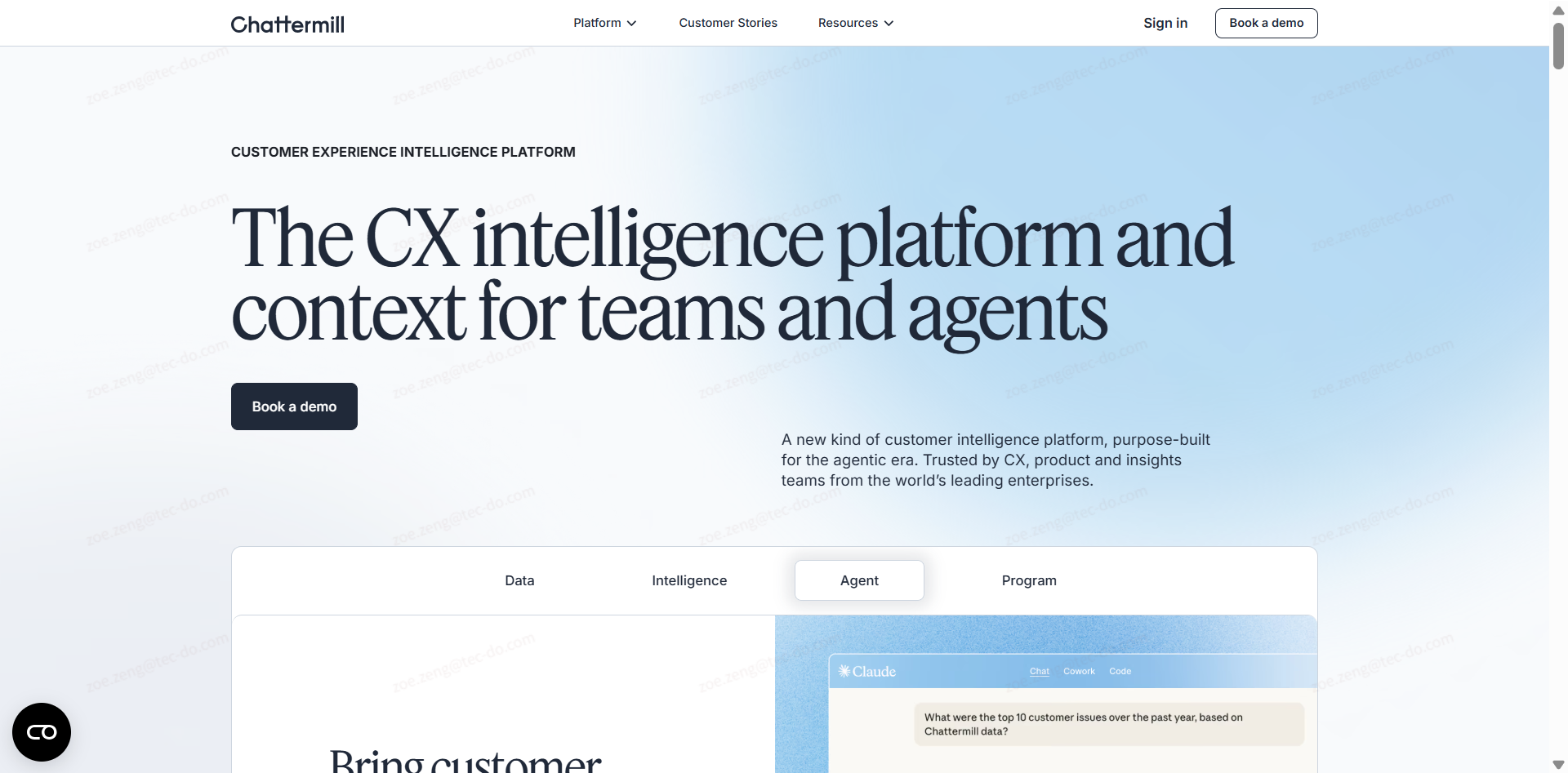
Why we picked it: Chattermill offers the broadest native integration coverage among the tools we assessed — 90+ connections across CX, support, survey, social, and app review channels. Its aspect-based sentiment analysis scores sentiment at the topic level within each response, and it processes feedback in 99+ languages natively. Customers include Uber, HelloFresh, and Booking.com.
Pros:
- 90+ native integrations
- Aspect-based sentiment analysis in 99+ languages
- Custom-trained AI models per customer
Cons:
- No self-serve tier; requires sales conversation
- Recommends minimum 5,000 feedback items/month
4. Thematic
Thematic automatically discovers themes in customer feedback without any manual tagging or setup.
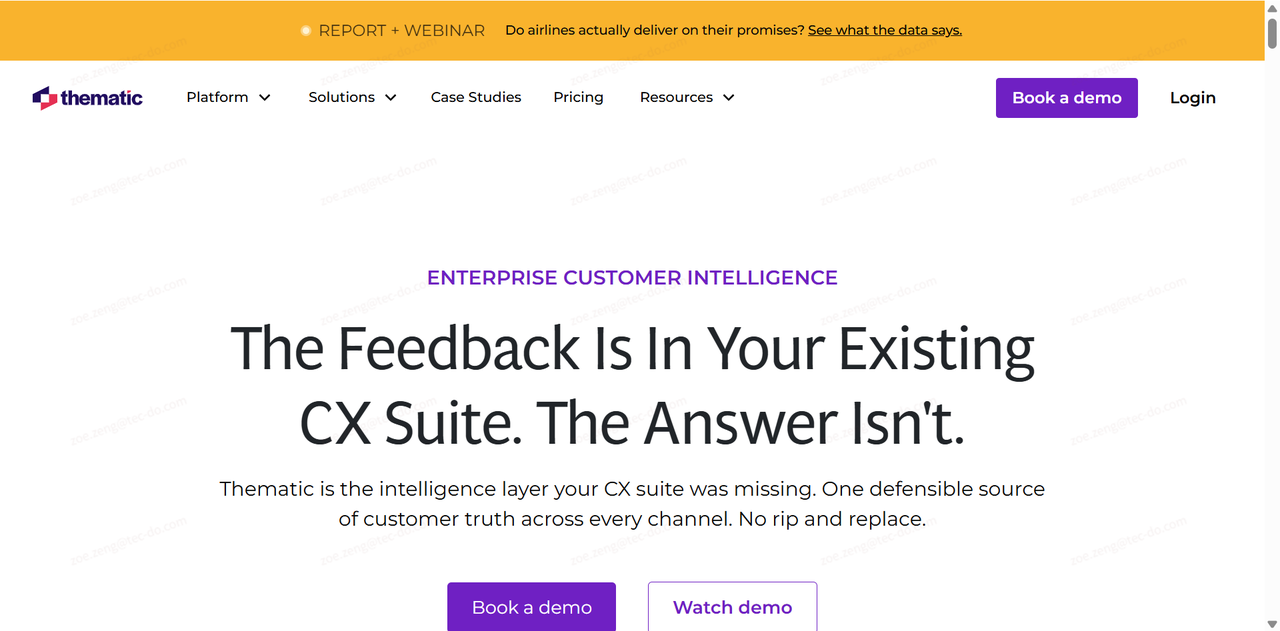
Why we picked it: Thematic auto-discovers themes from customer feedback without manual taxonomy setup and generates predicted NPS and churn scores from unstructured text alone. A Forrester TEI commissioned study documented 543% ROI for a composite organization. It connects to Qualtrics, Medallia, CSV, APIs, SurveyMonkey, and Zendesk — but without mature feedback data sources, its advantages can't be fully realized.
Pros:
- Forrester-verified 543% ROI
- Predictive NPS and churn scoring from text alone
- SOC 2 Type II certified
Cons:
- Requires existing feedback data sources
- Enterprise-only pricing with no public rate card
5. Viable
Viable uses GPT-4 to turn unstructured customer feedback into plain-English insights for product teams.
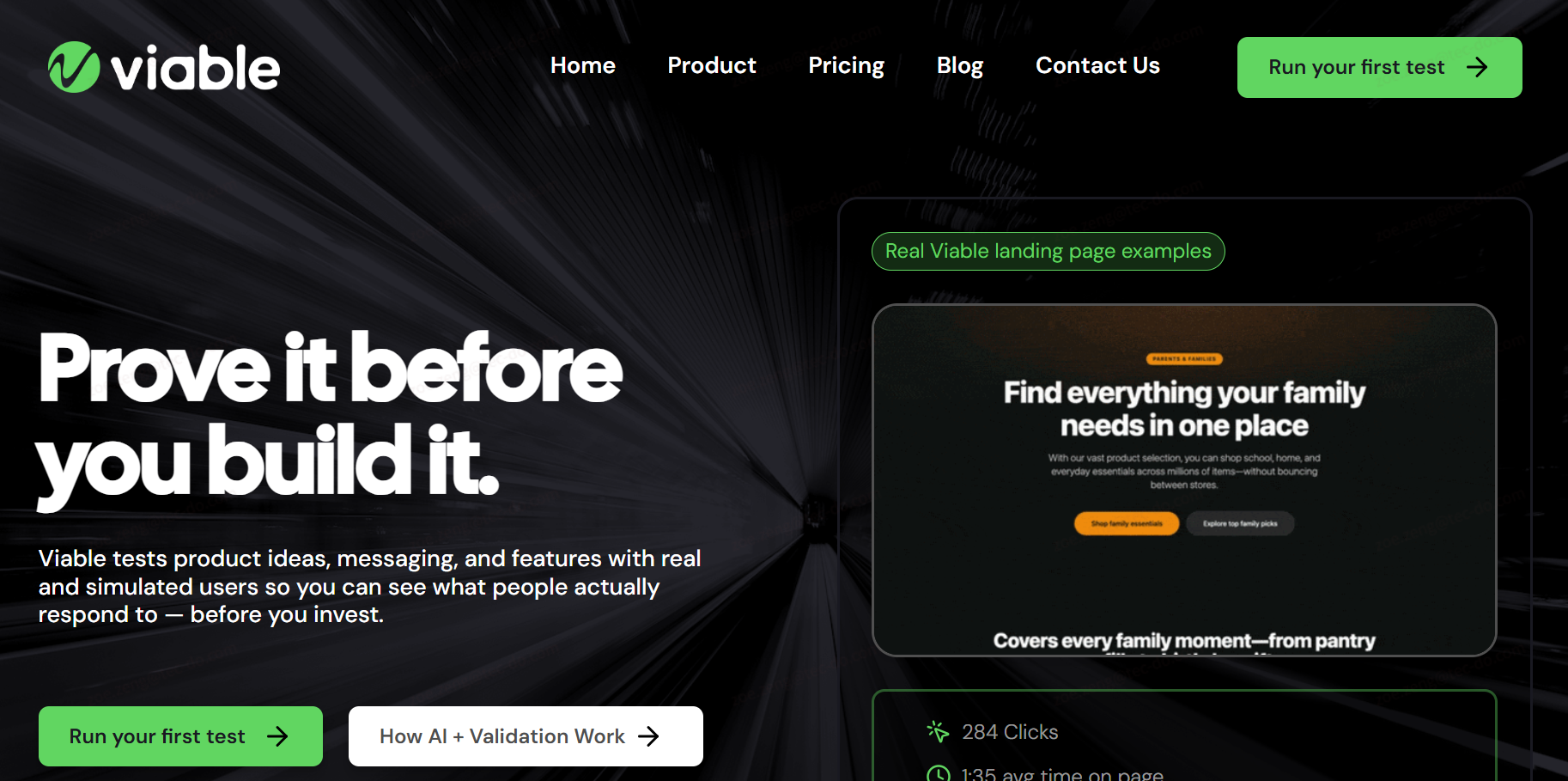
Why we picked it: Viable was one of the first platforms to leverage GPT-4 for customer feedback analysis. It connects to Zendesk, Intercom, HubSpot, and Salesforce, then generates executive summaries identifying the bugs, features, or pricing issues driving churn. Analysis that traditionally took days completes in minutes, with support for 50+ languages.
Pros:
- GPT-4 powered analysis with context-aware insights
- Transparent tiered pricing ($250–$500/mo)
- 50+ language support
Cons:
- English feedback yields highest accuracy
- Analyze-only platform — cannot collect new feedback
6. Dovetail
Dovetail is an AI-powered research repository that turns interviews, surveys, and support tickets into searchable intelligence.
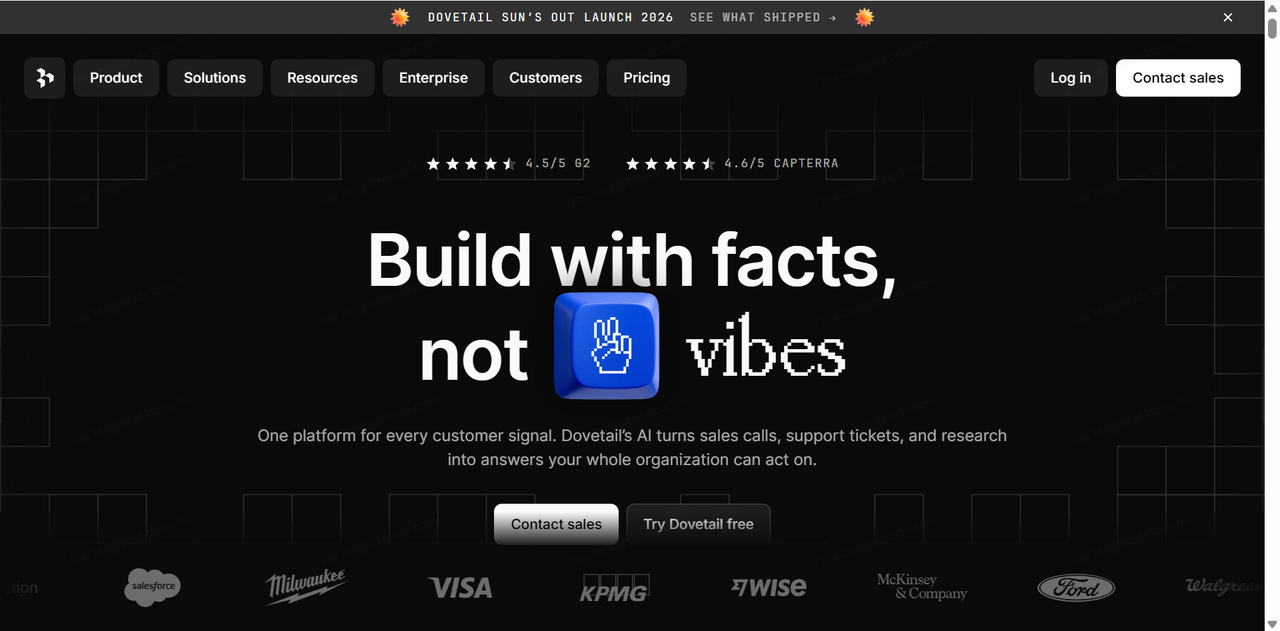
Why we picked it: Dovetail combines transcription with speaker identification, automated theme extraction, and natural-language search across your entire research library. AI Docs generate PRDs and VoC reports with verifiable citations. A Forrester commissioned study found 2.3x ROI. According to Dovetail, 40% of the Fortune 500 use the platform. Customers include Meta, Volvo, and AWS.
Pros:
- Combines research repository, AI analysis, and collaboration
- Strong compliance (SOC 2, ISO 27001, HIPAA, GDPR)
- 60-day free trial with full access
Cons:
- Free plan limited to one channel and one project
- Optimized for research, not high-volume monitoring
7. Qualtrics XM Discover
Qualtrics XM Discover is the text analytics engine inside the broader Qualtrics experience management platform.
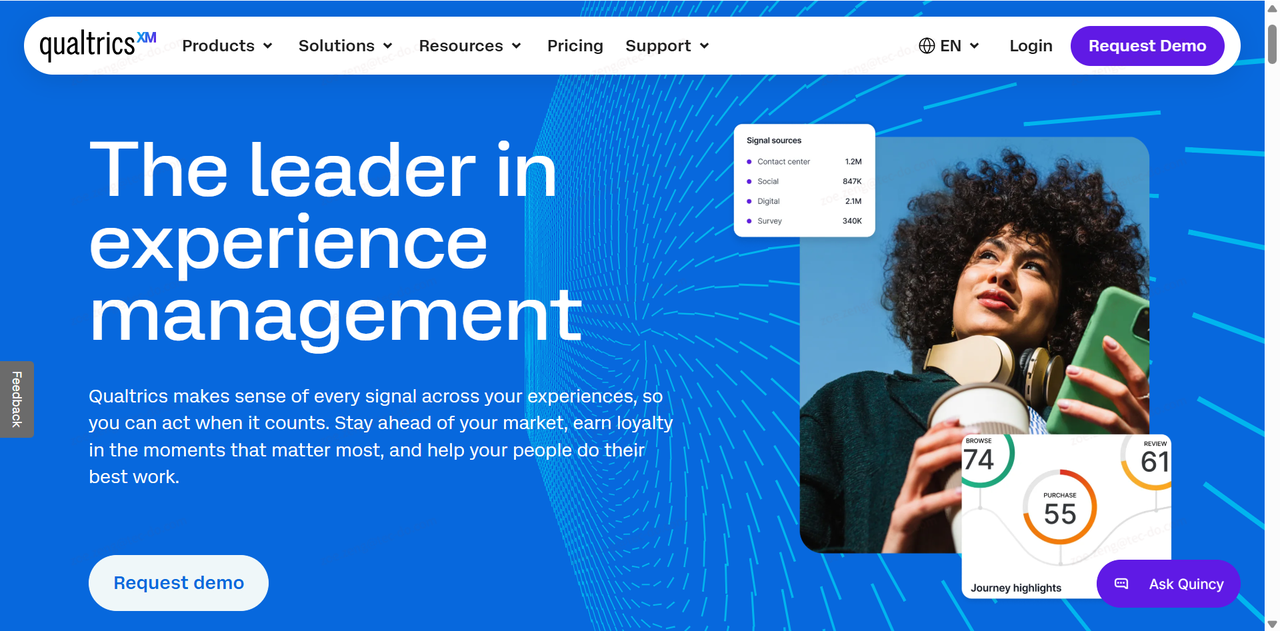
Why we picked it: Qualtrics handles sentiment analysis, topic detection, and text classification across voice, chat, email, social media, and surveys — the broadest experience management ecosystem available. Its Conversational Feedback feature prompts 40% of respondents to expand their answers. The platform connects customer, employee, brand, and product data in one ecosystem and holds Leader positions in Gartner and Forrester reports.
Pros:
- Broadest experience management ecosystem
- Conversational Feedback enriches survey data
- Gartner and Forrester Leader recognition
Cons:
- Complex implementation requiring dedicated XM team
- Enterprise-only pricing; steep learning curve
8. Lumoa
Lumoa is an AI feedback analysis platform that quantifies how much each theme influences NPS and CSAT scores.
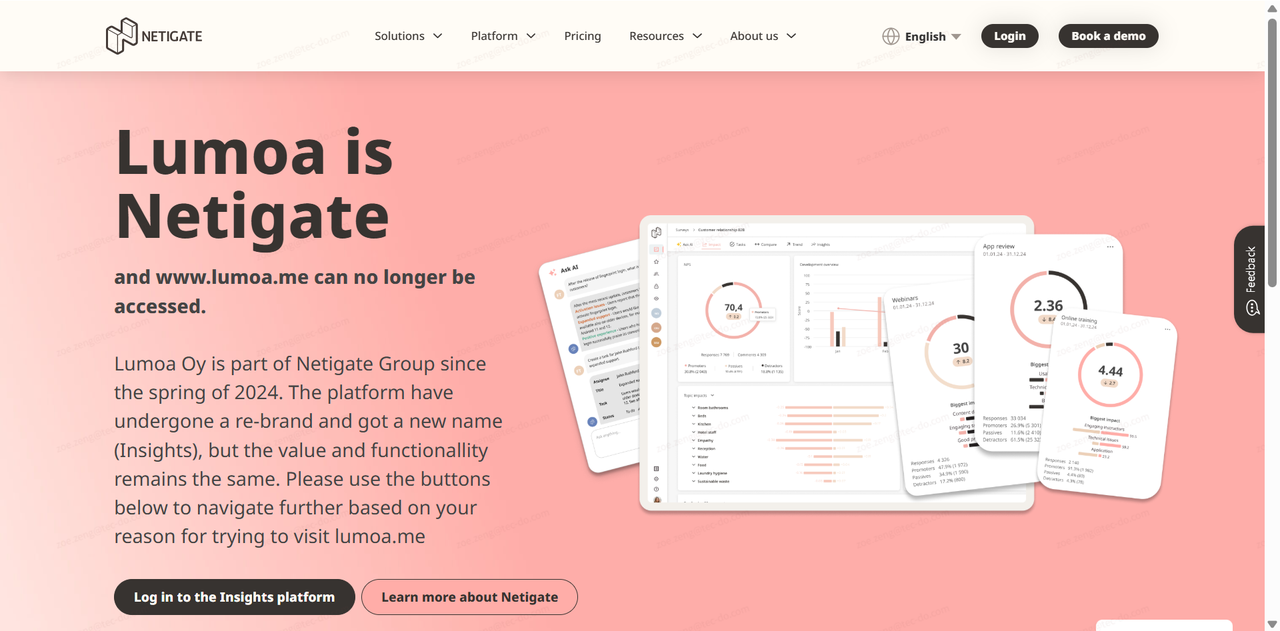
Why we picked it: Lumoa's impact analysis is its core differentiator — a theme driving 40% of score variation gets prioritized over one that's mentioned more often but has minimal impact. It consolidates feedback from surveys, tickets, reviews, and chat transcripts, with support for 60+ languages and real-time trend alerts when scores shift unexpectedly.
Pros:
- Impact analysis quantifies each theme's score influence
- Cleaner, more accessible interface than enterprise alternatives
- 60+ language support
Cons:
- Higher starting price for mid-market (~$555/mo)
- Better at analysis than collection
How to Choose an AI Customer Feedback Analysis Tool
Accuracy
Basic sentiment analysis assigns positive, negative, or neutral labels. The best tools in 2026 go further with aspect-based sentiment analysis (ABSA) — scoring sentiment at the topic level within each response. A review that says "great fabric but runs large" contains both positive and negative sentiment. GPT-4 powered tools handle sarcasm and negation better than traditional NLP.
Integrations
Feedback lives everywhere — Amazon reviews, Zendesk tickets, Qualtrics surveys, TikTok mentions. The best tools unify these sources into a single view with consistent tagging. Chattermill leads with 90+ native integrations. Map your actual feedback sources first, then check which tools connect natively.
Actionable Insights
Analysis without action is just reporting. The best tools push insights to where teams already work — Slack, Jira, Salesforce — rather than requiring another dashboard login. Navos turns reviews into marketing recommendations, Enterpret triggers follow-up workflows, and Dovetail generates cited product documents.
How to Test AI Feedback Analysis Tools on Your Own Reviews
A polished summary is not enough to choose an AI feedback analysis tool. Test shortlisted tools on the same review sample and check whether their conclusions can be traced back to the original feedback.
1. Prepare one consistent sample
Use feedback you are authorized to process. Include a unique review ID, date, product or SKU, source, and the original text. Remove duplicates and redact names, emails, order numbers, and other personal information before uploading. Use only a tool approved for that data.
Keep the product scope, date range, and sample size the same across tools. A support-ticket sample and a product-review sample may surface different issues; do not compare their theme percentages as if they describe the same customer population.
2. Check themes against the original text
Ask each tool to identify themes and sentiment for each aspect of a review, not just assign one overall sentiment label. For example, “The fabric feels great, but the size runs small” is a fictional illustration: positive sentiment about fabric and negative sentiment about sizing belong in separate categories.
For each theme, require supporting review IDs and exact excerpts. Count unique feedback items, not repeated words. One item may mention several themes, so theme percentages do not have to add up to 100%. Label them as shares of the analyzed sample, not shares of all customers.
3. Separate findings from actions
A sizing complaint is evidence to investigate the fit, size chart, or customer expectations—not proof that new ad copy will increase sales. Review the cited feedback, check the underlying issue, and assign an owner before deciding what to change.
Choose one action hypothesis at a time. For a sizing question, that might be a clearer size-guide explanation, but only after checking the product measurements. Validate with an appropriate outcome, such as sizing-related support contacts or return reasons, where those data are available. Do not infer sales impact from review frequency alone.
4. Use a repeatable test prompt
Paste the following prompt into a tool that can process your authorized feedback file:
Analyze only the customer feedback in the supplied file. First list the available columns, date range, missing data, duplicate records, and number of unique feedback items. Explain your deduplication rule; flag uncertain matches rather than silently removing them.Identify themes and aspect-level sentiment. For every theme, report the number of unique supporting feedback items, its share of the analyzed sample, exact excerpts, and review IDs. An item may belong to multiple themes. State the denominator and explain that theme shares may exceed 100% in total.Return a table with: Theme | Unique feedback items | Share of sample | Supporting excerpts and IDs | Uncertainty | Next verification step | Suggested owner.Separate observed findings from action hypotheses. Do not invent quotes, counts, customer prevalence, ROI, or performance improvements. Do not claim that a theme caused returns, churn, or lower sales unless the supplied data support that conclusion. If a field or calculation is unavailable, say so. Finish with one action to investigate first and the evidence required before implementing it.
Compare the outputs on traceability, counting accuracy, treatment of mixed sentiment, and usefulness of the next verification step. If a tool cannot process the file or expose supporting feedback, record that limitation instead of treating its summary as verified analysis.
Why E-commerce Brands Need AI Feedback Analysis
E-commerce brands generate feedback at a volume manual analysis can't match. A single Amazon listing can accumulate hundreds of reviews monthly. Brands selling across Amazon, Shopify, and TikTok Shop face feedback scattered across platforms, in multiple languages, arriving 24/7.
AI feedback analysis solves three problems: Speed — what took a week now takes minutes. Prioritization — tools like Lumoa and Thematic quantify which issues actually drive returns or churn, so teams fix what matters most. Actionability — Navos generates marketing recommendations from review analysis, turning feedback into a growth engine rather than a reporting exercise.
Frequently Asked Questions
What is AI customer feedback analysis?
AI customer feedback analysis uses NLP and large language models to automatically read, categorize, and extract insights from unstructured feedback — reviews, tickets, surveys, and call transcripts. AI tools can significantly reduce manual effort by surfacing themes, scoring sentiment, and identifying pain points.
Can ChatGPT analyze customer feedback?
ChatGPT can summarize and categorize feedback for small-scale tasks, but it lacks multi-channel data ingestion, custom-trained sentiment models, continuous monitoring, and integrations with business systems. For teams processing hundreds of feedback items monthly, a purpose-built tool delivers more consistent and actionable results.
How do I choose the right AI feedback analysis tool?
Start with three questions: How much feedback do you have? Where does it live? What do you want to do with the insights? E-commerce brands may prefer tools like Navos that connect review analysis to marketing action. B2B SaaS teams may need account-level feedback tracking like Enterpret. Enterprise teams may require the breadth of Qualtrics or Chattermill.