
By 2025, the global programmatic advertising market had reached $689.66 billion, and it is expected to climb to $766.2 billion by 2026, maintaining a compound annual growth rate of 12%. This huge figure not only represents a structural transformation in the advertising industry, but also reflects an irreversible trend: automated, algorithm-driven, data-centered digital media buying has fully replaced traditional human-led ad trading.
Only a decade ago, the digital ad buying process was rudimentary—advertisers and publishers had to complete campaigns through long manual steps like phone calls, emails, contract negotiations, and insertion orders, a process that could take days or even weeks. Programmatic advertising has compressed all that into milliseconds: the moment a user opens a webpage or app, an algorithm-driven real-time auction has already taken place, delivering the most suitable ad at the best price to the most relevant audience, with no human intervention required.
This article will give you a comprehensive analysis of programmatic advertising’s central role in today’s digital marketing ecosystem. Starting from a definition of programmatic advertising, it will explore its technical architecture and workflows, provide a systematic understanding of different types of programmatic transactions and their use cases, map the capabilities and service features of mainstream programmatic platforms in 2026, and ultimately explain how artificial intelligence fundamentally reshapes programmatic workflows and efficiency boundaries.
Programmatic Advertising Definition
Programmatic advertising refers to a modern ad-trading model that uses software platforms, AI algorithms, and Real-Time Bidding (RTB) technology to automate the buying and selling and placement of digital advertising inventory. This definition includes three inseparable core dimensions: automated execution, real-time bidding mechanisms, and data-driven decision logic. Together they form the technical foundation that distinguishes programmatic advertising from any other ad-buying approach.
- Automation means the full chain—from selecting ad inventory, negotiating prices, and signing contracts to final delivery and performance monitoring—is handled by systems, with humans only providing strategic guidance and intervention.
- Real-time bidding gives each ad impression an independent price. Advertisers no longer need to pay for inventory by the month or volume; instead they bid for each actual opportunity to reach a target audience, enabling fine-grained management of ad budgets.
- Data-driven operations are the fuel of the whole system—based on multidimensional data such as user demographics, browsing history, geographic location, device type, purchase-intent signals, and even real-time contextual cues, the system makes precise, split-second judgments about whether an impression is worth bidding on and how much to bid.
The scope of programmatic advertising has long since outgrown the display banners people first associate with it. Today, programmatic technology permeates nearly every form of digital advertising:
- Programmatic display advertising remains the most mature category, allowing brands to achieve large-scale, precisely targeted reach across millions of websites and apps.
- Programmatic video advertising is growing rapidly; advertisers can buy pre-roll, mid-roll, and post-roll video inventory on streaming platforms via real-time bidding.
- Programmatic native advertising enables ad content to visually and contextually integrate with the publisher’s environment, improving engagement while preserving a natural user experience.
- The programmatic revolution in connected TV (CTV) is particularly notable. As more viewers shift from traditional cable to smart TVs and streaming devices, programmatic technology gives TV—once dominated by bulk buys for big clients—digital capabilities for household-level targeting and performance attribution.
- Even promotional content on social media advertising platforms has, to some extent, adopted programmatic delivery logic—though many social platforms remain relatively closed ecosystems, their underlying operations still rely on automated audience matching and dynamic bidding mechanisms.

Traditional Ad Buying vs. Programmatic Ad Buying
To truly grasp the disruptive value of programmatic advertising, the most direct way is to compare it side-by-side with traditional ad buying.
Traditional digital ad buying relies entirely on manual processes: ad operations teams contact publishers or ad networks one by one to negotiate inventory, price, and schedules; after signing an Insertion Order, technicians manually configure delivery settings and upload creative assets to the ad server. Adjusting a campaign often means reopening rounds of communication and approvals, and because real-time data is lacking, advertisers may only discover after the campaign ends that budget allocation missed the target audience.
In contrast, programmatic advertising hands the entire buying and delivery process to algorithms—systems automatically bid and serve an ad each time an impression opportunity appears, based on pre-set audience profiles, budget constraints, and bidding strategies. Human involvement is limited to strategic setup and oversight.
The table below compares the two models across six key dimensions to help you quickly understand their core differences:
Comparison Dimension | Traditional Ad Buying | Programmatic Advertising |
Decision-making | Manual negotiation and coordination, relying on sales relationships and subjective judgment; long decision cycles involving multiple parties | Algorithmic, automatic decisions based on data and preset rules; real-time judgments and millisecond-level transaction decisions |
Pricing mechanism | Fixed rate cards or negotiated discounts, sold in bundles by inventory and time slot; prices are relatively rigid and inflexible | Real-time bidding with dynamic pricing; each impression is priced independently, reflecting immediate supply, demand, and audience value |
Audience targeting | Broad targeting based on media content and channel characteristics; reaches approximate demographic groups but cannot identify individuals | Precise targeting using user-level data, leveraging behavioral, interest, and intent signals to identify target individuals |
Execution timeline | From negotiation to execution usually takes weeks, involving contracts and asset handoffs | Once set, campaigns can start immediately without prior negotiation or contracting; can be launched or paused at any time |
Optimization capability | Campaign changes constrained by contracts; optimization depends on manual analysis and periodic adjustments, with delayed response | Real-time data feedback and automated optimization; algorithms continuously learn and adjust strategies, enabling rapid optimization |
Transparency | Limited and delayed data disclosure; inconsistent cross-media metrics make comprehensive evaluation difficult | Detailed impression-level data and unified reports; delivery process and funds flow are highly transparent and traceable |
Scalability | Each new media channel requires repeated negotiation; scaling is limited by manpower and relationship resources | Accesses massive media resources through a unified platform; scaling only requires increasing budget without additional coordination |
Programmatic advertising not only dramatically improves the efficiency of ad transactions but also fundamentally changes how ad performance is measured. Under traditional buying, the advertiser’s optimization logic is “run the campaign, read the report, adjust next time.” Programmatic advertising enables “every impression learns and evolves”—this real-time closed-loop optimization is an advantage manual processes can never match.
How Does Programmatic Advertising Work?
Key Roles Explained
The programmatic ecosystem depends on close collaboration among multiple technical platforms. Understanding these key roles is essential to grasping how programmatic advertising operates.
1. Demand-Side Platform
A Demand-Side Platform (DSP) is the primary interface for advertisers and agencies. It connects to vast ad inventory, allowing buyers to bid on impressions in one place based on audience targeting, budget constraints, and bidding strategies. DSPs add value by aggregating multi-channel inventory and by using intelligent algorithms to analyze the user data behind each impression to assess how well it matches the advertiser’s target audience, deciding whether to bid and how much to bid.
2. Supply-Side Platform
A Supply-Side Platform (SSP) serves publishers and media owners, helping them manage the sale and pricing of their ad inventory. Its core goal is to sell each impression at the highest effective price. SSPs send publisher impression opportunities to multiple ad exchanges and DSPs, inviting more buyers to bid and maximizing inventory yield.
3. Ad Exchange
An Ad Exchange functions like a stock exchange, matching DSPs and SSPs. It receives impression requests from SSPs and opens auctions to many DSPs via real-time bidding, returning the winning ad to the page the user is visiting.
4. Data Management Platform
A Data Management Platform (DMP) is the data hub of the ecosystem, collecting, integrating, and analyzing first-, second-, and third-party data to build refined audience segments and tags. It helps advertisers achieve more accurate audience targeting within the DSP.
Real-Time Bidding Process Steps
Real-time bidding (RTB) is the core mechanism behind programmatic advertising operations. Although complex algorithms and data exchanges operate behind the scenes, the whole process can be clearly broken down into four key steps along a timeline, all completed in the tiny fraction of time it takes a user to load a webpage.
Step 1: User visits a website or app.
The moment a user opens a webpage or launches a mobile app, device cookies, device IDs, and other available behavioral signals are immediately activated. These signals carry rich information about the user—recent browsing history, location, device model, language preferences, and potential purchase intent. This information does not include personal identity; instead, it describes an anonymous, tagged “digital persona” of the user currently viewing the media, providing crucial input for ad matching.
Step 2: The ad exchange platform creates a bid request.
When a publisher’s SSP detects an ad opportunity, it instantly sends a bid request to the ad exchange containing user data, ad slot specifications, media context, floor price, and other parameters. The ad exchange then launches a real-time auction to all connected DSPs, broadcasting the basic details of the opportunity to potential buyers. Multiple advertisers’ DSPs receive this invitation simultaneously, and each must decide within a very short time whether to participate.
Step 3: Demand-side platforms (DSPs) bid automatically.
Upon receiving the bid request, each advertiser’s DSP performs a series of complex calculations in milliseconds: it first assesses how well the request’s user data matches the advertiser’s target audience, then factors in bidding strategy, budget pacing, and historical conversion data. Using machine learning models, the DSP predicts the likely value of this impression and generates an optimal bid amount to submit to the ad exchange. If a user closely matches an advertiser’s audience, the DSP may bid higher to win the impression; if the match is weak or the budget is near its limit, the DSP may decline to bid or lower its bid.
Step 4: The winning ad is delivered instantly.
After collecting all DSP bids, the ad exchange determines the winner and returns the creative asset’s URL to the SSP, which or the ad server then loads and renders the ad. The entire sequence—from bid request to ad appearing on the user’s screen—typically completes within 100 milliseconds, so the user sees a highly relevant ad without noticing the process. This speed often means the ad is targeted and delivered before other page content has fully loaded.
Types of Programmatic Advertising
Programmatic advertising isn’t a single transaction type. Depending on inventory openness, pricing mechanisms, and the certainty of trading partners, four complementary transaction types have evolved. Understanding these differences is essential for advertisers building informed media-buying strategies.
1. Real-Time Bidding (RTB)
RTB is the most well-known and widely used programmatic transaction method. It operates in a fully open public auction environment where any qualified advertiser can compete for any available ad impression. The core characteristic of RTB is an “one-to-many” open market: one impression is simultaneously available to many buyers, and the highest bidder wins the placement. The main advantage is breadth of inventory and cost efficiency—advertisers can access vast media resources across the internet, and the auction mechanism keeps the actual transaction price near an optimal supply-demand level. However, the open market also brings challenges: advertisers have less control over media quality, and brand safety risks and ad fraud are relatively higher.
2. Private Marketplace (PMP)
A Private Marketplace (PMP) builds on RTB’s real-time auction mechanics but adds an access-control layer—publishers designate premium inventory as a semi-closed environment limited to invited buyers. Unlike RTB’s “anyone can bid” openness, PMP invitations go only to advertisers pre-approved by the publisher. The commercial value of PMP lies in greater transparency and higher-quality media for advertisers, while publishers can protect premium inventory pricing and brand tone, avoiding the risk of mixing quality inventory with low-quality ad content in the open market.
3. Preferred Deals
Preferred deals are a hybrid between open auctions and direct buying. Their key feature is skipping the real-time auction: advertisers and publishers pre-negotiate and lock in a fixed CPM (cost per thousand impressions). When an impression becomes available, the advertiser has the first right to buy at the pre-agreed price—choosing to buy or pass and let the impression enter the open auction. For advertisers seeking premium placements but wanting predictable budgets, preferred deals offer a balance of flexibility and certainty, enabling brands to reach core audiences while controlling costs.
4. Programmatic Direct
Programmatic Direct is the type most similar to traditional direct media buying among the four models. It applies programmatic automation to the purchase of reserved inventory. In this model, advertisers and publishers use automated programmatic interfaces to complete inventory reservations, contract signing, and campaign execution. Price and volume are agreed upon in advance, with no bidding involved. Programmatic Direct is suitable for large-brand advertisers with very high media environment requirements—for example, major brand campaigns that need to ensure ads run on specific media, at specific times, and in specific placements. It preserves the certainty of traditional direct buys while significantly reducing the friction and labor costs of negotiation and operations through automation.
To help readers more intuitively understand the differences among the four types, the table below summarizes them across three dimensions:
Transaction Type | Applicable Scenarios | Pricing Model | Transparency & Control |
Real-Time Bidding (RTB) | Scale coverage, performance-driven campaigns | Open auction, dynamic pricing | Lower inventory transparency, limited control |
Private Marketplace (PMP) | High brand-safety needs, premium media environments | Invitation-only auction, floor price | Controllable media quality, visible inventory info |
Preferred Deals | Balance of premium inventory and predictable budgeting | Fixed CPM, non-auction | Priority purchase rights, high delivery certainty |
Programmatic Direct | Large brand campaigns, locking specific media placements | Fixed price and quantity | Highest control, fully transparent inventory |
Advantages and Disadvantages of Programmatic Advertising
Core Advantages
Programmatic advertising rose from an experimental technology to the mainstream foundation of ad buying within a decade because it delivers four core advantages that traditional buying can’t match at the same cost.
- Precise targeting is the capability advertisers value most: by analyzing and cross-matching real-time user behavior data, interest tags, geography, device usage patterns, and signals of purchase intent, advertisers can narrow the audience from a vague “people who might be interested” to “people with a high probability of converting,” greatly reducing wasted ad spend on irrelevant audiences.
- Efficiency gains come from automating the entire workflow—from buying and delivery to bidding and reporting. Tasks that used to take operations teams days to set up across multiple media, creatives, and audience combinations can now be managed and deployed in hours through a DSP interface.
- Real-time optimization gives programmatic ads the ability to continuously improve: as the system accumulates impressions, clicks, and conversions during a campaign, machine learning algorithms dynamically adjust bidding strategies, targeting rules, and creative mixes so performance steadily improves over the campaign rather than remaining static.
- Scale expansion lets programmatic advertising break through traditional media procurement silos. With one DSP, advertisers can reach cross-channel global audiences across display networks, video platforms, connected TV, digital audio, and mobile apps—achieving true omnichannel integrated campaigns.
Challenges
Despite its clear advantages, programmatic advertising faces several significant structural challenges as it grows rapidly. Each challenge is not just a technical issue but a systemic problem that deeply affects advertisers’ commercial outcomes and brand assets.
1. Ad Fraud
Ad fraud is one of the most persistent and costly problems in the programmatic ecosystem. Fraudsters use bots to simulate human browsing and clicking, generating massive fake traffic and invalid impressions, causing advertisers to pay real money for ads never seen by real users. Industry research shows up to 12% of programmatic ad budgets can be lost to fraud, and roughly 55% of spending can be eaten by the so-called “tech tax”—the cumulative fees layered across each step of the programmatic supply chain. This financial impact is heavy for advertisers of any size; for budget-constrained small and medium businesses, the share of fraudulent traffic can directly affect campaign ROI. Recommended solutions include integrating industry-certified ad verification and anti-fraud tools such as Pixalate, DoubleVerify, or Integral Ad Science; regularly auditing delivery logs for traffic source data; setting alert thresholds for abnormal click-through rates and impression frequencies; and prioritizing media paths certified by ads.txt and sellers.json.
2. Brand Safety Risks
Brand safety concerns arise when ads appear in inappropriate media environments—for example, brand ads placed on pages containing violence, hate speech, misinformation, or adult content. This can harm consumer perception of the brand and, in severe cases, trigger PR crises or consumer boycotts. In the open programmatic market, where inventory sources are broad and delivery is rapid, manual review can’t feasibly cover every context, making brand safety management more complex. Recommended measures include building a multi-layered brand safety defense: pre-screening and categorizing domains using AI-driven contextual semantic analysis tools; using real-time brand safety monitoring tools during delivery to dynamically block unsafe placements; and post-campaign review of impression-level logs to update blacklists so risky placements are permanently excluded from future campaigns.
3. Transparency issues
Transparency has long been one of the most criticized aspects of the programmatic advertising supply chain. After an advertiser’s dollar passes through DSPs, ad exchanges, SSPs and multiple resale layers, the portion that actually reaches the media owner—that is, the amount truly used to buy users’ attention—is often unclear to the advertiser. Industry reports show about 15% of advertiser spending cannot be clearly attributed or tracked; this “unknown incremental” budget black hole represents roughly one-third of the total supply-chain cost. Recommended solutions include requiring all partners to provide detailed supply-chain fee breakdowns, specifying fee-transparency clauses in contracts, prioritizing transparency-based buying models, and regularly engaging independent ad-audit firms to comprehensively review and verify the supply chain.
4. Technical complexity
Technical complexity is a real barrier for many teams new to programmatic advertising. The ecosystem requires coordinated operation of multiple systems—DSPs, SSPs, DMPs, CDPs (customer data platforms), ad servers, attribution platforms and creative management platforms—each with configurations and optimizations that demand technical knowledge and practical experience. The learning curve is steep. Recommended solutions are to build programmatic capabilities in phases: initially use a managed service model and rely on agencies or platform operators to run and optimize campaigns while the internal team gains experience; in the mid-term adopt a hybrid model where simple, standardized buys are handled in-house while complex integrated campaigns remain with external specialists; once internal capabilities mature, gradually transition to full in-house operation.
5. Privacy regulations
Tighter privacy regulations are one of the most consequential macro changes affecting programmatic advertising in recent years. As the EU’s GDPR, California’s CCPA, China’s Personal Information Protection Law and other privacy laws take effect, third-party cookies and user-tracking mechanisms that programmatic advertising has relied on are being systematically weakened or phased out. These privacy changes have significantly harmed traditional programmatic targeting, causing many attribution methods that rely on deterministic tracking to fail. Recommended approaches are to accelerate development of a first-party data strategy, shifting from third-party-cookie–based anonymous audience targeting to compliant first-party data sources such as customer registrations, purchase histories and on-site behavior; and to adopt privacy-safe collaboration technologies like data clean rooms to enable cross-platform data matching and measurement while protecting user privacy.
Top Programmatic Advertising Platforms in 2026
In 2026 the programmatic advertising market shows both high concentration and differentiation: several mainstream DSPs each hold distinct strengths in market share, technical capability and ecosystem integration. According to Guide data, in Q1 2026 Google DV360 led the global programmatic market with a 41% share, The Trade Desk followed with 31%, Amazon DSP held 19%, Yahoo about 4%, and all other platforms combined accounted for just 5%. When choosing a programmatic platform, evaluate these core dimensions: reach (the breadth of media inventory and channel diversity the platform can access); AI optimization (how efficiently it auto-tunes campaigns and manages bidding strategies); depth of analytics (the granularity of audience insights and attribution accuracy); ecosystem integration (how seamlessly the platform connects with an advertiser’s existing tech stack and first-party data); and creative support (the richness of creative tools that affect personalization and user experience).
1. Google Display & Video 360
Google Display & Video 360 is Google’s flagship DSP, with its core competitive advantage being native, deep integration with Google Analytics 4, Google Ads and YouTube. This close in-ecosystem coordination reduces technical friction for advertisers when connecting cross-platform data and attributing outcomes. Google’s large and continuously growing first-party user data partly cushions the loss of third-party cookies’ targeting power. For advertisers who have invested heavily in the Google ecosystem, DV360 offers an end-to-end programmatic solution spanning search, display, video and connected TV.
2. Amazon DSP
Amazon DSP’s differentiated advantage is its unique e-commerce transaction data. The platform not only enables programmatic buys within Amazon’s sites, but also extends targeting to third-party sites and apps outside the Amazon ecosystem; regardless of where ads run, the core targeting fuel remains Amazon users’ real purchase behavior and product browsing data. For e-commerce brands and consumer-goods advertisers, Amazon DSP offers more than reach—it provides a closed-loop marketing tool based on genuine purchase intent signals, capturing the full consumer journey from exposure to click to final purchase within one coherent data system.
3. The Trade Desk
The Trade Desk has established a distinct positioning around platform neutrality and B2B audience targeting. As DV360’s strongest competitor, The Trade Desk refuses to tie itself to media content or ad inventory; this independence reassures advertisers that their data won’t be used by the platform for its own commercial purposes. In B2B programmatic, The Trade Desk lets advertisers upload first-party target account lists, build lookalike audiences, and overlay purchase-intent data from third-party platforms like 6sense, Bombora, or Demandbase—giving B2B programmatic campaigns targeting granularity comparable to or finer than consumer goods advertising.
4. MediaMath
In 2026, MediaMath still retains loyal users among advertisers who prioritize control, due to its log-level data transparency and flexible bidding objectives. Its platform allows buyers to analyze and optimize at the impression level, which is uniquely valuable in highly regulated industries such as finance and pharmaceuticals where transparency is critical. StackAdapt, with its deep optimization for B2B programmatic scenarios and integrated intent-data layer, is a differentiated option worth considering for mid-to-large enterprise clients.
The following table summarizes differences in core capabilities across the five major platforms:
Platform | Market Share (2026 Q1) | Core Differentiation | Suitable Use Cases |
Google DV360 | 41% | Deep integration with Google ecosystem; first-party data buffer for cookie deprecation | End-to-end integration; balances brand and performance |
The Trade Desk | 31% | Platform-neutral; strong B2B audience targeting | Independent data strategy; cross-ecosystem buying |
Amazon DSP | 19% | Driven by real purchase data; on- and off-site closed-loop attribution | E-commerce and consumer goods advertisers |
MediaMath | — | Log-level transparency; flexible bidding optimization | Highly regulated industries where transparency is prioritized |
StackAdapt | — | Deep focus on B2B programmatic; integrated intent data | Mid-to-large enterprise B2B marketing
|
What Do Programmatic Advertising Services Include?
Comprehensive programmatic advertising services go far beyond simply “operating a DSP to run ads.” They form a multilayered professional service chain covering strategy, execution, creative, and data analysis.
Audience research and insights are the starting point—professional teams analyze an advertiser’s first-party customer data, combine third-party market research, and use platform-owned audience insight tools to build commercially valuable target audience profiles. These profiles inform layered media strategies and audience segmentation plans.
Campaign strategy turns audience insights into actionable media plans, including channel mix planning, budget allocation logic across channels, selection of bidding strategies, pacing, and defining KPIs and benchmarks.
Media buying and campaign execution are the core operational elements, covering campaign setup in the DSP, audience tag configuration, bid strategy parameter settings, and unified deployment and coordination across channels.
Creative development and dynamic optimization have risen in importance in recent years—using dynamic creative optimization (DCO), the same ad slot can automatically show different creative versions based on audience characteristics. Hundreds of combinations of copy, visuals, and calls to action can be tested to identify the best-performing creative for each audience segment.
Performance optimization is an ongoing task throughout the campaign lifecycle. Operations teams must monitor key metrics in real time, identify underperforming audience segments, placements, or creative variants and pause or adjust them, while shifting budget toward efficient combinations to continually improve return on ad spend.
Attribution analysis and reporting is the closing step that ties campaign data to business outcomes—using multi-touch attribution models or marketing mix modeling to quantify programmatic advertising’s contributions to brand awareness, website visits, and final sales. Results are presented to decision-makers through visual dashboards and regular reports.
Should You Work with a Programmatic Advertising Agency?
Pros and Cons of a Programmatic Advertising Agency
Deciding whether to bring in a specialist programmatic advertising agency is a strategic choice every company considering programmatic advertising should weigh carefully. The core value of agency partnerships is that they let companies bypass the time and effort needed to build internal technical expertise and talent, giving immediate access to refined professional capabilities and industry resources.
From the advantages side:
- Professional programmatic agencies typically have multidisciplinary teams spanning data analysis, bidding strategies, creative optimization, and attribution modeling. These teams accumulate cross-industry and cross-platform experience through ongoing real projects, helping companies avoid the trial-and-error costs that come with starting from scratch.
- Agencies also often maintain strategic relationships with major DSPs and have large-scale media buying agreements. That means they can help clients access premium ad inventory at lower rates and better terms, and secure priority in beta feature testing, technical support, and issue response.
- For fast-growing companies, leveraging an agency’s infrastructure and team scale lets them quickly increase programmatic spend and market coverage without adding internal headcount, balancing growth with efficiency.
- Additionally, when advertising spans search, social, display, video, and CTV, an agency’s cross-channel unified management and coordinated optimization can prevent efficiency losses caused by information silos and budget friction between channels.
However, agency partnerships also have inherent limitations:
- First, agencies typically charge a management or service fee as a percentage of ad spend. For smaller budgets, this cost can significantly reduce the portion of funds available for media buying, putting pressure on overall return on ad spend.
- Second, handing programmatic operations to an external team reduces a company’s day-to-day control over strategy details, data assets, and optimization decisions. Agile marketing organizations that need to respond quickly to market changes or consumer dynamics may feel a lag in responsiveness.
- Third, agencies vary significantly in reporting transparency, consistency of metric definitions, and rigor of attribution logic. When comparing results from multiple agencies, advertisers may encounter inconsistent data standards and contradictory attribution outcomes.
How to Choose the Right Programmatic Ad Agency?
Selecting a programmatic agency is essentially a thorough partner due diligence process. During the intent-to-cooperate phase, companies should evaluate candidates across multiple dimensions to ensure the chosen partner closely aligns with their business goals, technical needs, and corporate culture.
- Transparency is the primary measure of an agency’s professionalism and integrity—an ideal partner should be willing and able to clearly specify media costs, technical service fees, and platform usage fees in the contract, proactively provide impression-level delivery logs for audit, and transparently explain the attribution methods and assumptions in their reports.
- Data capability directly determines an agency’s ceiling in precise targeting, audience modeling, and performance optimization. Evaluation should focus on whether the agency has a self-developed or deeply integrated data management platform, the breadth and activity of their first-, second-, and third-party data assets, and whether they have technical solutions for cross-channel identity resolution and data matching that comply with privacy regulations.
- Industry experience matters not only for understanding specific audience characteristics, but also for having mature strategies to address industry-specific compliance needs, seasonality, and competitive dynamics—if an agency proactively presents successful cases and quantifiable results relevant to the advertiser’s industry, that’s usually a trustworthy signal.
- The openness and compatibility of the tech stack is also critical. The DSPs, attribution platforms, creative management tools, and data governance solutions the agency uses must be compatible with the company’s current infrastructure and future expansion plans, as this directly affects the long-term sustainability of the partnership.
- AI integration: As programmatic advertising evolves from “automated media buying” to “automated decision-making + intelligent optimization,” more agencies are deeply embedding AI capabilities into their ad systems. For companies that want to scale their programmatic efforts, agencies with AI-ready data infrastructure and automated optimization frameworks are becoming an important evaluation dimension.
Tec-Do 2.0, an industry-leading ad tech provider, has more than a decade of experience in programmatic advertising, serving advertisers across industries and accumulating extensive methodologies and technical capabilities in data integration, media buying, and performance growth. Building on long-term data capability development, Tec-Do 2.0 launched Navos, which integrates multi-industry market data, user behavior data, and mainstream media ecosystem data to build a more complete intelligent decisioning capability. Its goal is to use AI to continuously iterate on audience identification, budget allocation, creative optimization, and buying strategies in programmatic advertising—moving from experience-driven to data-and-algorithm-driven approaches—improving delivery efficiency while increasing ad returns and resource utilization.
In-House Management vs. Agency Delegation
Gradually building programmatic advertising capabilities within a company’s own team — the so-called in-house or internalized model — has been a notable industry trend in recent years. According to the Association of National Advertisers in the U.S., 82% of member companies have some form of in-house agency. However, only a minority of brands have fully internalized programmatic advertising; most adopt a hybrid model that keeps strategy and core data control in-house while outsourcing day-to-day execution and operations to external partners.
The main advantage of an in-house model is that a company retains full control over ad spend structure, data assets, and strategic direction. Internal teams understand their products, brand positioning, and target audiences more deeply than external teams ever can, and they can react immediately to market or consumer behavior shifts without communication delays. But in-house operations face real challenges: building a full-stack programmatic team requires substantial recruiting and training costs, ongoing software licensing and platform subscriptions can be expensive, and a team that lacks outside perspectives and cross-industry experience risks falling into strategy homogenization and losing innovative drive. From a cost-and-efficiency viewpoint, for large advertisers whose annual programmatic spend reaches a certain scale, in-house scale effects can cover the fixed costs of teams and technology, making internalization economically sensible. For companies just starting with programmatic advertising or with budgets too small to support a standalone team, hiring an agency or using managed services offers professional capabilities while controlling costs — a lower-risk, higher ROI pragmatic choice.
How Will AI Reshape Programmatic Advertising?
If the past decade’s theme in programmatic advertising was “automation” — automating ad inventory buying, real-time bidding decisions, and audience data management and analysis — then by 2026 the industry is experiencing a deep shift: moving from “process automation” to “intelligent agency.”
Although traditional programmatic workflows have automated media buying to a high degree, campaign management teams still perform many manual tasks: marketers spend significant time pulling and interpreting performance data from numerous dashboards, creating and segmenting audiences based on experience, repeatedly designing and testing different ad copy and creative assets, and manually consolidating multichannel data into periodic performance reports. These steps, while not involving direct negotiation or manual ordering, remain heavy operational bottlenecks limiting programmatic effectiveness and efficiency gains.
AI developments in 2026 are changing that bottom-up. Agent-style AI is moving from proof-of-concept to production-ready deployments. AI can now automate campaign setup, manage delivery workflows, and coordinate cross-channel optimization. Automated bidding has become the industry baseline; AI can dynamically adjust bidding strategies and budget allocation in real time with minimal human intervention.
In other words, AI is shifting the programmatic operating model from “dashboard-driven analysis — human decision-making — manual execution” to “AI-assisted strategy — automated orchestration — continuous self-optimization.” Teams no longer need to monitor dozens of data panels one by one. AI can autonomously perform much of the analysis, diagnosis, and adjustments, while people focus on strategic sign-offs and creative reviews.
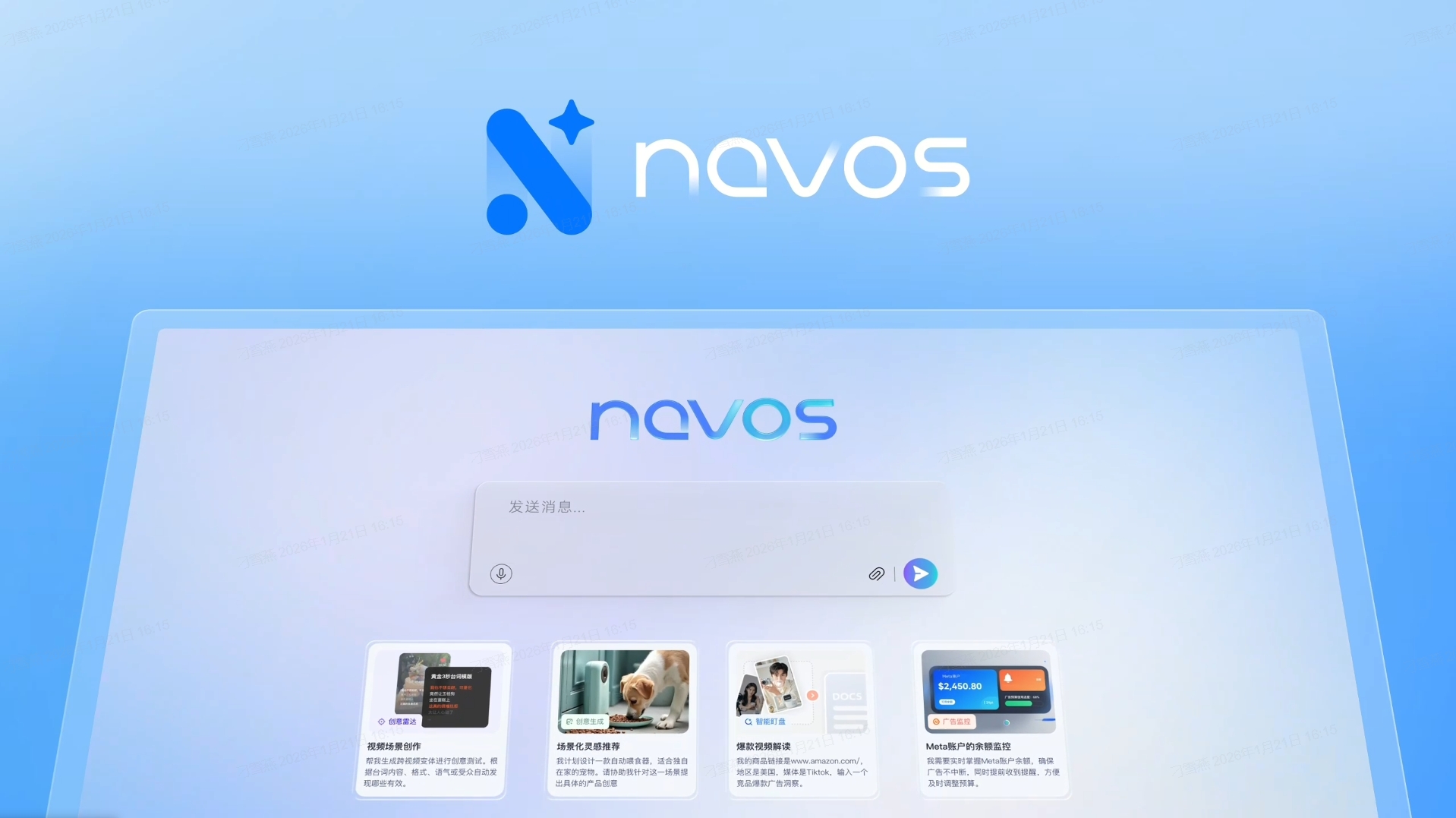
It is in this evolving industry context that next-generation AI-assisted platforms like Navos Agent emerge. Their value proposition addresses parts of the traditional programmatic workflow that remain highly dependent on manual effort. Navos Agent is not just a passive dashboard; it’s an AI work partner that can actively participate in research and execution. It can assist marketing teams by:
- Acting as an AI industry consultant to quickly complete market research and competitive analysis, uncovering commercially valuable audience insights and segmentation opportunities;
- Acting as an AI creative director to provide data-driven recommendations for campaign creative direction, help generate and iterate multiple creative versions, and offer preliminary performance predictions;
- Acting as an AI ad strategist to monitor creative performance during campaigns, automatically integrate multi-source data to produce insight reports, and identify the next opportunities.
Navos aims to greatly simplify tedious research processes, accelerate campaign ideation and planning, and free teams from repetitive operational work. In the intelligent-agent era of programmatic advertising, this AI-assisted model is redefining what “efficiency” means — not merely replacing people with machines, but enabling humans and AI to play to their respective strengths: humans handle strategic judgment, creative direction, and brand stewardship; AI handles data-intensive analysis, matching, and iterative optimization. Together they form a highly collaborative intelligent workflow.
Programmatic Advertising FAQ
1. In simple terms, what is programmatic advertising?
Programmatic advertising can be understood as a method of buying and selling digital ads using algorithms and software to automate the process. When a user opens a webpage or app, the system can, in a fraction of a second, use that user’s behavior and interest data to automatically select the best-matching advertiser from among many and display their ad — all without human intervention. Its core value is making ad delivery faster and
2. What’s the difference between Google Ads and programmatic advertising?
Google Ads is Google’s suite of advertising products, which includes multiple ad formats—search ads, shopping ads, YouTube ads, etc. Google Display & Video 360 falls under the programmatic DSP category, while Google Search ads are bid ads triggered when users actively enter search queries. Their operational logics and triggers differ. More precisely: programmatic advertising is a cross-platform, cross-media automated method and technical paradigm for buying ads, whereas Google Ads is Google’s productized implementation of that methodology on its platform.
3. Is programmatic advertising only for large companies?
Programmatic advertising is not exclusive to large enterprises—small and medium-sized businesses can benefit too. Although the technology behind programmatic advertising can seem complex, most mainstream DSPs now offer user-friendly self-service interfaces and relatively low minimum budgets, allowing SMBs to start small programmatic tests without external agencies. Compared with the multi-million-dollar spends of large enterprises, SMBs do face inherent gaps in data accumulation, optimization levers, and bargaining power. Still, programmatic’s precise targeting and measurable outcomes often let smaller budgets achieve higher ROI than traditional broad-brush campaigns.
4. What are the largest programmatic platforms?
As of Q1 2026 global market share, Google Display & Video 360 leads with 41%, The Trade Desk follows with 31%, Amazon DSP holds 19%, Yahoo about 4%, and all other platforms combined make up 5%. Additionally, platforms like MediaMath and StackAdapt maintain notable influence in specific niches and vertical markets.
5. How much does programmatic advertising cost?
There’s no fixed price for programmatic advertising; costs depend on many variables. The industry and audience competitiveness determine market CPM ranges. The transaction type—open RTB, private marketplace, or programmatic direct—significantly affects inventory unit prices. Platform fees and agency management fees further raise total costs. One industry reality to note: the more intermediaries in the programmatic supply chain, the smaller the share of budget that actually reaches the media. Therefore, when assessing programmatic costs, advertisers should look beyond headline CPM and track effective delivered cost, which better reflects true efficiency.
6. Can AI improve programmatic ad performance?
AI has been shown to significantly enhance programmatic ad performance. From bid optimization, audience targeting, and creative personalization to fraud detection and brand safety, AI algorithms now permeate nearly the entire programmatic stack. Industry research shows 82% of marketers list AI-driven optimization as a priority for programmatic, and 58% of advertisers plan to increase programmatic budgets in 2026. As agent-like AI evolves from an assistive tool to a core engine capable of managing ad workflows end-to-end, AI’s role in programmatic advertising will become increasingly indispensable.
Conclusion
Programmatic advertising—a modern marketing model that uses automation, real-time bidding algorithms, and data analysis to buy and optimize digital ad inventory—has fundamentally reshaped the economics of digital media buying. It has turned advertising from a negotiation-driven “relationship business” into a data-driven “efficiency science.” Precise audience targeting, real-time bidding optimization, cross-channel scalable reach, and outcome-focused measurable attribution are core advantages that form the irreversible value foundation of programmatic advertising.
Looking ahead, three structural forces will continue to reshape the programmatic ecosystem: deep AI integration will shift campaign management from “human-supervised automation” to “AI-autonomous orchestration”; cross-channel user identification and data integration technologies will enable more continuous and complete consumer journey tracking within privacy-compliant frameworks; and the maturation of data clean rooms, curated marketplaces, and first-party data strategies will collectively move the industry from signal loss pain toward a more transparent, sustainable equilibrium.
In this rapidly evolving technical ecosystem, companies and marketing teams should adopt next-generation tools that materially improve daily productivity. For example, AI-assisted solutions like Navos Agent are helping modern ad operations teams shorten the time from strategy to execution by adding intelligence to market research, audience insights, creative strategy, and data reporting—allowing professionals, with AI collaboration, to focus on higher-value strategic decisions and creative breakthroughs, and thus gain more agility and sustained competitive advantage in the increasingly complex programmatic landscape.