
Contemporary marketing faces a fundamental contradiction: market demand for personalization, real-time responsiveness, and multi-channel engagement is growing exponentially, while the execution capacity of traditional marketing teams increases only linearly. This structural bottleneck is becoming a primary constraint on business growth.
The core issue with traditional marketing models lies in their labor-intensive nature. Each campaign requires manual efforts for market research, content creation, channel selection, campaign execution, and performance analysis. When companies attempt to scale their marketing efforts, they often face a choice between increasing staffing or sacrificing execution quality. This creates three critical bottlenecks: execution speed constrained by team size, prolonged optimization cycles that cause missed opportunity windows, and decision-making reliant on limited data samples rather than holistic insights.
Artificial intelligence is fundamentally transforming this landscape. AI marketing isn't merely replacing human labor with technology; it's building a growth system capable of autonomous learning and continuous optimization. This system simultaneously processes hundreds of marketing variables, analyzes market signals in real time, automatically executes optimization decisions, and converts every interaction into data inputs for future improvements. For businesses seeking AI-powered growth, understanding this systematic approach is the first step.

What Does “Scaling Marketing with AI” Actually Mean?
Many companies mistakenly believe deploying a few AI tools equates to achieving marketing scale. In reality, true AI-driven marketing scaling involves building systemic capabilities across four critical dimensions, not merely stacking tools.
Content Scaling means generating highly customized marketing content for diverse audiences, channels, and scenarios at speeds far exceeding human teams' limits. This goes beyond bulk text generation—it involves creating content production systems that understand brand voice, audience preferences, and conversion logic.
Execution Scaling refers to simultaneously managing dozens or even hundreds of marketing campaigns, each continuously optimized. While traditional teams may struggle to manage 5-10 campaigns concurrently, AI-driven systems can scale this number tenfold or more while maintaining optimization quality.
Optimization Scaling signifies a shift from periodic optimization to real-time optimization. Where traditional A/B testing might take weeks to deliver insights, AI systems adjust strategies hourly or even minute-by-minute, dynamically allocating resources based on real-time data. This continuous optimization capability enables marketing ROI to exhibit compound growth characteristics.
Scaling Decision-Making represents the highest level of capability. It signifies that marketing decisions no longer rely on the experience-based judgments of marketing directors, but instead are grounded in comprehensive data, market signals, and predictive models. Systems can identify patterns imperceptible to humans, predict trend shifts, and automatically adjust strategic direction.
The key insight is this: deploying AI in marketing should not involve isolated tools but building an integrated system where data, insights, creativity, execution, and optimization form a closed-loop. The core feature of this system is its self-learning and continuous improvement capability, where every marketing interaction becomes input for enhancing the system's intelligence.
The Core Areas Where AI Drives Marketing Growth
AI for Market Intelligence
From Reactive Response to Proactive Forecasting
Traditional market research relies on periodic surveys and manual analysis, often lagging behind market shifts. AI marketing tools are transforming this landscape, turning market intelligence into a real-time, predictive strategic asset.
Trend Detection has evolved from quarterly reports to real-time monitoring systems. Advanced AI systems analyze social media, search data, industry news, and consumer behavior to signal emerging trends at their earliest stages. This empowers businesses to seize market opportunities before competitors can react. For instance, an e-commerce brand used AI trend analysis to reposition its products three months before an emerging lifestyle concept gained mainstream traction, ultimately securing leadership in that niche market.
Audience insights now extend far beyond traditional demographics. AI systems analyze behavioral patterns, content preferences, purchase timing, and decision pathways to build multidimensional audience profiles. Crucially, these insights dynamically update to reflect real-time shifts in audience preferences. A B2B software company discovered through AI audience analysis that its target customers' decision cycles significantly shortened following specific industry events. By adjusting its marketing cadence accordingly, the company boosted conversion rates by 40%.
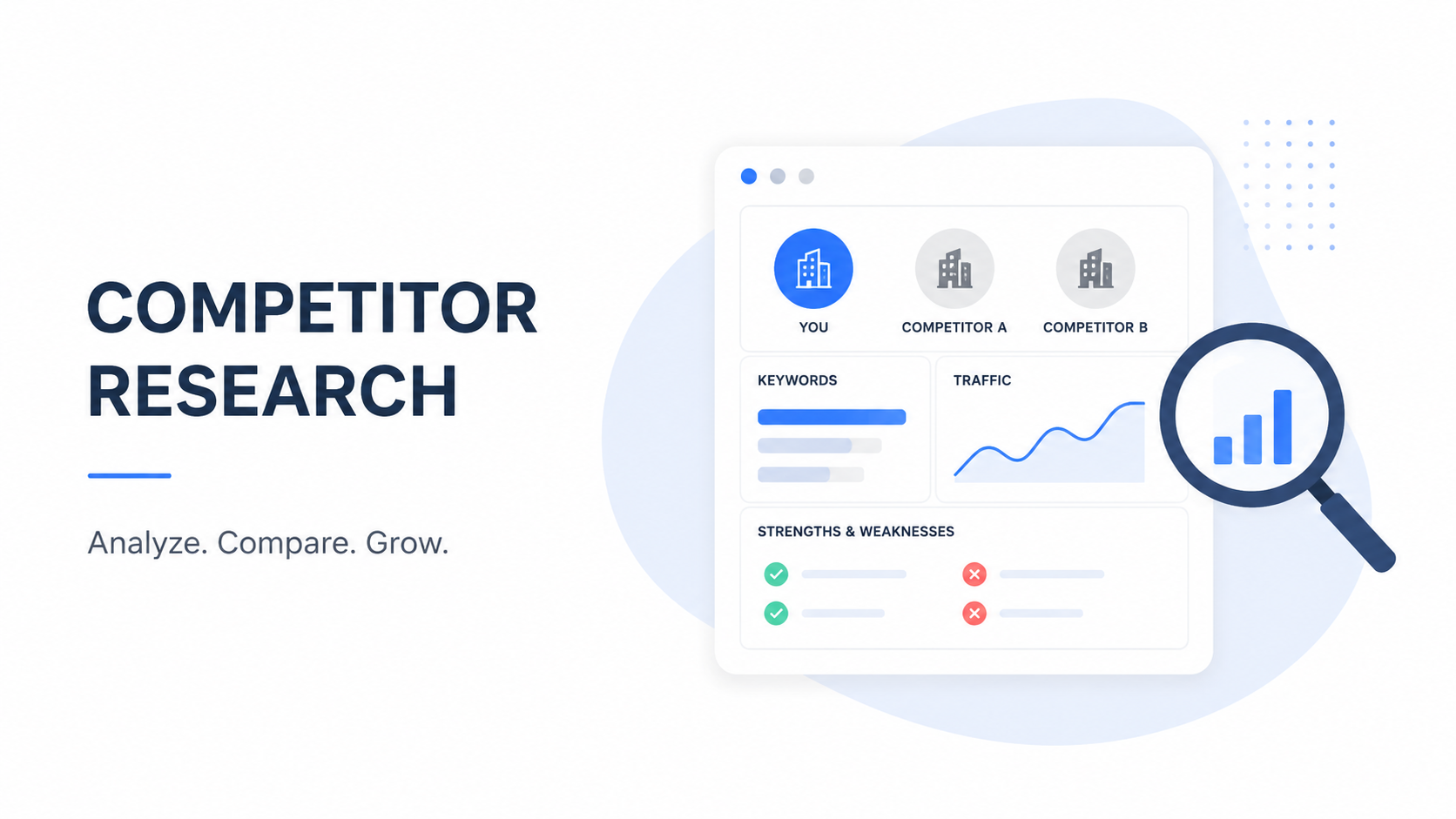
Competitive intelligence has also evolved from periodic competitor analysis reports to continuous monitoring systems. AI systems track competitors' pricing strategies, content approaches, channel layouts, and market responses, automatically generating strategic recommendations. This capability is particularly critical in rapidly evolving markets.
In this domain, specialized AI agents like Navos Consulting Agent are demonstrating unique value. These systems transcend mere data aggregation tools, functioning as intelligent agents that proactively uncover insights, identify opportunities, and deliver strategic recommendations. They transform scattered market signals into actionable growth strategies, freeing marketing teams from data analysis to focus on strategic decision-making.
AI for Content & Creative Production
From Handcrafting to Intelligent Factories
Content remains central to marketing, yet it's also the biggest bottleneck. High-quality content demands time, creativity, and expertise, making scalable production extremely challenging. AI is transforming this reality, though in ways different from what many imagine.
The true value of automated content creation lies not in replacing human creativity, but in freeing up creative energy. Creative AI Agent handles structured content elements—product descriptions, SEO optimization, formatting adjustments, multilingual adaptation—allowing creatives to focus on strategy and innovation. One multinational brand used an AI system to scale its product content from one language to twelve while maintaining brand voice consistency, accelerating global market coverage by eightfold.
Multivariate testing has evolved beyond traditional A/B testing into systems simultaneously evaluating dozens of content variations. AI automatically generates combinations of headlines, visuals, and calls-to-action, rapidly identifies top performers, and continuously optimizes. This approach enables businesses to dramatically boost content effectiveness without expanding teams.
The key to scaling creativity lies in establishing a creative-data feedback loop. AI systems analyze which creative elements drive conversions and which messaging resonates, then feed these insights back into creative production. One DTC brand discovered through such a system that a minor product feature sparked strong interest among a specific audience segment. They promptly adjusted their overall content strategy, resulting in a threefold increase in revenue from that niche market.
AI for Campaign Execution & Optimization
From Manual Adjustments to Autonomous Operations
Traditionally, executing and optimizing marketing campaigns required significant manual intervention. Setting up ad campaigns, adjusting bids, refining targeting, and analyzing performance consumed most of a marketing team's time. AI-powered marketing automation is revolutionizing this landscape.
Automated targeting and bidding now achieve levels of precision unattainable by humans. AI systems analyze hundreds of signals in real time—time, device, location, behavioral history, content interactions, and more—dynamically adjusting targeting strategies. Bidding is no longer a static value but a dynamic decision based on real-time conversion probability, competitive intensity, and ROI targets. One e-commerce platform increased conversions by 55% while maintaining the same ad spend through an AI bidding system.
Continuous Performance Optimization compresses the traditional “set-run-analyze-adjust” cycle into a real-time feedback loop. The system continuously tests minor variations, learns what works and what doesn't, and automatically implements improvements. This continuous refinement enables marketing efficiency to exhibit compound growth characteristics—each day becomes more optimized than the last, yielding significant cumulative effects.
Crucially, AI marketing automation isn't a complete black box. Robust systems provide transparency, allowing marketers to understand decision logic, set strategic boundaries, and retain manual intervention at critical junctures. This human-machine collaboration model ensures execution efficiency while maintaining strategic control.
AI for Data-Driven Growth
From Rearview Mirror to Navigation System
Traditionally, data analysis has been retrospective—understanding what happened in the past. AI is transforming data into a forward-looking growth engine, enabling businesses to predict the future and proactively adjust strategies.
Real-time analytics have evolved from weekly reports to instant dashboards. AI systems process massive data streams to identify anomalies, uncover opportunities, flag risks, and issue alerts before issues escalate. For instance, an AI system at a SaaS company detected declining retention among a user segment and automatically triggered targeted marketing campaigns, averting potential mass churn.
ROI Forecasting transforms marketing from a cost center into portfolio management. AI models predict long-term returns for various marketing strategies, accounting for complex factors like customer lifetime value, market saturation, and competitive dynamics. This empowers CMOs to manage marketing budgets like CFOs manage portfolios, optimizing resource allocation to maximize long-term value.
Transforming data into growth actions remains the ultimate goal. Superior AI systems not only deliver insights but also automatically generate actionable recommendations and execute them. For instance, when the system identifies a customer segment showing upgrade intent, it automatically triggers a customized upgrade marketing workflow. This automated closed-loop process from insight to action enables businesses to capture every growth opportunity.
How to Scale Your Marketing with AI?
Understanding individual AI applications (such as copywriting or graphic design) is merely an entry ticket. What truly determines a company's competitive advantage is the ability to build a closed-loop, scalable AI marketing system. Such a system isn't just a stack of technologies—it fundamentally reconstructs the underlying logic of marketing. The following framework provides a path from fragmented experimentation to systematic implementation, designed to help you achieve exponential leaps in efficiency and growth through AI.
Step 1: Build an AI-Driven Marketing Workflow
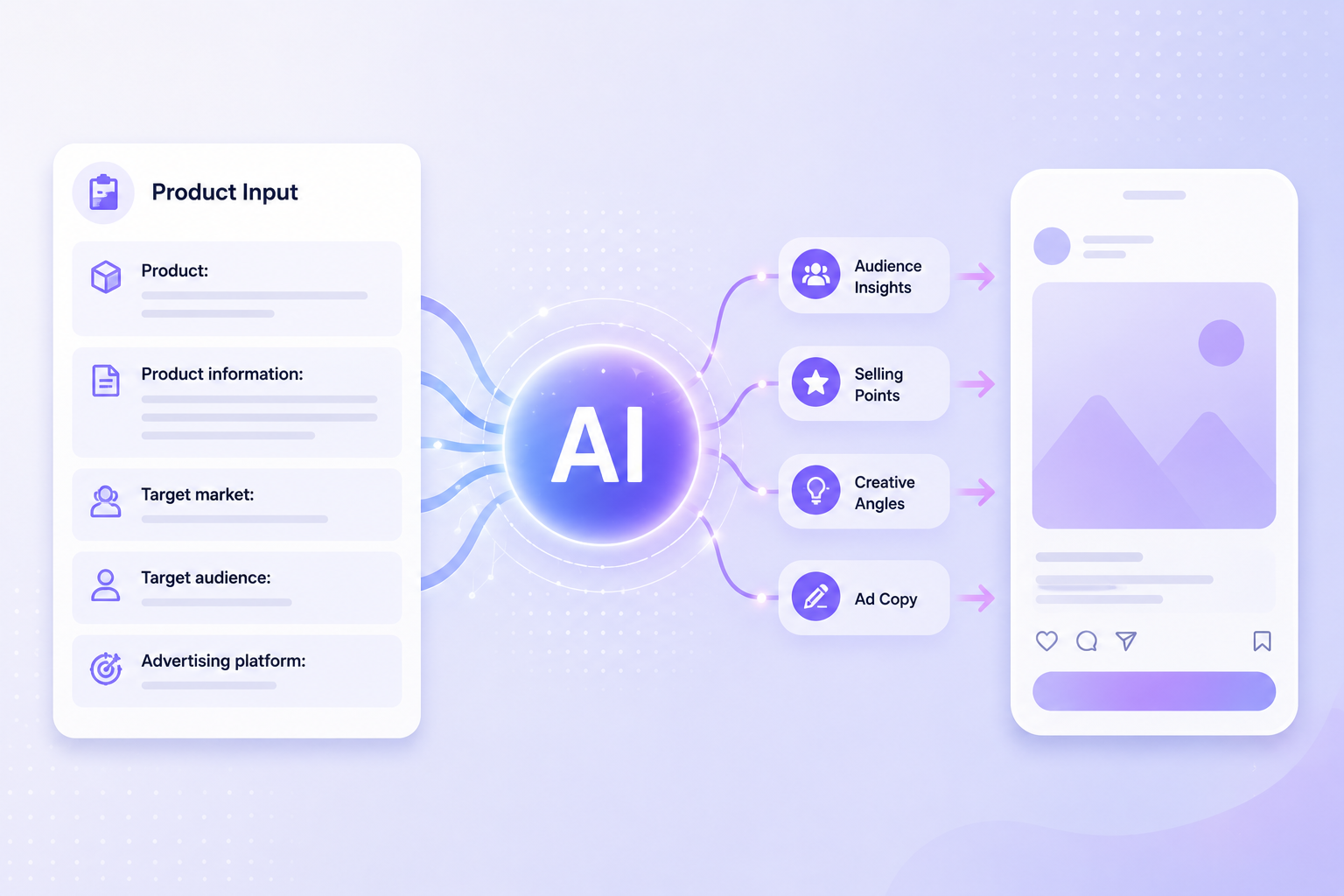
The core pain point of scalable marketing lies in “response latency”. In traditional marketing models, capturing market data and executing decisions involves lengthy reporting chains and cross-departmental coordination. A typical marketing loop—data collection → insight generation → creative development → execution deployment → performance monitoring → optimization decisions—could take weeks in the past. Under an AI-driven system, this cycle fundamentally revolves around “data flow”. We must establish a highly automated closed-loop system:
- End-to-End Data Integration: The AI marketing system must connect all touchpoints, including social media sentiment, e-commerce traffic, CRM customer behavior, and sales feedback. Platforms like Navos Agent, with robust API integration capabilities, enable businesses to break down “data silos”, allowing the marketing brain to sense market pulses in real time.
- Proactive Insight Generation: Traditional insights rely on manual report queries, whereas AI systems must possess proactive discovery capabilities. It shouldn't wait for you to ask “Why are sales declining?” but should proactively alert you: “Conversion rates for a specific audience segment have fluctuated by 15% over the past 6 hours. We recommend adjusting your ad strategy”.
- Agile Creative Factory: Based on real-time insights, AI marketing systems can instantly generate hundreds of sets of visual and textual assets tailored to different audience segments. This granular content production represents a scalable capability unimaginable in the manual era.
The ultimate goal of this AI marketing automation workflow is to compress the “weekly cycle” into “second-by-second response”. When execution deployment and performance monitoring become real-time, marketing transforms from offline planning into an online algorithm.
Step 2: Automate Repetitive Work, Not Strategy
Successful AI marketing upgrades are not about simple machine replacement but a profound redefinition of human-machine collaboration. An efficient system should have AI handle all repetitive, rule-based, and data-intensive tasks, thereby freeing human creativity and judgment.
In practice, we can divide responsibilities along these dimensions:
- AI handles “Quantification and Execution”: Fine-tuning ad bids, A/B testing thousands of keywords, dynamically segmenting audience profiles, and automatically allocating budgets across platforms.
- Humans manage “Quality and Strategy”: Defining brand essence, curating aesthetic tone, sensing new market opportunities, navigating complex crises, and conducting final quality reviews of AI-generated content.
Navos Agent serves as an “advertising trading desk assistant” in this process. It not only executes commands but also operates autonomously within established rules through its built-in strategy library and logic chains. The key lies in establishing clear decision boundaries: Which decisions can AI make independently? Which require human approval? Which demand human-machine collaboration?
Leading enterprises typically adopt a “tiered authorization” mechanism:
- Level 1 Automation (Fully Automated): Routine keyword bid adjustments executed directly by AI based on ROI performance.
- Level 2 Automation (Human-AI Collaboration): AI generates new content themes, audience expansion suggestions, or ad group proposals. These are pushed to marketers for one-click approval before execution.
- Level 3 Automation (Human-Led, AI-Assisted): For decisions like annual brand positioning adjustments or new market entries, humans simulate market feedback via AI before finalizing decisions.
This clearly defined workflow ensures marketing systems combine machine speed with human-centric warmth.
Step 3: Turn Data into Growth Signals
Data itself is static—even a heavy burden. It only gains commercial value when transformed into growth signals that directly trigger action. The core capability of an AI marketing system lies in extracting faint signals from vast noise that foretell growth opportunities.
A mature AI marketing framework should feature automated “signal-response” mechanisms:
- Community Engagement Signals: When AI detects a surge in positive sentiment around a topic on social media, Navos Agent alerts you to immediately activate content generation modules. It produces relevant articles and automatically triggers the ad system to increase bids on related keywords.
- Competitive Environment Signals: If competitors launch price promotions in specific regions, the system should automatically adjust its value proposition emphasis (e.g., highlighting quality or service) to counter competitive impacts.
- Customer Lifecycle Signals: When a dormant customer resumes searching brand keywords, the AI agent should instantly trigger personalized reactivation emails or targeted discount coupons within the CRM.
This “ultra-short circuit” connection from insight to action endows the marketing system with adaptive evolution capabilities. It ceases to be a rigid marketing manual, transforming into an intelligent agent that breathes, senses, and automatically adapts to its environment.
Step 4: Run Continuous AI Optimization Loops
Traditional marketing optimization operates in discrete phases: launch, conclude, review, then repeat. AI-driven optimization, however, is perpetual and round-the-clock. It weaves micro, meso, and macro dimensions into a self-reinforcing learning system.
- Micro-Optimization (Real-Time Iteration): At the granular level of each post, creative set, or email, AI conducts endless pixel-level testing. It learns which headlines drive higher click-through rates, which color schemes boost conversions, and instantly eliminates underperforming variants.
- Mesoscopic Optimization (Dynamic Allocation): Across marketing channels and campaigns, the system continuously balances resources based on real-time ROI. If Xiaohongshu's traffic growth slows while Video Accounts offer lower costs, the system automatically recommends or executes cross-platform budget shifts.
- Macro Optimization (Strategic Alignment): Based on annual market data, AI provides decision-makers with deep insights on portfolio optimization, market entry priorities, and long-term brand equity building.
Each optimization tier should operate autonomously but with distinct timeframes and decision-making authority. Micro-level optimization can execute autonomously in real-time, meso-level adjustments may occur daily or weekly, while macro-level decisions may require human involvement in strategic planning.
The evolution of marketing systems is advancing toward greater intelligence and collaboration. We are moving beyond the “one tool for one problem” phase into an Agent-based marketing operating system. Navos's leadership lies not only in its single algorithmic model but in its comprehensive “Agent Collaboration Framework”. Multiple specialized AI agents collaborate throughout the marketing lifecycle: the Consulting Agent handles market intelligence, the Creative Agent manages content production, the Marketing Agent oversees campaign management and performance enhancement, and the Asset Agent handles creative and content management. This transforms AI from isolated chatbots into intelligent employees deeply embedded within business processes. This systematic integration is precisely what turns AI marketing into a powerful growth engine.
What Businesses Gain from AI Marketing Scale?
The value of AI marketing ultimately manifests in measurable business outcomes. Below are common impacts observed by enterprises after implementing scaled AI marketing.
1. Increased Content Output
Traditional content teams may produce 10-20 marketing assets weekly. Teams using AI assistance can boost this figure to 100-200 weekly while maintaining consistent quality. One B2B company increased content output by 12x using an AI content system without adding staff, while maintaining brand consistency and SEO optimization standards.
This output boost isn't just about quantity—it's about achieving hyper-personalization. The system generates tailored content for audiences across industries, roles, and purchase stages, dramatically enhancing marketing relevance.
2. Lower Customer Acquisition Cost (CAC)
AI optimization continuously improves advertising spend efficiency. Through precise targeting, dynamic bidding, creative optimization, and conversion path refinement, businesses commonly observe a 30%-60% reduction in CAC. After implementing an AI bidding and optimization system, one e-commerce brand saw its CAC drop by 45% within six months while conversion quality actually improved.
The key driver is AI systems' ability to identify and focus on audiences with high conversion probability, avoiding budget waste on inefficient channels. The system continuously learns which audiences are most likely to convert based on timing, channel, and content exposure, then optimizes the entire marketing mix accordingly.
3. Higher Return on Investment (ROI)
The compounding effects of AI marketing drive sustained ROI improvement. One SaaS company reported an 80% increase in marketing ROI in the first year after implementing an AI system, followed by a further 50% increase in the second year (based on a new baseline). This compound growth stems from the system's continuous learning capability—it becomes smarter each month, gaining deeper insights into the market and audience.
ROI gains materialize across multiple dimensions: higher conversion rates, lower customer acquisition costs (CAC), enhanced customer lifetime value, and accelerated growth velocity. AI systems optimize the entire marketing funnel rather than isolated metrics, driving holistic business efficiency.
4. Faster Campaign Execution
Traditionally, planning and launching a new marketing campaign could take weeks. AI systems compress this cycle to days or even hours. A retail brand using an AI marketing platform completed the entire process from concept to execution within 24 hours, enabling rapid response to market opportunities.
This acceleration isn't merely about efficiency—it's a competitive advantage. In fast-changing markets, companies that can capture trends, test new channels, and respond to shifts ahead of competitors gain significant first-mover advantage.
5. Faster Decision Cycles
AI systems deliver real-time insights and automated optimization, transforming marketing decision-making from periodic to continuous. CMOs no longer need to wait for monthly reports to understand marketing effectiveness; instead, they can monitor key metrics in real time and make rapid adjustments.
A marketing executive at one company stated that after adopting an AI system, their team's decision cycle shortened from an average of two weeks to just two days. This agility enables the team to experiment more frequently, learn faster, and ultimately accelerate overall growth.
The Evolution of Marketing Teams: From Tools to AI Agents
The evolution of marketing technology has progressed through three distinct phases, each representing a qualitative leap in capability.
The Tool Era marked the rudimentary stage of marketing technology. Marketers utilized various software to enhance efficiency—email marketing tools, social media management platforms, analytics solutions, and more. While powerful, these tools operated in isolation, requiring manual switching between systems, data integration, and decision-making. The Tool Era boosted execution efficiency but did not alter the fundamental workflow of marketing.
The Automation Era introduced systematic processes. Marketing automation platforms orchestrated multi-step workflows, triggering actions automatically based on predefined rules. For example, when a prospect downloaded a whitepaper, a series of nurturing emails would automatically activate. This scaled operations, yet automation systems could only execute preprogrammed rules, lacking learning or adaptive capabilities.
The AI Marketing Team Era signifies a paradigm shift. Here, AI transcends passive tools or rigid automation to become intelligent agents capable of proactive thinking, learning, and optimization. These AI agents comprehend objectives, analyze environments, formulate strategies, execute actions, and learn from outcomes.
Imagine an ideal AI marketing team: Insight agents continuously monitor the market, identifying trends and opportunities; Strategy agents develop marketing plans based on insights; Creative agents generate and optimize content; Execution agents manage cross-channel campaigns; Analytics agents evaluate performance and provide optimization recommendations. These agents share knowledge, coordinate actions, and form an organic intelligent system.
This agent-based architecture is no longer a future concept but current practice at leading enterprises. Platforms like Navos embody this new paradigm, integrating insights, creativity, execution, and data into a unified, AI-driven marketing system. This integrated approach eliminates tool fragmentation, enabling marketing teams to operate with unprecedented speed and precision.
From a business perspective, this evolution signifies a role shift for marketing teams. Marketers are no longer executors but strategists and system stewards. Their core tasks involve setting objectives, defining boundaries, training AI systems, and making strategic judgments. The heavy lifting—execution, optimization, analysis—is handled by AI agents, freeing humans to focus on creative and strategic work.
Common Pitfalls When Scaling Marketing with AI
Despite AI's immense potential in marketing, many companies encounter setbacks during implementation. Understanding common pitfalls helps avoid costly mistakes.
1. Using AI Exclusively for Content Creation
This is the most prevalent misconception. Many companies purchase AI writing tools and expect immediate marketing results. In reality, content is just one component of the marketing ecosystem. Without AI-driven insights to guide content direction, AI optimization to enhance content effectiveness, and AI analytics to measure content value, the benefits of AI-powered content creation remain severely limited.
Successful AI marketing requires end-to-end AI capabilities, not isolated applications. Content, insights, execution, and optimization must work in concert to generate systemic value. One company learned this the hard way: their investment in AI writing tools did boost content output, but without AI-driven strategic guidance, much of that content failed to target the right audiences or address actual market needs. Ultimately, their ROI remained unchanged.
2. Lacking a Data Feedback Loop
The value of AI systems lies in learning and optimization, which requires continuous data feedback. Many companies use AI tools to generate content or execute campaigns without establishing systematic tracking and feedback mechanisms. Consequently, AI systems cannot learn what works and what doesn't, hindering continuous improvement.
An effective AI marketing system requires a complete data loop: every marketing action is tracked, performance data is collected, insights are extracted, and learnings are applied to future actions. The speed and completeness of this cycle directly determine how quickly the AI system optimizes.
3. Tool Fragmentation
Many companies purchase multiple AI marketing tools—one for content creation, one for ad optimization, one for analytics, and one for customer insights. These tools operate independently, with data silos preventing synergistic effects.
Tool fragmentation causes three problems: data silos prevent holistic insights; broken workflows require manual integration of outputs; and redundant investments occur due to overlapping tool functionalities. More critically, fragmented tools cannot achieve systemic intelligence—the whole is less than the sum of its parts.
The solution is to adopt an integrated AI marketing platform like Navos Agent or at least ensure robust data integration between tools. The goal is to establish a unified AI marketing operating system, not a collection of isolated tools.
4. Lack of Continuous Optimization
Some companies view AI systems as “set-and-forget” solutions. They deploy AI tools, perform initial configurations, and then expect the system to deliver ongoing improvements autonomously. The reality is that AI systems require continuous oversight, adjustment, and training to maximize their value.
Effective AI marketing demands establishing a culture and process for continuous optimization. This includes: regularly reviewing AI system decisions to ensure alignment with business objectives; continuously providing feedback to train systems to better understand the brand and market; adjusting AI system parameters and boundaries based on business changes; and testing new AI capabilities and application scenarios.
A best practice adopted by one company is establishing an “AI Marketing Operations Team” dedicated to the continuous optimization of AI systems. This team consists not of AI developers, but of marketing experts whose role is to ensure AI systems consistently serve business objectives and continuously enhance their effectiveness.
Conclusion
In an era where AI is reshaping business civilization, marketing may be the domain most profoundly impacted by technology—yet also the one with the richest dividends. Companies that swiftly transition from “manual craftsmanship” to “AI-driven” operations will establish insurmountable systemic advantages in growth velocity, market responsiveness, and resource allocation efficiency.
For enterprises exploring AI marketing, the key lies in treating AI as an investment in growth infrastructure, not merely a short-term tool purchase. This demands systemic thinking: instead of asking “Which AI tool should I use?”, ask “What kind of AI-driven marketing system do I need to build?”
The core value of cutting-edge AI marketing systems like Navos Agent lies not in the excellence of individual features, but in its ability to integrate every isolated marketing component—research, strategy, creativity, execution, attribution—into a unified, intelligent whole (System-wide Intelligence). It functions like a digital steward with a “holistic perspective”. ensuring every micro-level execution aligns with macro-level brand strategy. This leap from “point tools” to “omni-agency” is precisely the key for enterprises to build scalable marketing and long-term competitive advantage.