
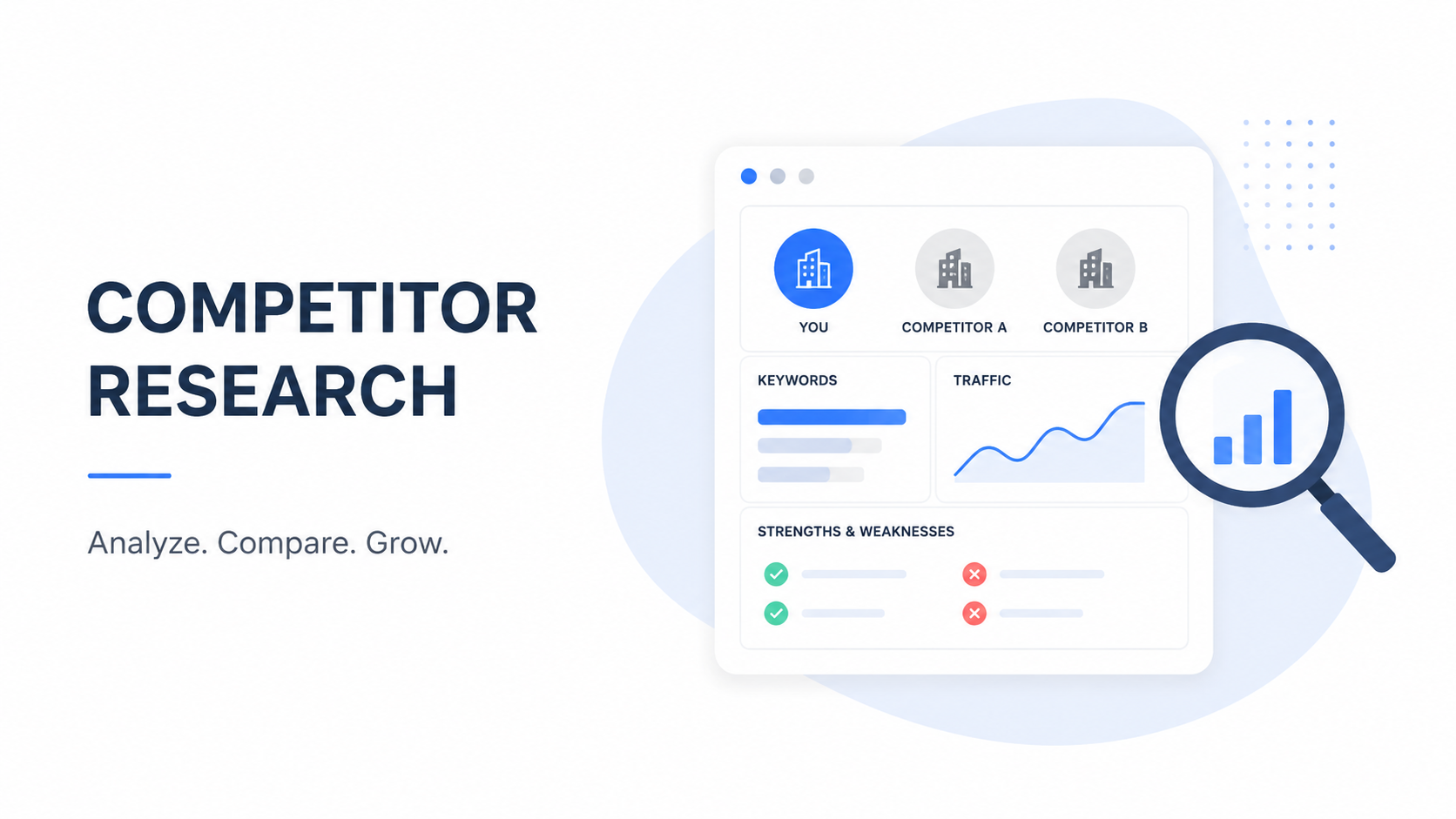
Understanding what your competitors are doing — and more importantly, why it's working — is one of the most powerful advantages any marketing team can develop. Yet most businesses treat competitor research as an afterthought, something to do once when launching a new product or entering a new market, rather than an ongoing intelligence practice that continuously shapes strategy. That approach leaves significant opportunities on the table and creates blind spots that more sophisticated competitors will inevitably exploit.
Competitor research, when done properly, influences virtually every dimension of your marketing operation. It informs which keywords you should target in your SEO campaigns, which content topics are likely to attract organic traffic, how your paid advertising budget should be allocated, and how your product or service should be positioned relative to alternatives in the market. The businesses that consistently outperform their competition aren't necessarily the ones with the largest budgets — they're the ones with the clearest picture of the competitive landscape and the strategic clarity to act on what they discover.
This guide is designed to walk you through a comprehensive, step-by-step approach to conducting competitor research that goes well beyond surface-level observation. Whether you're an SEO professional looking to close keyword gaps, a content marketer trying to identify untapped topic clusters, a growth marketer optimizing paid campaigns, or a business owner trying to understand where your brand stands in the market, this guide will give you a structured methodology, the right tools, and a practical framework you can apply immediately.
What Is Competitor Research?
Competitor Research Definition
Competitor research is the systematic process of gathering, analyzing, and interpreting information about the other businesses that compete for your target audience's attention, trust, and money. It encompasses a wide range of activities — from analyzing a competitor's website structure and content strategy to examining their keyword rankings, backlink profiles, advertising campaigns, and product positioning — all with the goal of extracting insights that can inform and improve your own strategic decisions.
To conduct effective competitor research, you first need to understand who your actual competitors are, because the answer is more nuanced than most marketers initially assume. Direct competitors are businesses that offer the same or very similar products and services to the same target audience. If you run a B2B project management software company, your direct competitors are other project management software companies targeting similar customer segments. Indirect competitors, on the other hand, are businesses that offer different solutions to the same underlying problem — a company that builds custom enterprise workflow tools might not seem like a direct competitor to project management software, but they're competing for the same budget and solving overlapping pain points. Then there are emerging competitors: newer players, often venture-backed startups or companies pivoting into your space, who may not yet show up in your organic rankings but are building the infrastructure to challenge you within twelve to eighteen months.
It's also worth distinguishing between competitor research and market research, because these terms are often used interchangeably but refer to different practices. Market research is broader and focuses on understanding the overall market — customer behavior, industry trends, demand dynamics, and macro-level forces. Competitor research is specifically focused on the other players in that market and how they're positioning themselves to capture demand. Both are valuable, and they complement each other, but they require different methodologies and produce different types of insights.
👉 Click to Learn More about What is Market Research?
Why Competitor Research Is Important?
The value of competitor research extends well beyond simply knowing what your rivals are up to. When conducted rigorously, it creates a strategic foundation for decisions that would otherwise be made on intuition or incomplete information.
From an SEO perspective, understanding which keywords your competitors are ranking for — and why — gives you a detailed map of where organic search traffic is flowing in your industry. This allows you to identify gaps in your own keyword coverage, prioritize high-opportunity content topics, and build a more intelligent link acquisition strategy based on what's actually working for the sites that are outperforming you. SEO competitor research is particularly valuable because search rankings are transparent in a way that other competitive data is not — the evidence is publicly visible and measurable.
From a content marketing perspective, competitor research helps you understand what content formats resonate with your shared audience, which topics are already saturated with high-quality content (and therefore harder to compete on), and where genuine gaps exist that represent publishing opportunities you could own. Discovering that a competitor has a detailed resource center built around a topic your audience cares deeply about — but that you haven't addressed — is precisely the kind of insight that should reshape your editorial calendar.
From a product and marketing strategy perspective, analyzing how competitors position their value propositions, structure their pricing pages, craft their calls to action, and develop their customer-facing messaging gives you a detailed picture of the strategic choices they've made and where those choices may have created vulnerabilities you can exploit through differentiation.
Who Should Conduct Competitor Research?
Competitor research isn't the exclusive responsibility of any single role or department — it's a cross-functional intelligence practice that creates value across multiple teams. SEO professionals rely on competitor research to identify keyword opportunities, understand backlink landscapes, and benchmark technical performance. Content marketers use it to build editorial strategies that are grounded in real audience demand and genuine competitive differentiation. Growth marketers apply competitive insights to paid search and social advertising, studying competitor ad copy, landing pages, and conversion approaches to sharpen their own campaign strategy. Product marketers use competitor analysis to develop positioning frameworks that clearly articulate why a customer should choose their product over alternatives. And business owners, particularly at early-stage companies where strategic resources are limited, use competitor research to make faster, more confident decisions about where to invest time and money.
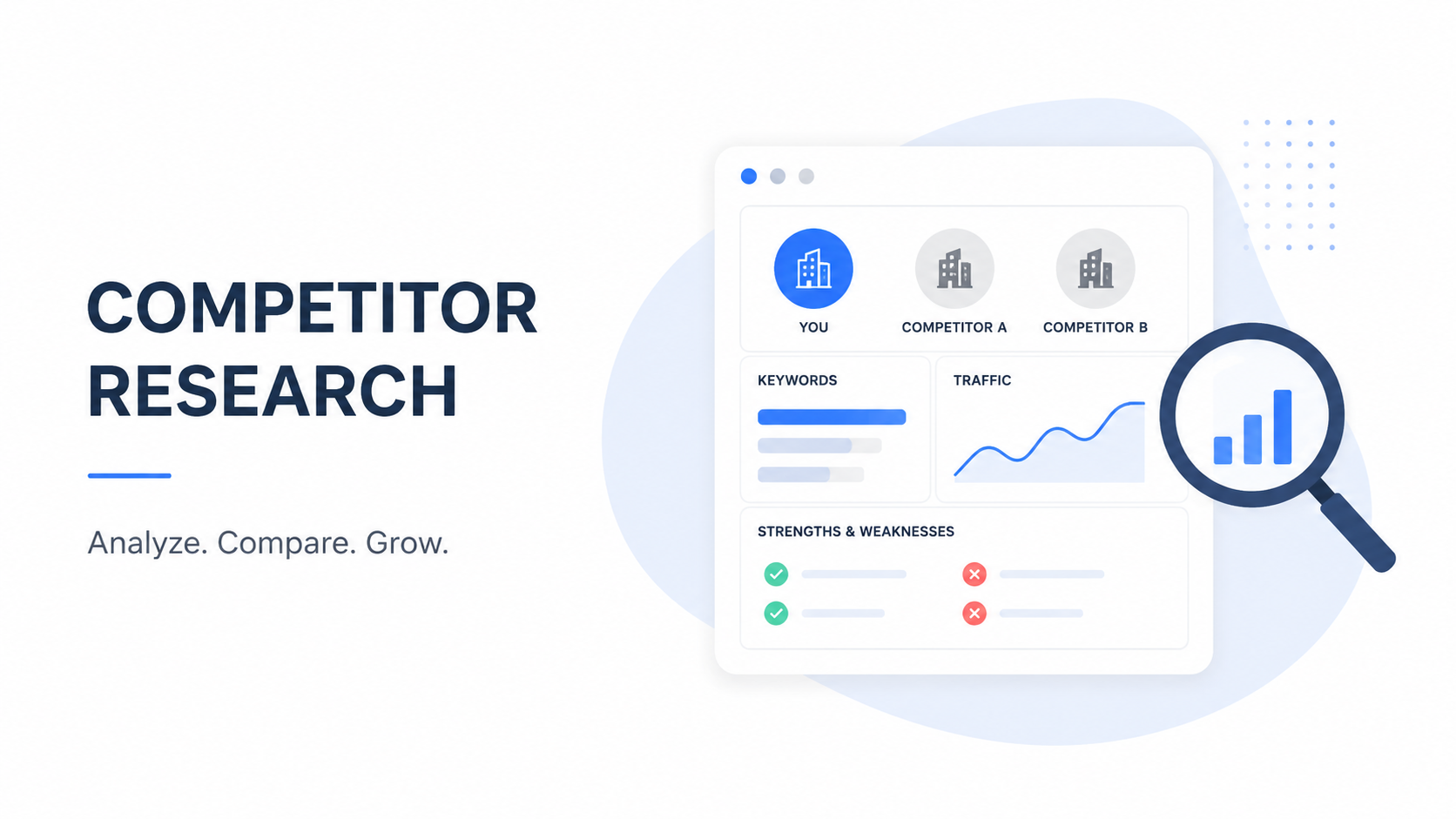
How to Do Competitor Research Step by Step?
Step 1: Identify Your Competitors
Before you can analyze your competitors, you need to know precisely who they are — and the answer to that question should be informed by data rather than assumption. Most businesses begin with a mental list of the three or four companies they think of as their main rivals, but this list is almost always incomplete.
Start with your direct competitors: the businesses targeting the same customer segments with similar products or services. Then expand your scope to include indirect competitors who address the same customer problem through different solutions, and search competitors — websites that rank for the same keywords you're targeting even if they're not technically in your industry. A major media publication or an industry association might consistently outrank you for keywords that matter to your business without being a direct commercial competitor, and that distinction matters for how you approach your strategy.
Practical Methods
Running targeted Google searches using the language your customers use to describe their problems and desired outcomes is one of the most reliable ways to surface competitors you might not have considered. Pay close attention not just to the organic results but also to the paid ads, the featured snippets, and the "people also ask" sections, all of which reveal which businesses are investing in the same audience you're pursuing.
Industry directories, comparison platforms like G2, Capterra, or Trustpilot, and vertical-specific listing sites are excellent sources for identifying established players in a space, particularly for B2B products and services. These platforms often categorize competitors in ways that illuminate indirect competitive relationships you might have missed.
Social media research — particularly on LinkedIn, Twitter/X, and niche community platforms like Reddit or Slack groups — can surface emerging competitors who are building audience and credibility before they appear prominently in search results. Watching where your target audience is engaging and who they're paying attention to is a forward-looking competitive intelligence practice that helps you identify threats before they become serious.
AI-powered discovery tools have also become increasingly useful for competitor identification, particularly for businesses in crowded or fast-moving markets where the competitive landscape is difficult to map manually.
Step 2: Analyze Their Website Performance
Once you've established who your competitors are, a rigorous analysis of their websites reveals a significant amount of strategic information that would otherwise require expensive primary research to uncover.
Website Competitor Research Checklist
A thorough website competitor research process should examine site structure — how information is organized and how different sections of the site are connected — because the architecture of a website reflects strategic priorities.
- Navigation tells you which pages a competitor considers most important and what user journey they're optimizing for.
- Landing pages reveal conversion strategy, messaging frameworks, and value proposition language.
- Conversion funnels, where visible, show how competitors move prospects from awareness to consideration to purchase.
- Product and pricing pages are particularly revealing because they show how a competitor has decided to package and communicate their offering, which CTAs they're using to drive action, and whether they're competing primarily on price, features, quality, or some combination of all three.
Key Questions to Ask
As you work through a competitor's website, you should be continuously asking a set of analytical questions:
- What are they ranking for?
- Is the content they've created designed to capture organic search traffic or to convert visitors who arrive through other channels?
- How do they position their products relative to the alternatives a customer might consider?
- What calls to action appear most prominently?
- What do those choices reveal about their conversion strategy?
- Which content formats — long-form guides, case studies, video explainers, calculators — appear to be generating the most engagement based on visible indicators like social shares, comments, and link acquisition?
Step 3: Conduct Competitor Keyword Research
What Is Competitor Keyword Research?
Competitor keyword research is the process of identifying the specific search queries for which your competitors are ranking in organic and paid search results, then analyzing those rankings to understand which terms are driving meaningful traffic and where opportunities exist for your own content and SEO strategy. Unlike general keyword research, which starts from your own assumptions about what your audience is searching for, competitor keyword research starts from demonstrated evidence of what's actually working for businesses in your space.
Understanding keyword intent is central to making competitor keyword research actionable. A competitor might rank for thousands of keywords, but not all of those rankings are strategically significant. Informational keywords attract researchers who are still learning — valuable for building brand awareness and content authority. Commercial keywords attract buyers who are evaluating options — critical for conversion-focused content. Transactional keywords signal purchase intent — essential for capturing demand at the bottom of the funnel. Knowing which of a competitor's keywords fall into each category helps you prioritize where to invest your own content and optimization resources.
How to Find Competitor Keywords?
Organic keywords are the queries for which a competitor earns unpaid rankings in search engine results pages. These can be uncovered using SEO tools like Ahrefs, Semrush, or Moz Pro by entering a competitor's domain and reviewing the organic keyword report, which shows every keyword the site ranks for along with position, search volume, and estimated traffic data.
Paid keywords reveal which search terms a competitor considers valuable enough to bid on with advertising dollars, which is often a strong signal of high commercial intent and conversion potential. Understanding which keywords competitors are paying to appear for can help you identify terms worth targeting organically — if someone's spending money to show up for a query, that query is probably worth competing for through content as well.
Branded keywords — searches that include a competitor's brand name — reveal the scale of their brand awareness and can surface opportunities for comparison content or brand bidding campaigns. Long-tail keywords, typically three or more words in length, often represent more specific user intent and lower competition, making them particularly valuable for newer or smaller brands trying to establish search visibility in a competitive market.
SEO Competitor Research Metrics to Analyze
Not all keywords are worth pursuing equally, which is why the metrics surrounding competitive keyword data matter as much as the keywords themselves. Keyword difficulty scores estimate how hard it would be to rank in the top positions for a given term, based on the strength of the pages currently ranking there. Search volume indicates how many times a keyword is searched per month on average, though high volume alone doesn't justify targeting a term if the commercial value is low. Traffic potential accounts for the fact that a keyword ranking in position one might drive significantly more traffic than the search volume suggests, because related queries often route to the same page. Ranking trends show whether a competitor's position for a given keyword is stable, improving, or declining — declining rankings often signal an opportunity worth pursuing.
Competitor Keyword Gap Analysis
Keyword gap analysis is arguably the most immediately actionable output of competitor keyword research. It involves comparing the keywords your competitors rank for against the keywords you rank for, and identifying the terms where they have visibility but you don't. These gaps represent areas where your competitors are capturing search traffic that could be coming to your site instead.
Within the gap, it's worth distinguishing between high-difficulty gaps that would require significant investment to close, low-competition opportunities that could be addressed with well-crafted content relatively quickly, and quick-win keywords where you have some existing content or authority that could be improved to push a ranking from page two to page one. Prioritizing quick wins alongside longer-term strategic investments creates a more balanced and sustainable SEO roadmap.
Step 4: Evaluate Competitors' Content Strategy
Content strategy analysis goes beyond identifying which keywords a competitor ranks for — it examines the totality of their publishing approach, from the topics they cover and the formats they use to the depth of coverage they provide and the way they structure information to serve different stages of the buyer's journey.
Competitors worth studying closely will typically have a mix of content assets: a blog or editorial section where they publish informational and thought leadership content, resource centers housing guides, templates, and tools that attract links and recurring visitors, landing pages designed to convert traffic from specific channels, video content that serves audiences who prefer that format, case studies that demonstrate commercial credibility and real-world results, and industry reports that establish authority and generate media coverage.
Content Research Framework
When analyzing a competitor's content, a structured framework should examine publishing frequency — how often they're adding new content, which indicates the scale of their content investment — as well as topic clusters, which reveal the thematic areas they've chosen to build authority around. Content depth analysis looks at whether their pieces are superficial treatments of a topic or genuinely comprehensive resources that cover a subject in enough detail to satisfy serious research intent. User intent coverage evaluates whether their content addresses the full range of questions a prospect might have across the awareness, consideration, and decision stages of the buying process. Internal linking structure analysis shows how they're connecting related content to build topical authority and guide users through a logical progression of information.
Content Gap Analysis
Content gap analysis involves identifying topics that your competitors have covered but you haven't, subjects where your existing content is substantially weaker or less comprehensive than theirs, and emerging trends in your industry that neither you nor your competitors have addressed in depth — which represents an opportunity to be first. Being first to publish authoritative content on an emerging topic is one of the most effective ways to build lasting search visibility and thought leadership.
Step 5: Analyze Competitors' SEO Strategy
On-Page SEO
On-page SEO analysis examines how competitors optimize individual pages for search visibility. Title tags and meta descriptions reveal how they're balancing keyword targeting with click-through rate optimization — specifically, how they write these elements to attract clicks from the search results page while also signaling relevance to search engines. Header structure analysis shows how they organize content hierarchically, which both improves readability and helps search engines understand the topical focus of a page. Content optimization analysis looks at how naturally they integrate target keywords, how comprehensively they address the topic relative to competing pages, and how effectively they use supporting elements like images, data, and internal links.
Technical SEO
Technical SEO analysis covers the performance and infrastructure factors that affect how well a site is crawled, indexed, and ranked. Page speed is increasingly important given Google's Core Web Vitals framework, and significant differences in load performance between your site and a competitor's can represent either a vulnerability or an opportunity depending on which direction the gap runs. Mobile usability has been a ranking factor for years, and sites that deliver a substantially better mobile experience tend to perform better in mobile search results. Site architecture analysis examines how pages are organized, how deep they are from the homepage, and how effectively the internal link structure distributes PageRank across the domain.
Backlink Analysis
Backlink analysis is one of the most valuable components of SEO competitor research because inbound links from authoritative external sites remain among the strongest ranking signals available. By analyzing a competitor's referring domain profile — the number and quality of external sites linking to them — you can understand how they've built their domain authority and which specific link-building strategies have been most effective. Identifying the highest-authority sites that link to a competitor but not to you surfaces specific outreach and content opportunities worth pursuing as part of your own link acquisition strategy.
Step 6: Research Competitors' Advertising Strategy
Paid Search Analysis
Understanding a competitor's paid search strategy provides a window into how they think about their highest-value conversion opportunities. By examining the keywords they're bidding on, the ad copy they're using to attract clicks, and the landing pages those ads lead to, you can identify the customer segments they're prioritizing, the value propositions they believe are most compelling, and the conversion mechanics they've tested and refined over time. Tools like Semrush and SpyFu surface this data in ways that were previously only accessible to the largest, most sophisticated advertisers.
Social Media Advertising
Social advertising analysis examines the creative formats competitors are using — static images, video, carousel ads, or story formats — the messaging and offer structures they're testing, and the audience targeting signals visible through platforms like Meta's Ad Library. This research reveals which conversion angles are being tested most heavily, what seasonal campaigns competitors are running, and whether they're leading with promotional offers, educational content, testimonials, or product demonstrations.
What You Can Learn?
The most valuable takeaways from advertising analysis are insights about where competitors are concentrating their budget (which reveals their highest-priority customer acquisition channels), which conversion angles they've decided to scale (which suggests those approaches are working), and whether they're running campaigns aligned to specific seasons or industry events that you should be accounting for in your own planning.
Step 7: Monitor Competitor Activity Continuously
Competitive intelligence isn't a project with a start and end date — it's an ongoing practice that needs to be integrated into your regular marketing operations. Competitors launch new products, adjust their pricing, shift their content strategy, enter new markets, and build new partnerships. Search algorithms change, which causes rankings to fluctuate in ways that create new opportunities and close others. Tracking new content your competitors publish, monitoring shifts in their SEO rankings, staying alert to product launches and pricing changes, and watching their advertising activity across channels ensures that your competitive intelligence remains current and actionable rather than becoming stale and misleading.
Why One-Time Research Isn't Enough?
Competitor strategies evolve constantly in response to market conditions, performance data, and strategic pivots. A competitor that had weak SEO coverage six months ago may have invested heavily in content production and substantially improved their organic visibility. A rival who wasn't running paid search campaigns may begin bidding aggressively on terms that matter to your business. Search rankings change frequently, sometimes dramatically, in the wake of algorithm updates or shifts in user behavior. Treating competitor research as a one-time activity is like navigating with a map that was accurate when it was drawn but may no longer reflect the current terrain.
Best Competitor Research Tools in 2026
SEO and Keyword Research Tools
Ahrefs is one of the most comprehensive SEO platforms available and is particularly strong for keyword research, backlink analysis, and competitor content discovery. Its Site Explorer feature allows you to enter any domain and immediately access its organic keyword rankings, traffic estimates, top pages by organic traffic, and complete backlink profile — making it an essential tool for both SEO competitor research and website competitor research.
Semrush offers a comparably robust feature set and is particularly well-regarded for its advertising intelligence capabilities alongside its organic SEO features. Its Keyword Gap tool makes competitor keyword gap analysis straightforward and actionable, and its Traffic Analytics feature provides estimated visitor data that complements organic ranking information.
Moz Pro provides keyword research, rank tracking, and backlink analysis tools with a user interface that many marketers find accessible, particularly those who are newer to SEO. Its Domain Authority metric, while a proprietary score rather than a direct ranking factor, is widely used as a benchmark for comparing the overall authority of competing domains.
Website Competitor Research Tools
Similarweb is the leading platform for website traffic analysis, providing estimates of total monthly visits, traffic source breakdowns, audience engagement metrics, and geographic distribution for virtually any website. It's invaluable for benchmarking your own site's performance against competitors and understanding which channels are driving the most significant share of their traffic.
BuiltWith reveals the technology stack underlying any website — the CMS, analytics tools, advertising pixels, marketing automation platforms, and other technologies a competitor is using. Understanding a competitor's technology infrastructure provides clues about their operational sophistication, the marketing tools they're investing in, and the technical capabilities they've built.
Content Research Tools
BuzzSumo specializes in content performance analysis and is particularly useful for identifying which pieces of content in a given topic area have generated the most social shares and engagement. It helps content marketers understand which formats and angles resonate most strongly with an audience, making it a valuable input for content strategy development.
SparkToro takes a different approach to competitive audience research by analyzing where a target audience spends their attention — which websites they visit, which social accounts they follow, which podcasts they listen to, and which newsletters they read. This audience intelligence is invaluable for understanding how competitors are building brand awareness and where you might find similar audiences.
AI-Powered Competitor Research Tools
How AI Is Changing Competitor Analysis
Artificial intelligence is fundamentally transforming the practice of competitor research by dramatically accelerating data collection, automating the generation of insights from large and complex datasets, identifying trends and patterns that would be difficult for a human analyst to detect manually, and producing strategic recommendations that help marketing teams move from raw data to concrete action much faster than was previously possible. The shift is significant not just in terms of speed but in terms of the analytical depth that's now accessible to teams that don't have the resources to hire dedicated competitive intelligence analysts.
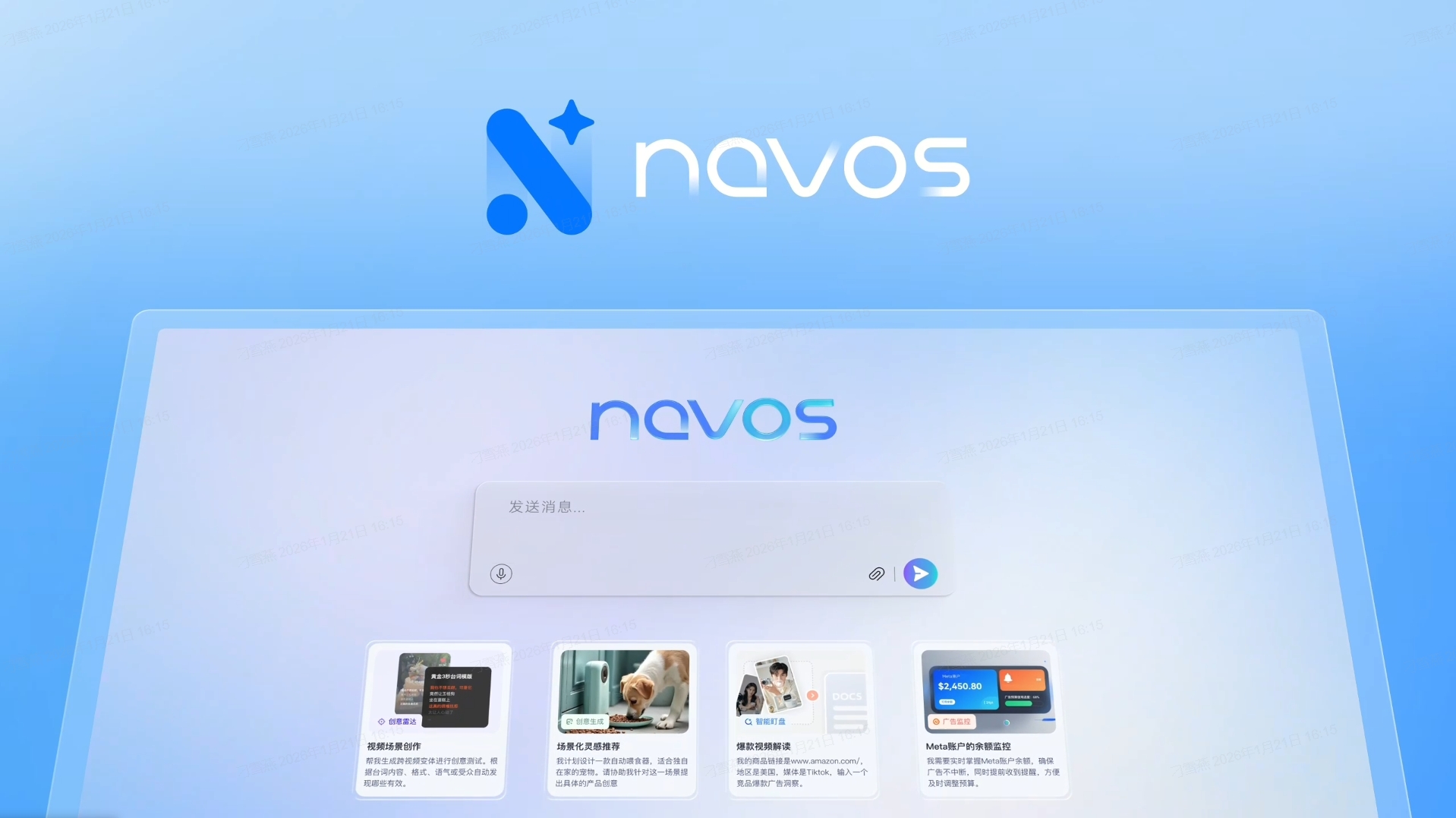
Using Navos Agent for Competitor Research
For marketing teams looking to go beyond individual research tools and build a more integrated competitive intelligence practice, Navos Agent functions as an AI research assistant that connects multiple data sources and helps teams translate competitor data into strategic actions.
Rather than requiring analysts to manually pull data from separate SEO, content, and advertising platforms and synthesize it into actionable recommendations, Navos Agent can discover competitor content strategies automatically, analyzing what topics competitors are publishing, which formats they're using, and where gaps exist relative to your own content footprint.
Powered by the latest and most advanced large language models, Navos AI Industry Conslutant can analyze keyword opportunities at scale across multiple competitors simultaneously, surfacing prioritized recommendations based on traffic potential, difficulty, and strategic fit. It monitors market changes across multiple channels so that your competitive intelligence stays current without requiring continuous manual effort, and it generates actionable research summaries that help marketing and product teams make informed decisions without spending days on manual data gathering.
Positioned as an AI research assistant rather than a standalone SEO tool, Navos is designed to help marketing teams turn competitive intelligence into the kind of strategic actions that actually move the needle on business outcomes.
Common Competitor Research Mistakes to Avoid
1. Focusing Only on Direct Competitors
The most limiting mistake in competitor research is restricting your analysis to the businesses you already think of as your competitors. Indirect competitors and search competitors often represent more significant threats and more interesting opportunities precisely because they're operating in adjacent spaces where competitive intensity may be lower and differentiation is more achievable.
2. Copying Instead of Differentiating
Competitor research should inform your strategy, not dictate it. The goal is to understand what's working in the market well enough to make smarter decisions about how to position your own brand differently — not to replicate what your competitors are doing and compete head-to-head on identical terms. Brands that use competitive intelligence to identify differentiation opportunities consistently outperform those that simply try to match their competitors' moves.
3. Ignoring Search Competitors
Many businesses focus their competitor research exclusively on commercial competitors — the businesses they lose deals to — while ignoring the websites that are capturing search traffic from their target audience. A media publication, an industry association, a comparison site, or an educational platform might be ranking for dozens of keywords your audience searches without ever competing for their business directly, but they're still drawing attention and traffic away from your brand.
4. Looking Only at Keywords
Keyword analysis is a critical component of competitor research, but it's only one dimension of a complete competitive picture. Businesses that focus exclusively on keywords miss important insights about competitor content strategy, website conversion optimization, advertising approaches, product positioning, and brand perception — all of which can be equally important determinants of competitive success.
5. Treating Research as a One-Time Activity
The competitive landscape is not static. Competitors evolve their strategies, new entrants emerge, algorithm changes shift search rankings, and market conditions create new opportunities and close others. Competitor research that isn't conducted on an ongoing basis quickly becomes an inaccurate representation of reality and can lead to strategic decisions based on outdated intelligence.
Frequently Asked Questions
1. What is competitor research?
Competitor research is the process of systematically gathering and analyzing information about the businesses that compete for your target audience's attention and business, with the goal of extracting strategic insights that can improve your own marketing, product, and positioning decisions.
2. How do you conduct competitor keyword research?
Competitor keyword research involves using SEO tools like Ahrefs, Semrush, or Moz Pro to identify the organic and paid keywords for which your competitors are ranking or bidding, then analyzing those keywords by intent, difficulty, volume, and traffic potential to identify gaps and opportunities in your own keyword strategy.
3. What are the best competitor research tools?
The best competitor research tools in 2026 include Ahrefs and Semrush for SEO and keyword research, Similarweb and BuiltWith for website competitor research, BuzzSumo and SparkToro for content research, and AI-powered platforms like Navos Agent for integrated competitive intelligence that spans multiple channels and data sources.
4. How often should you perform competitor research?
The core components of competitor research — keyword analysis, backlink profiles, content strategy review — should be revisited at least quarterly, while continuous monitoring of competitor activity, including new content, advertising changes, and product updates, should be built into your regular marketing operations as an ongoing practice.
5. What is website competitor research?
Website competitor research is the analysis of a competitor's website performance, structure, content, conversion mechanics, and technical characteristics to understand how they're attracting and converting visitors, what strategic priorities their site architecture reflects, and where opportunities exist to outperform them.
6. What is SEO competitor research?
SEO competitor research is the process of analyzing a competitor's organic search performance — including their keyword rankings, backlink profile, technical infrastructure, and on-page optimization — to understand how they've achieved their current search visibility and to identify specific opportunities to close gaps or outperform them in search results.
Conclusion
Competitor research is not a peripheral activity that marketing teams do when they have spare time — it's a foundational intelligence practice that should inform every major strategic decision, from the keywords you target and the content you create to the way you position your product and allocate your advertising budget. Effective competitor analysis draws on multiple dimensions of competitive data: keyword research, website analysis, content evaluation, advertising intelligence, and continuous market monitoring, all synthesized into strategic recommendations that help your business move faster and make better decisions.
The businesses that build a genuine competitive advantage aren't those with the most data — they're the ones with the most actionable intelligence, the discipline to keep their competitive knowledge current, and the strategic clarity to translate what they learn into meaningful differentiation. By following the step-by-step methodology outlined in this guide and applying the right combination of tools and frameworks, you can build the kind of competitive intelligence practice that compounds over time, continuously surfacing new opportunities and helping your team stay ahead of the market rather than responding to it. AI-powered solutions like Navos Agent can significantly accelerate this process, helping marketing teams reduce manual research time, integrate insights from multiple data sources, and transform competitive intelligence into the strategic actions that drive real business growth.