Creator Outreach SOP: Scale Influencer Prospecting and Follow-Up
If you contact 100 creators with the same message, you may feel productive, but you are not building a system. You are creating inbox noise.
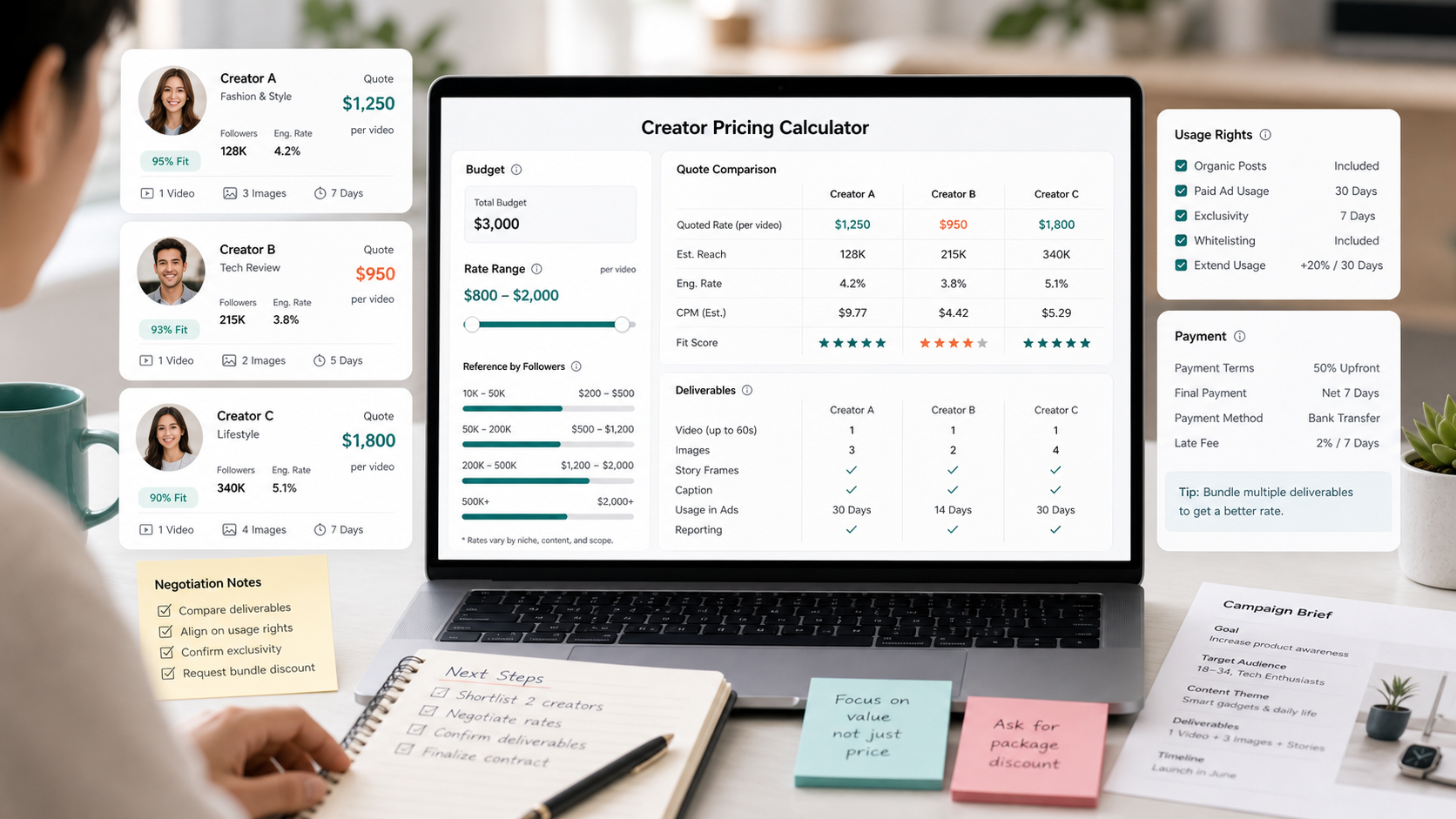
Scalable influencer outreach works when every creator has a reason for being on the list, a budget assumption, a status and a next step. Before contacting creators, use the Navos AI Influencer Price Calculator to estimate rate ranges and prioritize creators who fit both the audience and budget.
A strong outreach operation is more like a pipeline than a one-time send. The list, message, budget, reply status and follow-up timing all need to stay connected.
This SOP is built for brands working with TikTok creators, Instagram creators, YouTube creators and UGC creators. You can use it for a small test campaign or a larger monthly creator program.
Step 1: Define the campaign goal before building the list
Creator lists are only useful when they are tied to a goal.
Campaign goal | Best creator type | Outreach priority |
Product launch | Micro creators and UGC creators | Fast testing and authentic content |
Brand awareness | Mid-tier or macro creators | Audience reach and brand fit |
Paid ad assets | UGC creators and short-form specialists | Production quality and usage rights |
Conversion | Niche reviewers and problem-aware creators | Audience intent and comment quality |
Market entry | Local creators | Language, location and cultural fit |
If the goal is unclear, every creator looks "interesting." That makes the list too broad, the message too vague and the quote review too subjective.
Step 2: Build a creator list with the right fields
Do not stop at name, platform and follower count. You need enough information to decide priority.
Recommended fields:
Field | Why it matters |
Creator name | Basic identification |
Platform | TikTok, Instagram, YouTube, UGC, Twitch or others |
Profile URL | Quick review and deduplication |
Niche | Beauty, tech, fashion, parenting, fitness, food, gaming and more |
Follower count | Useful for rough tiering |
Recent average views | Better signal of active reach |
Engagement quality | Shows whether the audience is real and relevant |
Audience location | Helps match target market |
Content format | Review, tutorial, vlog, skit, unboxing, comparison |
Brand fit notes | Why this creator belongs on the list |
Estimated rate range | Helps with budget planning |
Outreach status | To contact, contacted, replied, quoted, negotiating, booked |
Next follow-up date | Prevents missed opportunities |
The estimated rate field is easy to skip, but it saves time. Many teams contact creators first and discover later that half the replies are outside budget.
Use the Influencer Price Calculator to estimate ranges before outreach. This helps you separate realistic prospects from creators who may need a later, higher-budget campaign.
Step 3: Segment creators into A, B and C groups
Do not treat every creator the same.
Segment | Criteria | Outreach style |
A | Strong audience fit, strong content, rate likely within budget | Highly personalized email and fast follow-up |
B | Good fit, but data or budget is uncertain | Semi-personalized message with clear scope |
C | Backup list or experimental fit | Light DM or later campaign |
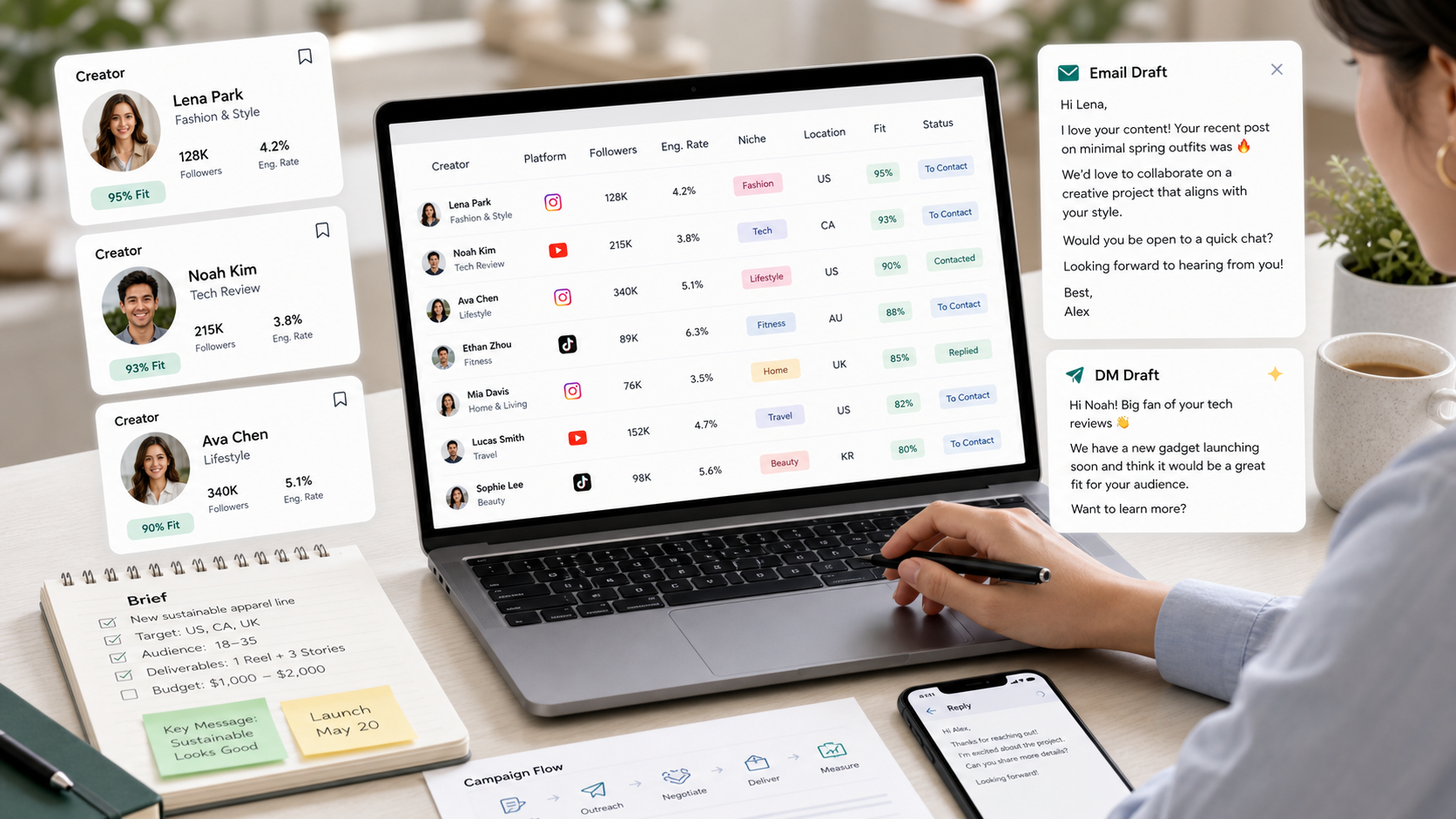
The A group should be smaller than you think. These are the creators worth studying before outreach. Mention a specific post, explain why their audience fits, and make the collaboration idea concrete.
The B group can use a tighter template with one or two personalized variables. The C group should not consume too much manual time.
Step 4: Write outreach that scales without sounding automated
Use fixed structure and variable details.
Stable structure:
- Specific reason for reaching out.
- One-sentence brand context.
- Collaboration idea.
- Scope and budget signal.
- Clear next step.
Personalized variables:
Variable | Example |
Specific content | "your recent video comparing travel backpacks" |
Audience match | "your comments often include first-time buyers asking practical questions" |
Format fit | "your short demo format would work well for a product walkthrough" |
Campaign angle | "helping busy creators edit faster on mobile" |
Budget signal | "we are planning a paid test package and can share the rate range in the brief" |
Scalable outreach template
Hi [Name],
I found your [specific content] and liked how you [specific observation]. Your audience seems close to the people we are trying to reach for [campaign angle].
I am [Your Name] from [Brand]. We help [audience] with [product outcome].
We are planning a paid [platform + format] collaboration and think your style could be a good fit. The initial scope is [deliverables], with creative direction led by you.
We can share a short brief and align on the rate based on deliverables, usage rights and timeline. Would you be open to reviewing it this week?
Best, [Your Name]
Step 5: Use a 7-day follow-up pipeline
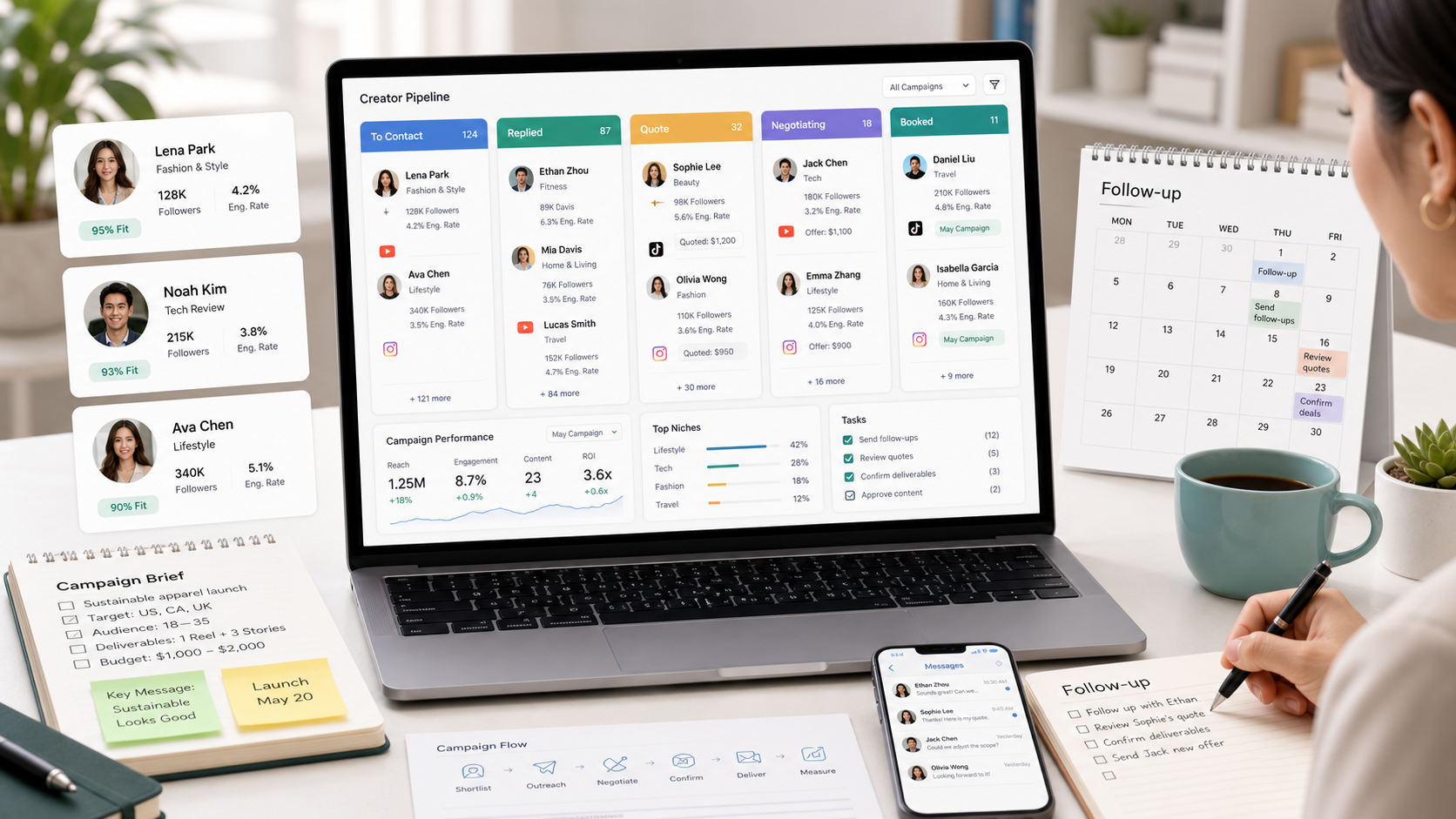
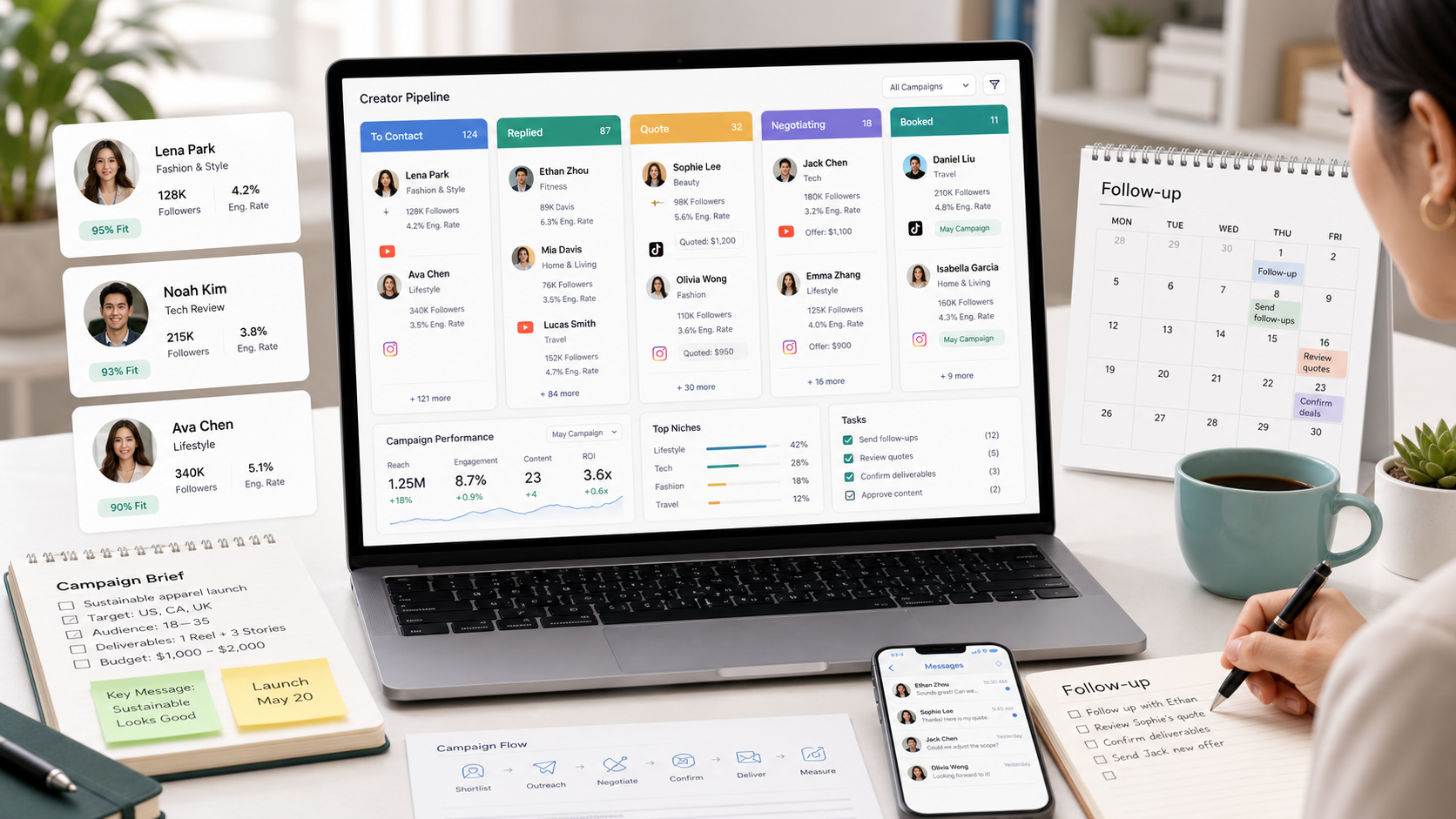
Track every creator in a pipeline. A simple board is enough.
Stage | Meaning | Action |
To contact | Approved prospect | Send first message |
Contacted | First message sent | Wait 2 days |
Follow-up 1 | No reply after 2 days | Send short reminder |
Follow-up 2 | No reply after 5 days | Add brief context or budget range |
Replied | Creator answered | Send brief or ask for rate card |
Quote received | Creator sent price | Review scope and usage |
Negotiating | Scope or price is being adjusted | Confirm deliverables |
Booked | Agreement reached | Move to contract and production |
Later | Not a fit now | Save for future campaign |
Follow-up timing
Timing | Message |
Day 0 | First email or DM |
Day 2 | Light reminder |
Day 5 | Add brief, timeline or budget context |
Day 7 | Polite close-out |
Do not judge a campaign after the first send. Follow-up is part of outreach, not an afterthought.
Step 6: Review quotes with the same framework
Once creators reply, the process can become messy. Different creators quote in different formats. Standardize the review.
Review area | Question |
Deliverables | What exactly is included? |
Organic posting | Which platform and format? |
Usage rights | Can the brand reuse the content? For how long? |
Exclusivity | Is any competitor restriction included? |
Raw footage | Are unedited files included? |
Timeline | When is draft, revision and publish? |
Reporting | Will the creator share performance data? |
Rate range | Is the quote within the expected range? |
Before rejecting a quote, check whether the creator included extra value such as paid usage, raw footage, additional Stories or a longer usage term. Before accepting a quote, check whether those items are actually included.
The Navos AI Influencer Price Calculator is useful at this stage because it gives your team a shared reference point. You can compare a quote against platform, category and creator tier, then adjust based on usage and workload.
Step 7: Measure the outreach system, not just the campaign
Track more than final sales.
Metric | What it tells you |
Contacted creators | Volume of outreach |
Reply rate | Message and targeting quality |
Positive reply rate | Strength of offer and fit |
Quote rate | Whether creators are willing to discuss paid work |
Average quoted rate | Budget realism |
Negotiation success | Whether scope alignment is working |
Booked creators | Campaign supply |
Content delivered | Production reliability |
Usage rights secured | Future paid media value |
If reply rate is low, improve the list and first message. If replies are positive but quotes are too high, improve pre-outreach rate estimation. If creators book but content underperforms, improve creator selection and brief quality.
A simple monthly influencer outreach SOP
Use this checklist for each monthly cycle.
Step | Owner | Output |
Define campaign goal | Marketing lead | Campaign brief |
Build creator pool | Creator marketer | 100-300 creator prospects |
Estimate rates | Creator marketer | Budget tiers |
Segment list | Marketing lead | A/B/C priority groups |
Prepare outreach | Creator marketer | Email and DM templates |
Send first batch | Creator marketer | 20-50 contacted creators |
Follow up | Creator marketer | Updated pipeline |
Review quotes | Marketing lead | Approved creator shortlist |
Confirm scope | Marketing and creator | Deliverables and usage terms |
Measure results | Marketing lead | Outreach and campaign report |
This prevents one common mistake: starting over every campaign. A good creator program gets smarter each month because the list, rates, replies and performance data keep improving.
FAQ
How many influencers should I contact for a campaign?
It depends on your booking goal and expected reply rate. For a small test, start with 30 to 80 carefully segmented creators instead of sending a generic message to hundreds.
How do I scale influencer outreach without spamming creators?
Use segmentation, specific personalization and a clear pipeline. Keep the message structure consistent, but personalize the reason for outreach and the campaign fit.
Should I estimate influencer rates before or after outreach?
Before outreach. Pre-estimating rates helps you prioritize creators, avoid unrealistic offers and reduce wasted conversations. Use the Influencer Price Calculator as a planning step.
What is the most important field in a creator outreach list?
Recent average views and audience fit are often more useful than follower count alone. Add estimated rate range as well, because budget fit affects whether the collaboration can move forward.
What should I do with creators who do not reply?
Follow up two or three times over 7 days, then move them to a later campaign list. A non-reply does not always mean no. It may mean the timing, brief or channel was not right.